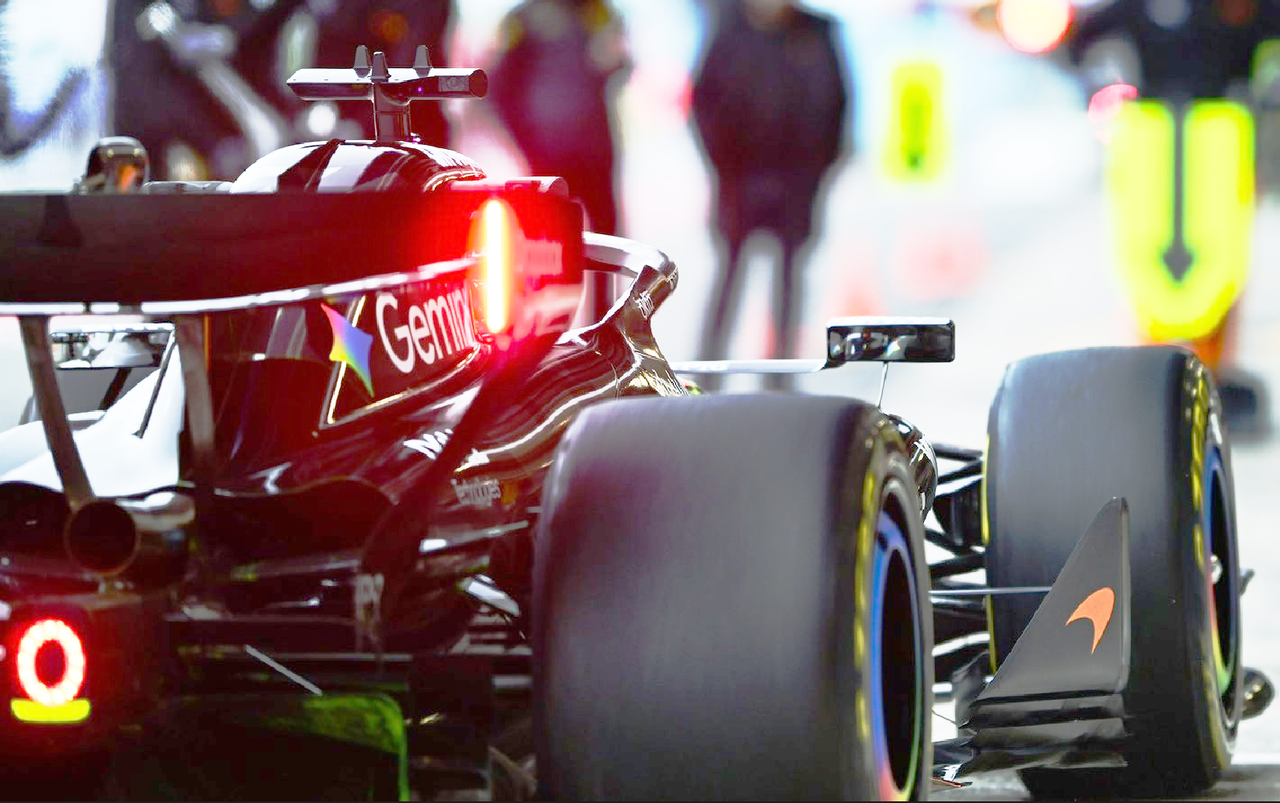
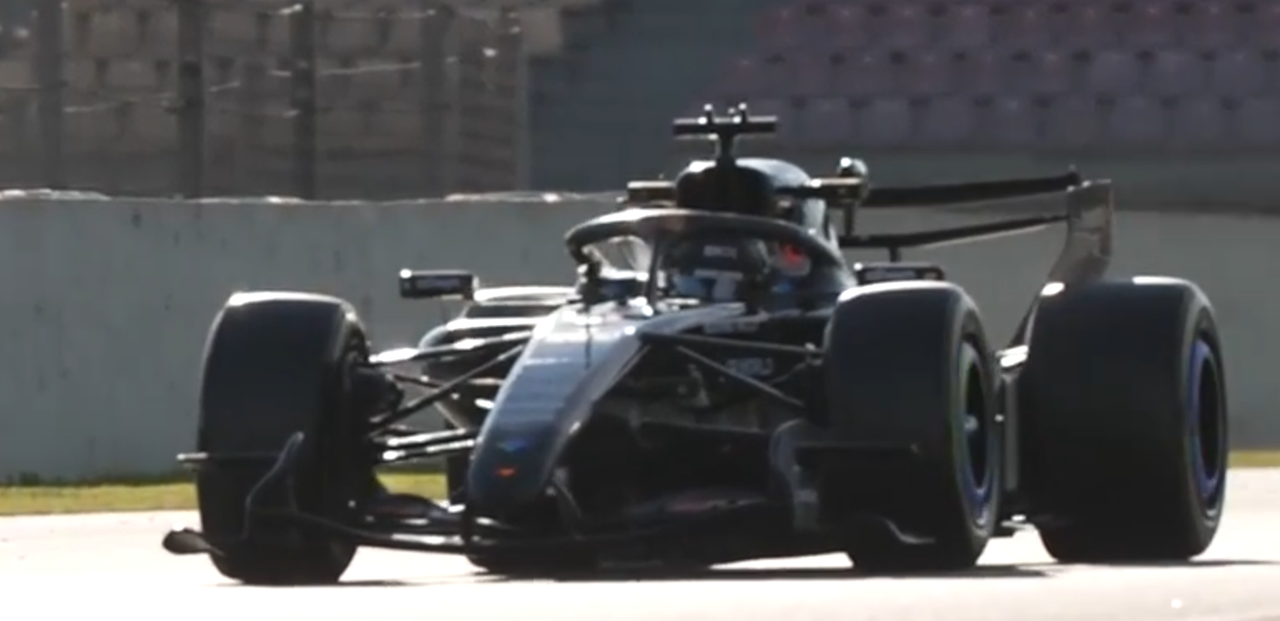
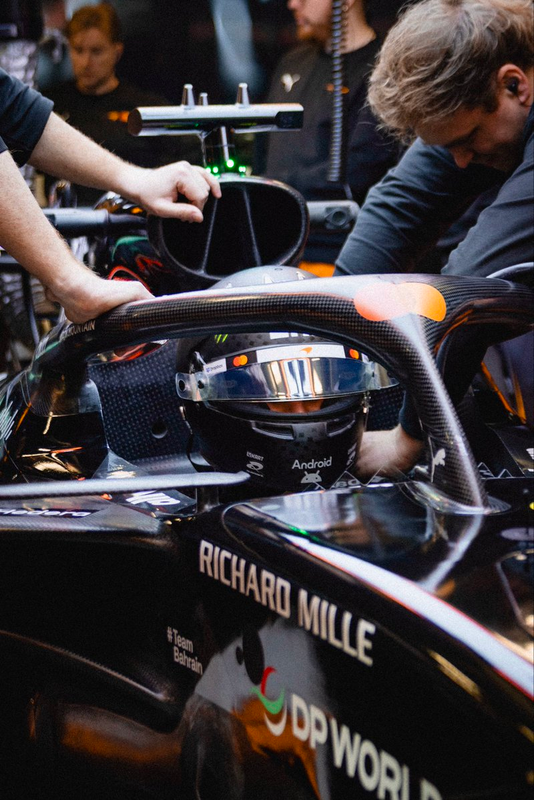
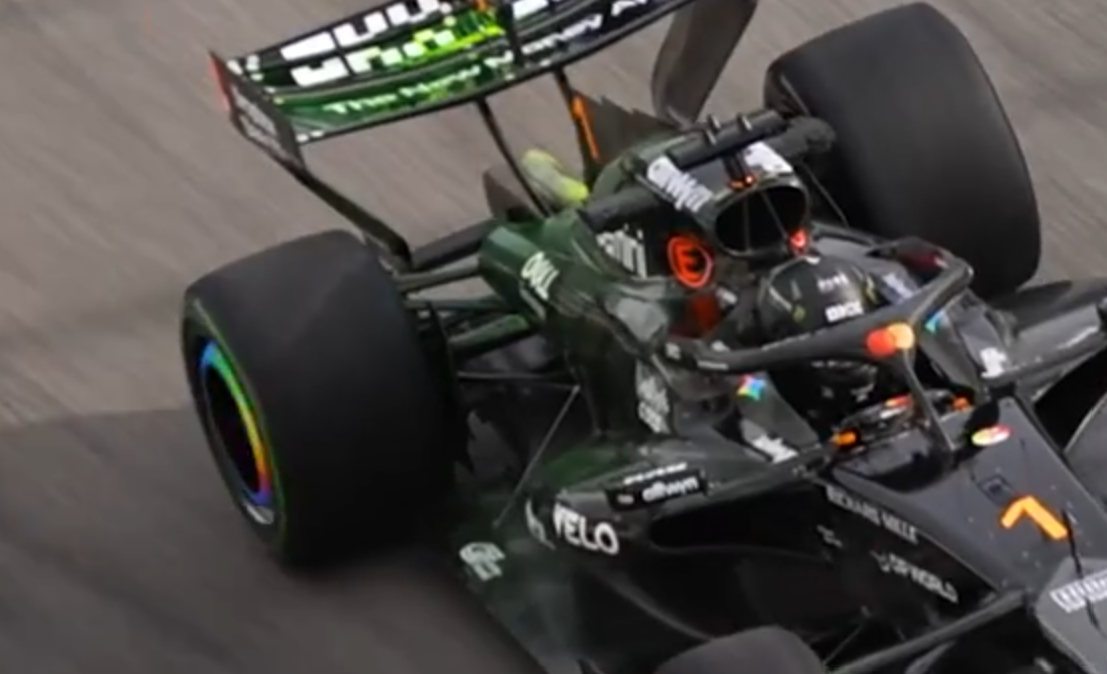
Mclaren MCL40

A place to discuss the characteristics of the cars in Formula One, both current as well as historical. Laptimes, driver worshipping and team chatter do not belong here.
haza
haza
7
Joined: 18 May 2015, 23:14

Re: Mclaren MCL40

Post

What’s the reasoning for that design Surely those endplate winglets are going to act as an aerofoil producing lift

SB15
SB15
7
Joined: 15 Feb 2025, 22:47

Re: Mclaren MCL40

Post

pronopheus wrote:
28 Jan 2026, 19:29
SB15 wrote:
28 Jan 2026, 19:18
Xero wrote:
28 Jan 2026, 19:14


I think it's widely accepted that McLaren switched focus earlier than the other top teams. McLaren abandoned development on the MCL39 mid-season due to their obvious advantage (gambled!), which was why Red Bull and Mercedes were able to catch up.


I think they have just gone down a different path as you say. I would not be surprised to see bits added to the car over the next couple of days - the floor edge and bargeboards especially. The whole FW stands out to me, looks very well sculpted.
I don't know because the Redbull's and Ferrari front wing looks more refined to me. The only detail that stands out to me is the bargeboard setup because no other has that type of interpretation.

It doesn't matter if you stopped or started development earlier than other teams, what matters is your understanding of the regulations. Big example is Williams, where they started back in 2023.

The car overall looks like a very earlier version especially if you compare it to the Mercedes, so we'll wait until Bahrain to see the "Real" car.
In what way does the FW of RB and Ferrari look more refined. I see it exactly the other way around.
That's your opinion I guess.

LionsHeart
LionsHeart
17
Joined: 09 Mar 2023, 19:21

Re: Mclaren MCL40

Post

haza wrote:
28 Jan 2026, 19:40
What’s the reasoning for that design Surely those endplate winglets are going to act as an aerofoil producing lift
Direct the airflow to the underside of the front wheels. Reduce drag. Maybe that's why the upper flaps have a steep angle of attack? To compensate for downforce during cornering and braking. Until you load the model into the CFD, there's little you can say about this. Formula 1 history is replete with examples of this, where the winglet on the outer side of the endplate points downwards. Just remember Mercedes during Hamilton's time. They stuck to this concept for several seasons, and no one talked about lift.

Moderators, I apologize.
Image
Last edited by LionsHeart on 28 Jan 2026, 20:11, edited 1 time in total.

User avatar
pronopheus
2
Joined: 06 May 2015, 23:02

Re: Mclaren MCL40

Post

@SB15 Nah, that was a real question to u! Just forgot the "?"

LionsHeart
LionsHeart
17
Joined: 09 Mar 2023, 19:21

Re: Mclaren MCL40

Post

A little bit more.


Emag
Emag
133
Joined: 11 Feb 2019, 14:56

Re: Mclaren MCL40

Post

Image
Developer of F1InsightsHub

User avatar
_cerber1
291
Joined: 18 Jan 2019, 21:50
Location: From Russia with love

Re: Mclaren MCL40

Post

haza wrote:
28 Jan 2026, 19:40
What’s the reasoning for that design Surely those endplate winglets are going to act as an aerofoil producing lift
My guess is that they want to create a low-pressure area ahead of the wheel. How they'll ultimately use it remains to be seen. Don't worry about lift; it won't be enough here; the rest of the wing will easily compensate.

matt_s
matt_s
10
Joined: 29 Jan 2015, 13:35

Re: Mclaren MCL40

Post

Xero wrote:
28 Jan 2026, 19:36

I'm not so sure, now we've seen some decent fresh photos it's looking a lot more developed than first thought.

The bargeboards look well cooked to me now. Nice detail in the lower horizontal strakes to seal the floor, and a vertical strake to cleanly manage the tyre wake without the drag penalty. Definitely not as busy looking, but it looks refined.
Now I've seen the newer hi-res images, I definitely agree regarding the bargeboards. 👍

Definitely still different, but not simple.

User avatar
SilviuAgo
104
Joined: 15 Aug 2020, 16:08

Re: Mclaren MCL40

Post

MCL40 - Floorboard

1. First a quick mention of the FWDP. The down washing orientation is clear to see here. Viewed from the front, the roll up would rotate in a clockwise direction, used to manage the mid front tyre wake. Pulling the lower portion of it outboard.

2. Notes the lower 2 sections of the floorboard. Initially, almost in a purely outwashing orientation. Represented by the dashed square in side view. Aft of that, they twist into an upwashing position, closer to what we've seen on the majority of cars. The uppermost part looks like a standard in washing shape, like the rules intended.

3. Shows the triple slotted rear corner floor edge. You can also see the floor flick up just inboard of it.

4. Highlights the diffuser corner optimization. This sacrifices diffuser volume for better lateral expansion.

5. Interestingly, they do not use the lower caketin deflector. The upwashing arrangement you see there is the diffuser winglet. Neither do they utilize the diffuser cutouts.

Image

MCL40 sidepod -

1. Highlights the full-length downwash bodywork we've become so used to seeing. They are using not diffuser cutout, which makes total sense as to why they don't have the g-line undercutting back as aggressively as the W17/SF-26.

2. Shows the serrated sharkfin similar to the SF-26.

Image
source: @brakeboosted

MCLL40 front end -

1. Shows the cranked front wing. The trend of McLaren running front wings with a notably larger frontal area continues from the previous regulation cycle. We can also see contouring of the FWEP with outwashing geometry, indicating alignment with the broader design consensus across the grid.

2. Locates the static flap adjuster in the nose, aligning with the RB22 and W17 with no outboard adjusters. We can also see how much further rearward the actuator is packaged compared to the formerly mentioned teams.

3. Notes the switch to a push-rod front suspension. This change aligns with the broader grid-wide trend, with 7/9 teams revealed using push rod front. Indicating that clear aerodynamic motivations behind the switch.

4. Notes the orientation of the front wing diveplane. It looks to be in a slight downwashing orientation toward the tip. I believe this is just to control the direction of rotation of the tip vortex. It also means this element might potentially be generating some lift.

5. Notes the comparatively large front brake ducts compared to what we've seen from rival teams.

6. Highlights the very high central nose section aft of the front wing, akin to the W17 nose design. I've tried to guess what the cross-section would look like at that point, but we'd need better angles to judge it more definitively

Image

MCL40 Isometric view.

1. Shows the cranked outboard section of the front wing. Its seems that they have biased the combined chord length distribution toward the movable elements. Meaning they'll shed a larger portion of the localized drag depending on how much the incidence reduces when activated.

2. Locates the SLM actuator linkage. It joins the 3rd element at the trailing edge. Like the SF-26, the FW will rotate through the central section as well. Some other teams, like the Mercedes has the central area that does not move with the front wing flaps.

3. Highlights the floor leading edge devices. They look to have reasonable height to them which means the floor LE has to be quite thin as the reg volumes do intersect. However, the nose slightly obscures the view so we'll require better angles.

4. Shows the FW pylons mount at the trailing edge of the main plane.

5. Notes the slightly different interpretation of the section rules in the floorboard. It is indiscernible from this photo, but we can already tell they are doing something different. Reminder that teams can have up to 3 sections in any X, Y or Z plane in the floorboard.

6. Roll hoop intake is a carry-over design from he MCL39.

Image
Source: @brakeboosted

Brahmal
Brahmal
41
Joined: 19 Oct 2024, 05:07

Re: Mclaren MCL40

Post

_cerber1 wrote:
28 Jan 2026, 20:21
My guess is that they want to create a low-pressure area ahead of the wheel. How they'll ultimately use it remains to be seen. Don't worry about lift; it won't be enough here; the rest of the wing will easily compensate.
It might lower pressure above the winglet, but I believe they are mainly trying to create a volume of high-pressure between the winglet and the bottom plate. They would be using this in concert with the tip vortex to push airflow around the outside of the wheel. Alternatively, Mercedes and Racing Bulls are using a physical aero surface in the form of an outwashing vertical fin on the bottom plate to try to achieve a similar effect.
LionsHeart wrote:
28 Jan 2026, 19:58
Direct the airflow to the underside of the front wheels. Reduce drag. Maybe that's why the upper flaps have a steep angle of attack? To compensate for downforce during cornering and braking. Until you load the model into the CFD, there's little you can say about this. Formula 1 history is replete with examples of this, where the winglet on the outer side of the endplate points downwards. Just remember Mercedes during Hamilton's time. They stuck to this concept for several seasons, and no one talked about lift.
I'm curious what the interaction with the spinning wheels would entail. Would a volume of high-pressure in front of the bottom half of the wheel "starve" the tire-squirt area of air, or enhance it? The older Mercedes pictured would be trying to achieve a similar outwash-via-high-pressure-volume effect, but would have very little interaction with the face of the spinning wheel so probably isn't directly relevant.
SilviuAgo wrote:
28 Jan 2026, 20:35
1. First a quick mention of the FWDP. The down washing orientation is clear to see here. Viewed from the front, the roll up would rotate in a clockwise direction, used to manage the mid front tyre wake. Pulling the lower portion of it outboard.
Do you know how the tip vortex would be influenced by having high-pressure underneath it?

Emag
Emag
133
Joined: 11 Feb 2019, 14:56

Re: Mclaren MCL40

Post


Great analysis by dr obbs. He also makes an interesting observation about the diffuser. He think they have the diffuser cut, but it's being obstructed by one of the allowed diffuser fences inside, so that's why it looks like it doesn't.

However, I am not 100% convinced. On a second look, it kind of makes sense because that area does look a little weird. But to confirm, I think we would need a better shot.

I think you can almost see an element very close to the diffuser sidewall inside the diffuser here. Look for a green line (flow vis) at the edge in the bottom. On the left of the actual sidewall. It could be the strake dr obbs is referencing.
Image
Developer of F1InsightsHub

User avatar
AR3-GP
535
Joined: 06 Jul 2021, 01:22

Re: Mclaren MCL40

Post

Image
Beware of T-Rex

Emag
Emag
133
Joined: 11 Feb 2019, 14:56

Re: Mclaren MCL40

Post

Image
Developer of F1InsightsHub

GrizzleBoy
GrizzleBoy
35
Joined: 05 Mar 2012, 04:06

Re: Mclaren MCL40

Post

The barge boards looks like its designed to fire vertices directly at the are where other cars have a diffuser hole.

Also regarding diffuser holes, remember we're back in squatting rears territory, where the rear of the car squats and makes a gap between the diffuser edge and rear brake ducts to.make a channel.

Also the front winglets should.make a higher than normal pressure area in front of the tyres that actually starts the aerodynamic "edge" of the tyre further than where the tyre is, which should help incoming.air from outside the lower area of the car have an incoming angle that matches where they're trying to move the vertices to.
Last edited by GrizzleBoy on 28 Jan 2026, 21:59, edited 2 times in total.

Emag
Emag
133
Joined: 11 Feb 2019, 14:56

Re: Mclaren MCL40

Post

With DRS engaged. Interestingly, that huge top element is still visible and potentially generating some upwash/drag even on the open position.

Image
Developer of F1InsightsHub