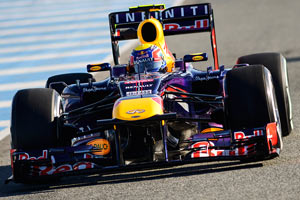
Team: Adrian Newey (CTO), Petr Prodromou (CA), Rob Marshall (CD), Christian Horner (TP) Drivers: Sebastian Vettel (1), Mark Webber (2), Sebastian Buemi (reserve) Team name: Infiniti Red Bull Racing
A place to discuss the characteristics of the cars in Formula One, both current as well as historical. Laptimes, driver worshipping and team chatter do not belong here.
djos wrote:I think the most plausible explanation I've seen is that RBR have installed kers dump resistors in the t-tray.
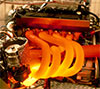
Guys please stop this. The car simply was set up to low in ride height for FP1's first stint and therefore scraping the ground. If you scrape metal over the asphalt at ~300 km/h it's getting hot! Those thermal cameras show a yellow signature at about 100 C° (because it has to fit the tire temperature window), so nothing unusual here... Btw. those extreme yellow heat signatures have never been seen in the rest of the weekend. Why? RBR corrected the ride height after webbers first stint.
Why would we "stop this"? Learn to disagree, we are here to discuss things. Scraping the tarmac is a plausible source of heat. I for one think that it doesn't quite match. The very bottom is not the hottest part, and heat developed and dissapeared at times when it could fit some sort of electric resistance, under braking for example. But of course in either case, scraping, internal heating or something else, there would be a delay before the visible surfaces warm up. It is complicated.
If anyone has a lenghty thermal video and could post it, it would help a lot.
Dunning asked: Do you know, Kruger? Kruger said: Yes.
some news/tweets about MW's RB9 and the heat signature:
Steve Matchett wrote:Ok, forgive tardy response (busy travel days), talked with Jon Wheatley (Red Bull TM) earlier to follow up on 2 things we saw in Korea. NT
Steve Matchett wrote:Webber's RB9 monocoque will need changing for Japan as the oil fire damage was sufficiently severe to require a new top section.
Steve Matchett wrote:The heat signature we noticed around the tea-tray/keel area of Webber's car (via the thermal camera) was from the legality plank front skid
Steve Matchett wrote:While neither of these little factoids warrant their own hour long special, I always like to make good on my word to follow the story along.
As far as I know, spare chassis have a percentage of parts already mounted, so it's not a 100% build-up.
"...and there, very much in flames, is Jacques Laffite's Ligier. That's obviously a turbo blaze, and of course, Laffite will be able to see that conflagration in his mirrors... he is coolly parking the car somewhere safe."Murray Walker, San Marino 1985
I always disliked that rule. It was introduced in an attempt to reduce costs, only to have the teams bringing a complete spare car anyway, just divided in hundreds of pieces. The FIA probably never heard of man hours costs, assembly costs and so on.
Any news about the engine actually? Were they able to salvage that?
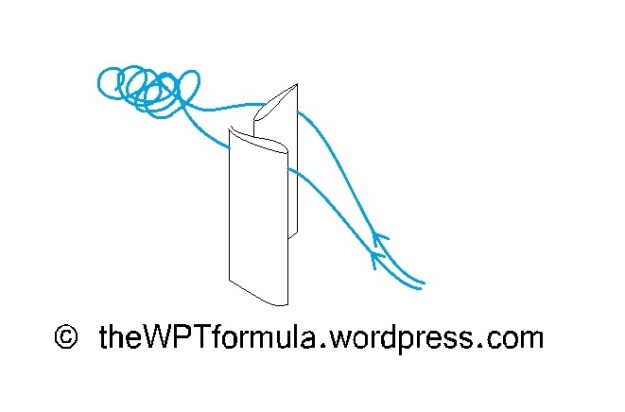
theWPTformula made an interesting blogpiece about the vertical vanes:
One of the vertical elements lies roughly in parallel with the endplate, the other (trailling element) is offset by quite an angle, around 45 degrees. I am not entirely sure what they are trying to achieve but I think the vane works in conjunction with the endplates and outboard elements of the wing to project flow around the front tyre more efficiently. Perhaps it does that by separating to the oncoming airflow out into two paths before converging creating a large vortex that helps the outwash of the wing. I am not entirely sure so do not quote me on it! I have not found another explanation, but if I do then I will edit this section.
turbof1 wrote:theWPTformula made an interesting blogpiece about the vertical vanes:
One of the vertical elements lies roughly in parallel with the endplate, the other (trailling element) is offset by quite an angle, around 45 degrees. I am not entirely sure what they are trying to achieve but I think the vane works in conjunction with the endplates and outboard elements of the wing to project flow around the front tyre more efficiently. Perhaps it does that by separating to the oncoming airflow out into two paths before converging creating a large vortex that helps the outwash of the wing. I am not entirely sure so do not quote me on it! I have not found another explanation, but if I do then I will edit this section.
turbof1 wrote:theWPTformula made an interesting blogpiece about the vertical vanes:
One of the vertical elements lies roughly in parallel with the endplate, the other (trailling element) is offset by quite an angle, around 45 degrees. I am not entirely sure what they are trying to achieve but I think the vane works in conjunction with the endplates and outboard elements of the wing to project flow around the front tyre more efficiently. Perhaps it does that by separating to the oncoming airflow out into two paths before converging creating a large vortex that helps the outwash of the wing. I am not entirely sure so do not quote me on it! I have not found another explanation, but if I do then I will edit this section.
turbof1 wrote:The drawing could have been more correct, but it has an angle of 45 degrees.
No, the text says one element has an offset of 45 degrees to the other. While the other one is parallel to the endplate. Both is wrong.
Both elements are more or less parallel to the outwards bend endpart of the endplate and imho are there to push more air away from the front tire. The elements imho are only separated to reduce the higher drag a one piece solution would provide.