A place to discuss the characteristics of the cars in Formula One, both current as well as historical. Laptimes, driver worshipping and team chatter do not belong here.
These are ground effect era style 'strakes' meant to channel the air during yaw. I am guessing that these are turning from x-y direction to x direction (rather than x-y to y for floor edge vortex in the ground effect era) as we move from front to rear on the floor. https://i.ibb.co/D3CG9VR/Mc-L40-floor-front-strakes.png
Theyre probably closer to pre ground effect strakes than they are ground effect ones Imo.
The GE effect strikes went front front of floor all the way to side of the floor edge.
The 2026 ones as with much of the cars bodywork seems to.return to very small strakes that barely extend more than a few inches.
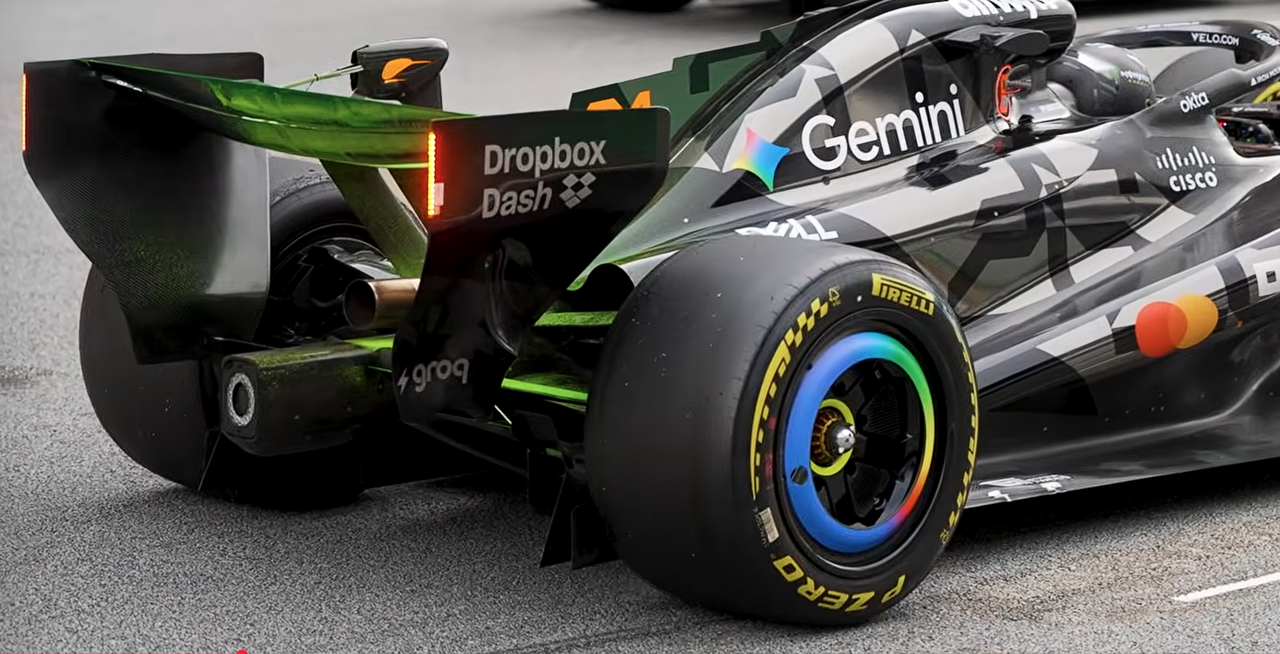
Am I the only one who thinks the airbox is obscenely wide, like the failed Alpine cars of 2024-25? The air reaching the rear wing cannot be terribly "intact" since it was just "mended" shortly before the wing. Therefore the wing suffers dirty air from itself so to speak.
Rules are made for the obedience of fools and the interpretation of smart men.
- Colin Chapman
Am I the only one who thinks the airbox is obscenely wide, like the failed Alpine cars of 2024-25? The air reaching the rear wing cannot be terribly "intact" since it was just "mended" shortly before the wing. Therefore the wing suffers dirty air from itself so to speak.
Seems to be a theme with this gen. Only Ferrari powered cars seem to have avoided it, but of the rest McLaren and Aston look to have minimised it the most (although Aston’s undercut might help them deal with it better), while Red Bull and RB seem to be by far the worst on this front.
That is a good point. What happened to the rear when the DRS opened in the past seasons, especially pre-ground effect? We should have something similar, but more powerful.
The diffuser will exhibit a curve (of accumulation in load) as it travels faster, and not affected by rear ring status to great degree.
That load, if its arranged to cross the threshold of spring curve, on Belleville arrangement, will lead to "collapse" of support from heave element.
Playing with the response curves of these two effects can keep it in that "collapsed" zone until driver applies brake.
The load acting on the spring must be the overall one on the car, it cannot be the one generated by the diffuser only. Therefore, once you open the DRS (on both axes), you will definitely see a reduction of the ovarall load.
Even if the load coming from the diffuser increases, the overall will decrease.
Only possibility would be the diffuser to "stall" before DRS opening.
Another consideration would be that they will not have active aero in wet conditions, which must result in a higher DF level. Would you still want to stall the diffuser in the wet?
"From success, you learn absolutely nothing. From failure and setbacks, conclusions can be drawn." - Niki Lauda
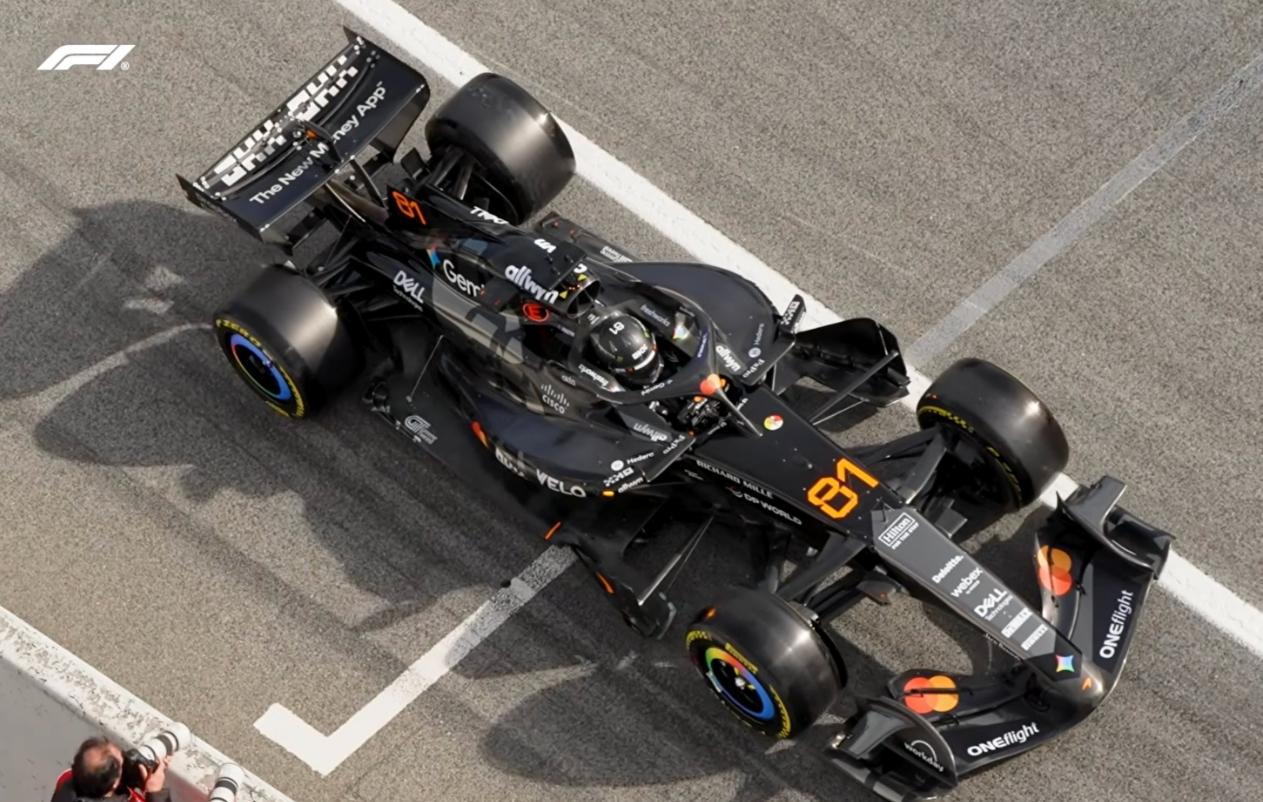
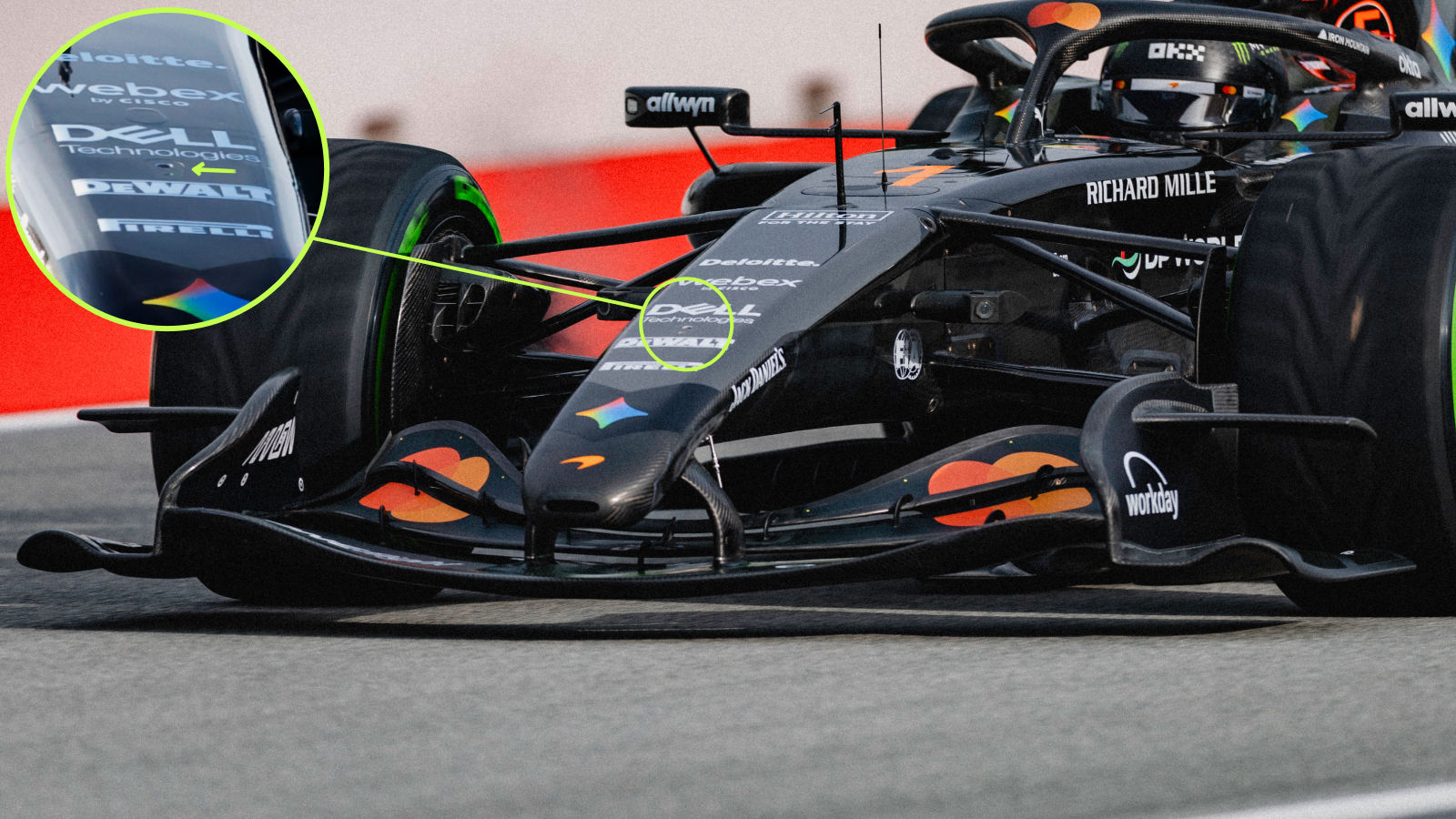
McLaren has developed a hydraulic system for active aerodynamics inside the nose, with only two thin actuators emerging from it. This solution could provide aerodynamic advantages, as it is less invasive.
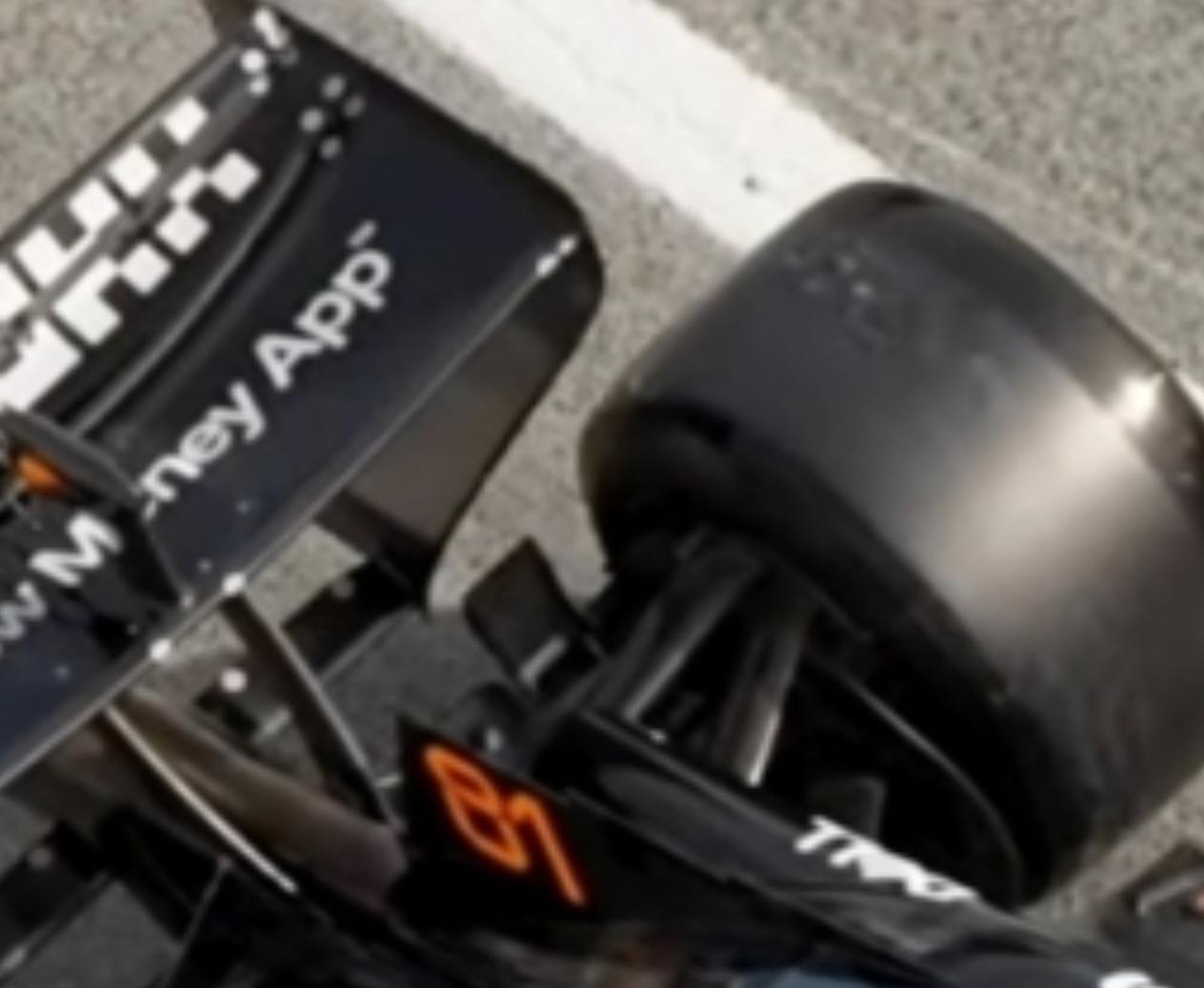
Could be testing different cooling levels. The top picture has a smaller exit area than the bottom one.
Apparently, it's the other way around. In the second photo, the exhaust pipe is covered more tightly with a shroud. But if you look at the outer part of the bottleneck, the relative height of the pipe is the same. Again, based on the angle shown.
Active aero actuation is internal, with minimal tie rods and less airflow disruption than solutions with external pods. A small hole on the nose bridge allows manual front wing adjustments, continuing a trend among teams using internal actuation.