Concept power units from 2030

All that has to do with the power train, gearbox, clutch, fuels and lubricants, etc. Generally the mechanical side of Formula One.
User avatar
bananapeel23
33
Joined: 14 Feb 2023, 22:43
Location: Sweden

Re: Concept power units from 2030

Post

DenBommer wrote:
04 May 2026, 20:43
https://www.the-race.com/formula-1/f1s- ... -era-team/

I assume this proposal would be without a turbo?

But they want lighter and smaller cars, and then they would give them 1200 hp? That seems like an enormous amount if they were ever to weigh 100–200 kg less.
Getting car + driver below 690-700kg isn't possible with the current safety standards unless you also reintroduce refueling.

NA isn't as effective as people think for getting weight down, as the increase in fuel load nearly cancels out the weight savings. Sure, the cars would be very light in quali, but crash structures are developed around fully fueled car weight. If you want smaller cars you need to balance fuel efficiency and weight. That means keeping electric parts that offer good power/weight and scrapping the rest.

An updated 2014 engine is the best way of getting weight down. Cut battery capacity to 1MJ and use an SSB to save weight. Use a 150 kW MGU-K and reintroduce the MGU-H. PU weight could be cut by over 20kg compared to 2014, since the ICE was unnecessarily heavy and the battery was larger than strictly necessary.

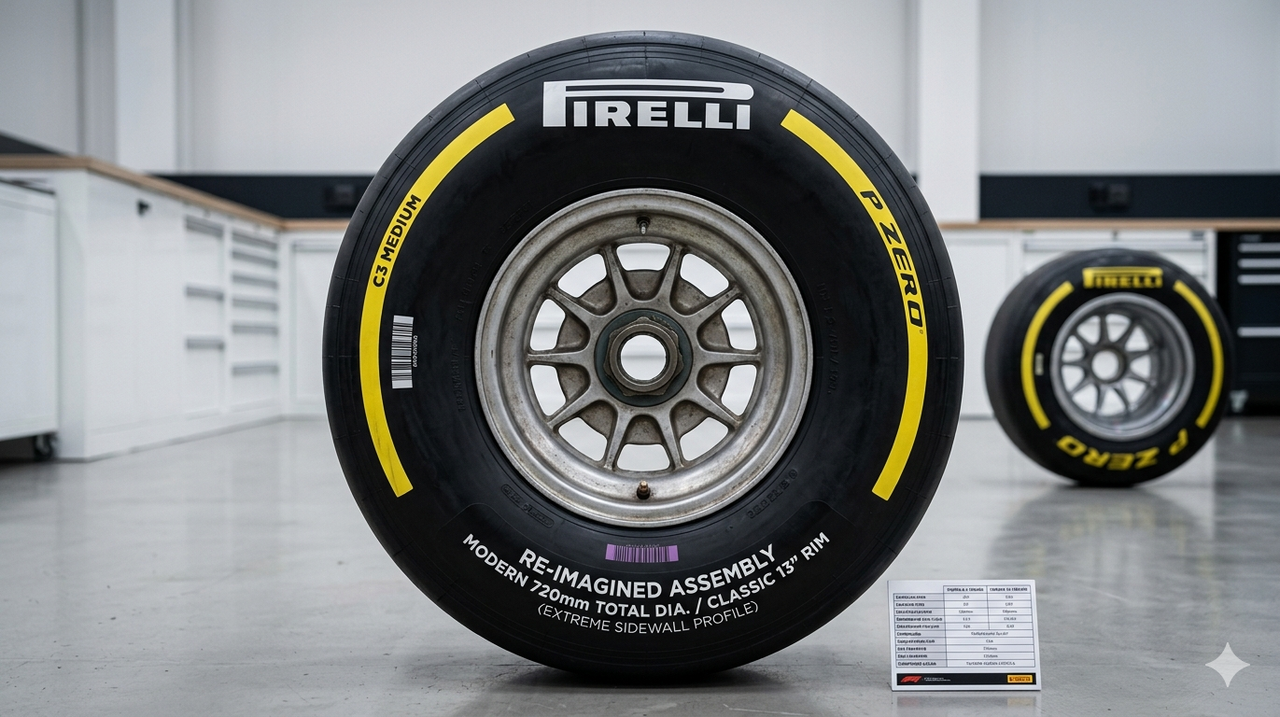
A 90 kg fuel load would suffice, given the weight savings. This means that PU+fuel comes in 35kg lighter than 2017. Crash structures could be sized down accordingly, likely getting the cars to ~700kg, lower if they keep shrinking the car and go back to 13 inch tyres.

I guess strictly speaking an NA V8 can be lighter, but that requires refueling, and refueling isn't fun. Either way you want to harvest exhaust gases if you want to cut weight.

Tommy Cookers
Tommy Cookers
668
Joined: 17 Feb 2012, 16:55

Re: Concept power units from 2030

Post

the current rules are rigged in favour of the Miller-cycle turbocharged engine eg ....
geometric CR
charge cooling limits
fuel
boost

who says that (spark-ignition) NA is inherently less efficient WOT ? .... not Mr Toyota

some here remember that exhaust recovery and more-complete-expansion/early inlet closure can thrive with NA
though (boosted or NA) more expansion in-cylinder means less exhaust recovery

NA engines already have 1.2 bar manifold via tuned-length exhaust and induction tracts (so race turbo uses these)
tuned length has less so-called pumping losses than otherwise

User avatar
FW17
181
Joined: 06 Jan 2010, 10:56

Re: Concept power units from 2030

Post

bananapeel23 wrote:
06 May 2026, 11:13
DenBommer wrote:
04 May 2026, 20:43
https://www.the-race.com/formula-1/f1s- ... -era-team/

I assume this proposal would be without a turbo?

But they want lighter and smaller cars, and then they would give them 1200 hp? That seems like an enormous amount if they were ever to weigh 100–200 kg less.
Getting car + driver below 690-700kg isn't possible with the current safety standards unless you also reintroduce refueling.

NA isn't as effective as people think for getting weight down, as the increase in fuel load nearly cancels out the weight savings. Sure, the cars would be very light in quali, but crash structures are developed around fully fueled car weight. If you want smaller cars you need to balance fuel efficiency and weight. That means keeping electric parts that offer good power/weight and scrapping the rest.

An updated 2014 engine is the best way of getting weight down. Cut battery capacity to 1MJ and use an SSB to save weight. Use a 150 kW MGU-K and reintroduce the MGU-H. PU weight could be cut by over 20kg compared to 2014, since the ICE was unnecessarily heavy and the battery was larger than strictly necessary.

A 90 kg fuel load would suffice, given the weight savings. This means that PU+fuel comes in 35kg lighter than 2017. Crash structures could be sized down accordingly, likely getting the cars to ~700kg, lower if they keep shrinking the car and go back to 13 inch tyres.

I guess strictly speaking an NA V8 can be lighter, but that requires refueling, and refueling isn't fun. Either way you want to harvest exhaust gases if you want to cut weight.
2013 car was 642 kg
2014 car was 690 kg - addition of turbo engine, 2 motors, CE and 0.56kw battery and 2 side impact structures
2017 car was 728 kg - addition of fat wheels, wide car, wide tyre and teams going for longest wheel gearbox possible
2018 car was 734 kg - addition for the halo
2021 car weight was 752 kg - teams just wanted higher ceiling
2022 car weight was 795 kg - the 18 inch wheel, heavier suspension and some additional crash requirement


As you can see the f1 monocoque weight for crash protection increase is not much

The addions are coming from bigger wheels, heavier tyres and longer car

Ozan
Ozan
12
Joined: 05 Jan 2012, 01:50

Re: Concept power units from 2030

Post

based on T.Wolff's comments, i think they can make an engine that is:

-2.0 liter V8 + turbo that runs on new 100% sustainable fuels but fuel flow rate is regulated
-MGU-K that produces (up to) 400kw for overtake mode like the one that is used on Indycar for attacking and defending

this formula can produce up to 1200bhp that he mentioned and also audi and honda can also produce these engines with the knowledge that they gathered from the current regulation engines.
I don't think they will choose NA engines as they are not fuel efficient as turbo boosted engines

mzso
mzso
76
Joined: 05 Apr 2014, 14:52

Re: Concept power units from 2030

Post

bananapeel23 wrote:
06 May 2026, 11:13
DenBommer wrote:
04 May 2026, 20:43
https://www.the-race.com/formula-1/f1s- ... -era-team/

I assume this proposal would be without a turbo?

But they want lighter and smaller cars, and then they would give them 1200 hp? That seems like an enormous amount if they were ever to weigh 100–200 kg less.
Getting car + driver below 690-700kg isn't possible with the current safety standards unless you also reintroduce refueling.

NA isn't as effective as people think for getting weight down, as the increase in fuel load nearly cancels out the weight savings. Sure, the cars would be very light in quali, but crash structures are developed around fully fueled car weight. If you want smaller cars you need to balance fuel efficiency and weight. That means keeping electric parts that offer good power/weight and scrapping the rest.

An updated 2014 engine is the best way of getting weight down. Cut battery capacity to 1MJ and use an SSB to save weight. Use a 150 kW MGU-K and reintroduce the MGU-H. PU weight could be cut by over 20kg compared to 2014, since the ICE was unnecessarily heavy and the battery was larger than strictly necessary.

A 90 kg fuel load would suffice, given the weight savings. This means that PU+fuel comes in 35kg lighter than 2017. Crash structures could be sized down accordingly, likely getting the cars to ~700kg, lower if they keep shrinking the car and go back to 13 inch tyres.

I guess strictly speaking an NA V8 can be lighter, but that requires refueling, and refueling isn't fun. Either way you want to harvest exhaust gases if you want to cut weight.
I don't think that's true at all. And the rest of your comment discredits your starting statement.
If you take away elsewhere you can also reduce the weight of crash structures. Furthermore crash structures are plain carbon fiber composites, right? That can be improved.

I think a downsized ICE ICE, and car sizes would bring the most weight savings. Then hopefully compound savings on crash structures.

stasuberacing
stasuberacing
1
Joined: 07 May 2026, 18:35

Re: Concept power units from 2030

Post

In my eyes, the way forward would be:

2.4 V8 on sustainable fuel for ICE
Front and rear KERS (with front KERS you could gain a lot of power from braking) You need front Kers if you want to be able to have 200-300 bhp from electric

User avatar
bananapeel23
33
Joined: 14 Feb 2023, 22:43
Location: Sweden

Re: Concept power units from 2030

Post

mzso wrote:
07 May 2026, 18:14
I don't think that's true at all. And the rest of your comment discredits your starting statement.
If you take away elsewhere you can also reduce the weight of crash structures. Furthermore crash structures are plain carbon fiber composites, right? That can be improved.

I think a downsized ICE ICE, and car sizes would bring the most weight savings. Then hopefully compound savings on crash structures.
2014 added a 2nd SIS and made it a spec part. Adding ~5 kg in the process.

2018 added the Halo and a 3rd wheel tether, roughly 7.5kg.

2021 saw a large weight increase for no apparent reason, likely due to the budget cap making intense weight saving cost prohibitive (and the driver weight floor adding an effective 5-10kg)

The 2022 regulations saw the car shortened, aero significantly simplified and the overall car weight increased from 752kg to 798kg. 46kg of weight increase with a smaller car and the same PU. The shrink is likely to have compensated for the floor weight increased. 14kg was tyres. The vast majority of the remaining 32kg was overwhelmingly pure safety weight stemming from survival cell wall strengthening due to Huberts tragic death. Furthermore, the SIS was strengthened by 15% and the FIS by about 45%.

2024 saw 2kg from the roll hoop.

2025 saw 2kg additional driver weight to help tall drivers.

The 2026 regs added a ton of complexity with the dual-stage FIS, likely adding 2-3kg, then another 2 kg or so from the roll hoop.

Then there are miscellaneous weight increases that are difficult to remove, mostly cameras, sensors and telemetry equipment. Totalling a few kg.

In total we are looking at ~45-60kg in weight increases that have nothing to do with the powertrain. Put the 2013 V8 back in and we would still be dealing with a near-700kg F1 car, especially when we consider that an NA V8 would be heavier today, since the FIA would want a relatively high ICE weight floor due to the cost cap.

Additionally, no 2030 V8 would be non-hybrid, and the options being discussed would have a significant MGU-K that would require a battery capable of deploying and harvesting at least 200-300kW, which would be relatively heavy as a consequence (likely on par with KERS battery). The MGU-K itself would also likely come in at 10-12 kg at the very least, while the gearbox would also have to be stronger than the 2013 one in order to handle the torque from the MGU-K, adding significant weight.

Sub-700kg isn’t impossible, but it sure isn’t trivial, and going back to 2013 weight is a pipe dream, especially with the cost cap.

Lt_Boards
Lt_Boards
2
Joined: 24 Mar 2014, 06:04

Re: Concept power units from 2030

Post

Cold Fussion wrote:
28 Apr 2026, 17:56
mzso wrote:
26 Apr 2026, 14:21
Cold Fussion wrote:
25 Apr 2026, 12:49
Hopefully nothing given it's primarily a spec series.
A silly blanket statement... BTW so is F1 by now. With spec parts, and a formula so specific that many other parts are practically the same.
The B.Sport guy for example pointed at the front regen that it would be a good solution to the current fiasko of F1. And even as an FE spec part it's not too bulky.
Calling F1 a spec series is absurd. Front regen without front deployment is just a band aid to an otherwise poor set of technical regulations, any open set of regulations would see front axle deployment if a motor was already present on the front axle. In my opinion F1 should either embrace awd with front axle regen, or develop a set of regulations where front axle harvesting isn't required to make the energy budget work.
I don't think calling F1 a "spec" series is absurd.

Teams and Engine suppliers appear to be more focused on designing cars to fit within the increasingly constrained specifications of the technical regulations than ever before. When someone comes up with something outside of the box, the specifications of the box are updated to nullify it.

Now I know in some ways this is a semantic argument, but you can't deny the fact that so much of F1 is now heavily pre specified. Short of buying "off the shelf" parts (which some teams actually do) or turn key solutions (which has also been done. Super Aguri), teams are focusing on building the most efficient spec parts they can; chasing diminishing returns, and loop holes rather than truly innovating (in the purest sense).

Take for instance Ferrari's partial cover of the exhaust. Yes its clever solution others are now starting to follow, but it is in essence a stupid piece of engineering made clever by highly specified set of technical regulations. Or their alleged fuel flow "cheat" which would never have been thought abut if F1 didn't try to be so highly technical in specifying fuel flow limits, which seemed a bit redundant given the engine capacity, compression ratio, boost, fuel tank and fuel chemistry were already so heavily restricted and specified.

Now I wouldn't call F1 a spec series, and I am sure that reference was more about making a point about the constrained tech regs than actually claiming it is a spec series like F2 or F3. But to say its absurd to compare it to a series like Formula E, in my opinion, is just as absurd. I would take a look into what Nissan did a few years back in FE. Some innovative design and engineering that would be the envy of every F1 team.

My personal opinion, is that F1 does to much over specifying of "what" your allowed to do, "How" your allowed to do it and "when" your allowed to do it for any given parameter. This is where I to feel it has some essence of a spec series.

Everyone hates on the WEC's BoP. But apart from that I think they nailed the regs perfectly in that they are very clear on what the performance/outcomes to be achieved from the powertrains and then giving the engineers the freedom to do it anyway they want (relatively speaking). Yes the BoP is annoying as hell, but at least the BoP is out there for everyone to see. F1's engine AUDO regs is just BoP in disguise, but with some extra politics and the need for the worse performing engine suppliers to spend millions of more dollars to catch up whilst the better engine suppliers are effectively handicapped for doing a great job.

In probably an overly simplistic opinion, they should simply put torque sensors on the rear axel. Tell teams the torque is never allowed to exceed a certain amount, and let them do whatever the hell they like. Instead, F1 had an idea on what they think should be the max power output, and instead of just specifying that, they created a highly detailed and constraining set of specifications for almost every aspect of the engine. Then everyone gets annoyed at Mercedes in pre-season because they caught F1 with their pants down when it came to specifying the compression ratio and basis for testing/measuring it.

Cap the total fuel allocation for a race, and if it works out quicker to have some Hybrid electrical components, you bet F1 will adopt it! You might even end up with tech the trickles down to the road cars which then creates the "road relevance" everyone is always banging on about.

Rant Over.
Apologies

sp8472
sp8472
2
Joined: 04 Mar 2020, 02:01

Re: Concept power units from 2030

Post

I agree. I would even go one step further. Define the amount of energy to be consumed (quiet to 100kg of fuel) and let engineers come up with the solutions that they think will work best.

Same thing with the car. Define the box. Build within that box. Have some limitations, such as no traction control, no 4WD or 4 wheel steering and a manual gear box. Obviously include the safety criteria. Then go at it and be innovative.


Sent from my iPhone using Tapatalk