2026 Aerodynamic & Chassis Regulations

Here are our CFD links and discussions about aerodynamics, suspension, driver safety and tyres. Please stick to F1 on this forum.
User avatar
venkyhere
39
Joined: 10 Feb 2024, 06:17

Re: 2026 Aerodynamic & Chassis Regulations

Post

Off topic, but still on topic.
A brilliant summary of the 2026 regulations from Lollipopman : https://www.youtube.com/watch?v=NcrblPqT6sM
Comic relief of the kind that suits this forum to a T.

FNTC
FNTC
23
Joined: 03 Nov 2023, 21:27

Re: 2026 Aerodynamic & Chassis Regulations

Post


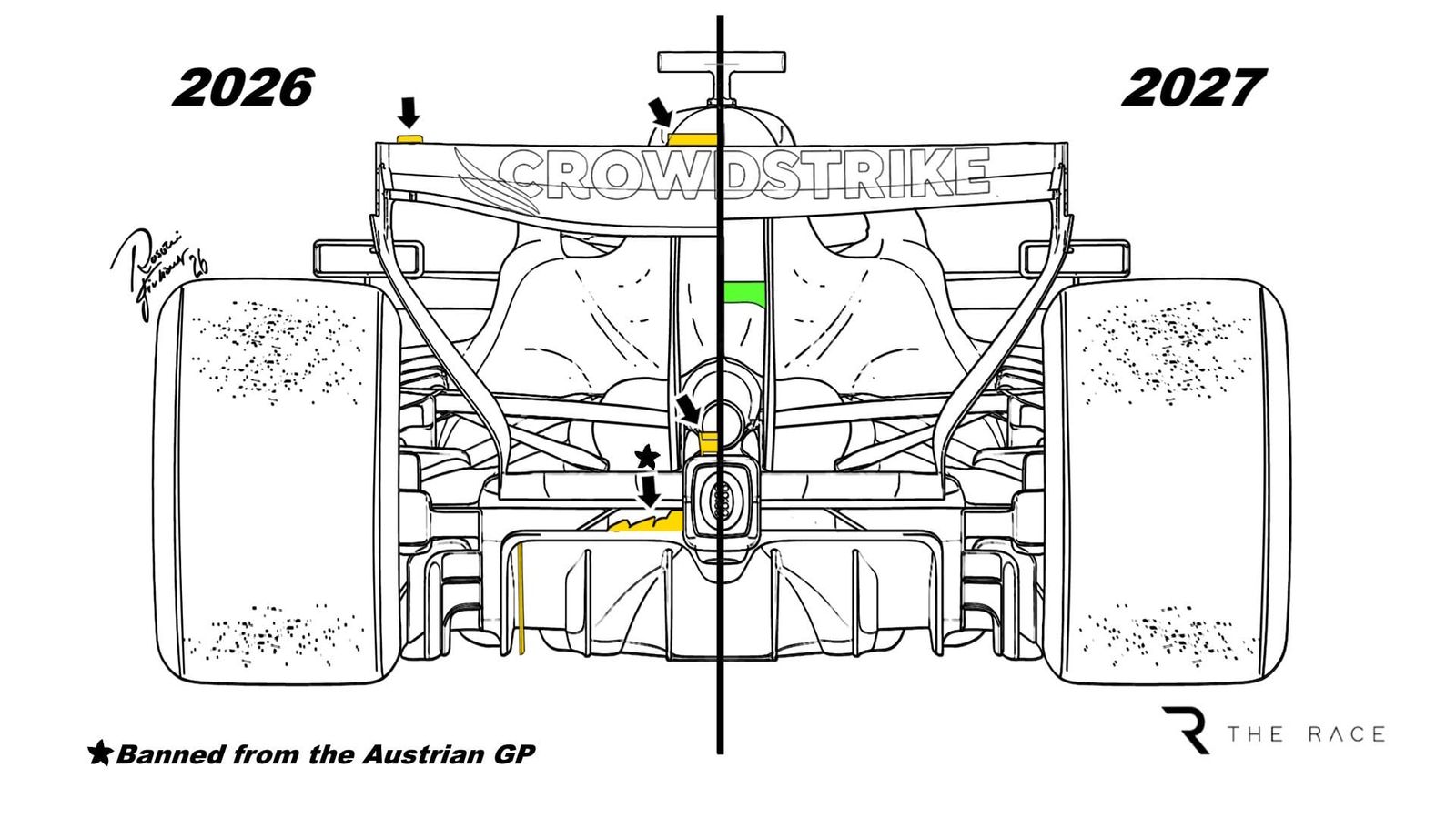
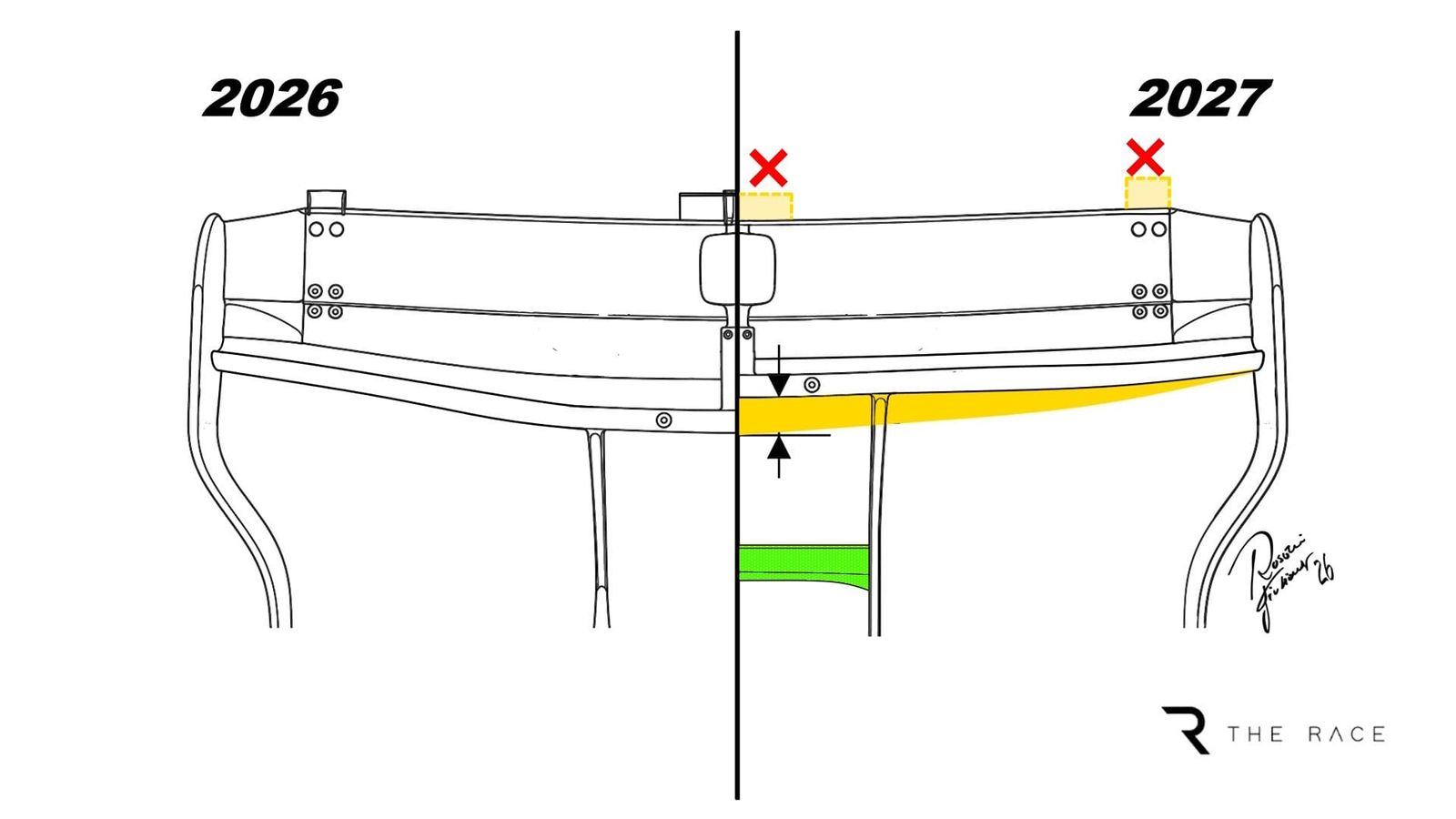
Lol... FIA says you can put the regulation box for the "rear wing brackets" where you want almost. So Mercedes puts it on top of the rear wing outside the rear wing regulation box. :lol:

User avatar
hollus
Moderator
Joined: 29 Mar 2009, 01:21
Location: Copenhagen, Denmark

Re: 2026 Aerodynamic & Chassis Regulations

Post

I thought they were mirror mounts? O:) :-s
¡Puxa Sporting!

michl420
michl420
27
Joined: 18 Apr 2010, 17:08
Location: Austria

Re: 2026 Aerodynamic & Chassis Regulations

Post

So they could put this "rear wing brackets" also under/behind the exhaust "ferrari style"?

User avatar
Stu
Moderator
Joined: 02 Nov 2019, 10:05
Location: Norfolk, UK

Re: 2026 Aerodynamic & Chassis Regulations

Post

michl420 wrote:
12 Mar 2026, 18:26
So they could put this "rear wing brackets" also under/behind the exhaust "ferrari style"?
Haas have done so.
Perspective - Understanding that sometimes the truths we cling to depend greatly on our own point of view.

Hoffman900
Hoffman900
242
Joined: 13 Oct 2019, 03:02

Re: 2026 Aerodynamic & Chassis Regulations

Post

https://morethesis.unimore.it/theses/av ... 25-131711/
Parametric Design and Optimization of an Active Drag Reduction System Mechanism for the Haas 2026 Formula 1 Car Wind Tunnel Model
In the Formula 1 championship, the pursuit of optimal performance amid the diverse array of circuits necessitates a specific adaptation of car aerodynamics. The introduction of the Drag Reduction System (DRS) by regulations aims to facilitate overtaking by allowing active aerodynamic adjustments. This creates a conflict in aerodynamic requirements: minimizing drag during straight-line driving versus maximizing downforce while cornering. Consequently, developing aerodynamic devices must enhance car performance in both DRS OFF and DRS ON conditions. The initial evaluation of new aerodynamic components in Formula 1 typically involves numerical tools and Computational Fluid Dynamics (CFD) simulations, followed by validation in a wind tunnel using a 60% scale model. With the upcoming 2026 regulations, the rear wing DRS operating in conjunction with the front wing in X-Mode and remaining active for a longer duration per lap necessitates a more precise assessment of performance in both states. Therefore, establishing a method for dynamically adjusting the rear wing flap position of the wind tunnel model without reducing wind speed or requiring manual operator intervention is critical for time efficiency and ensuring high test repeatability. This thesis aims to develop an active mechanism enabling the rear wing flap of the wind tunnel model to adjust in real-time under wind-on conditions. This begins with a thorough investigation of the existing VF24 WT model to understand the project's constraints and requirements. Subsequently, a numerical model will be developed using the 3DExperience CAD tool for geometrical and force-inertial parametrization of the 2026 wind tunnel DRS mechanism. The anticipated outcome of this research is a reliable and reusable mechanism adaptable for various rear wing configurations throughout the 2026 season, emphasizing versatility for future advancements. The parametrization process aims to minimize oversized components by ensuring that the DRS mechanism is optimally modelled, reducing overall dimensions and weight while maintaining required load capacities. This approach also facilitates automated assessments of design validity based on the controlled gap between the flap in DRS ON condition and the main plane, relative to the maximum values set by FIA regulations. Ultimately, this work provides a continuously updated methodology for fine-tuning based on benchmarking data from previous seasons and insights from future developments. The model will also serve as a foundation for studying the transient responses between DRS OFF and ON conditions and for tests evaluating intermediate flap positions between fully closed and fully open configurations.