PlatinumZealot wrote: ↑16 Jan 2026, 02:29
AR3-GP wrote: ↑15 Jan 2026, 17:53
Stu wrote: ↑06 Jan 2026, 09:02
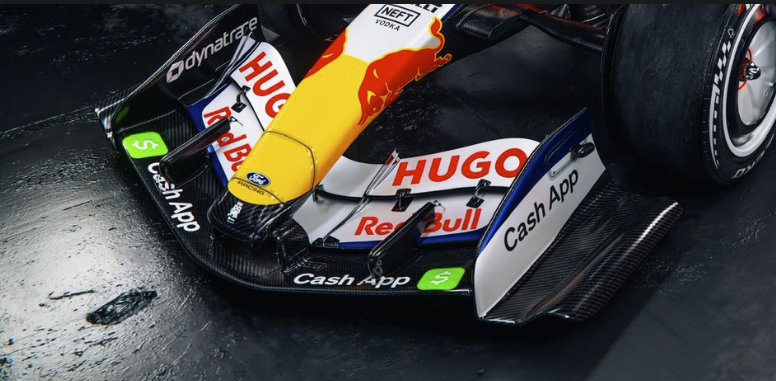
Great illustration, and a very useful reference point (I think that it also backs up my point as well!?); this worked because it was used by the driver to adjust the front wing and balance the car, in my experience a LinAc cannot be made to operate quickly enough for the ‘instant’ change required. At the same time rotary servo-motors would need to be synchronised side to side (anyone that has owned an original MX5/Miata/Eunos Roadster will be aware of the ‘winking’ phenomenon and operational time difference between two synchronised servo-motors!).
Hydraulic operation would allow you to move the bulk into the nose and retain small actuators, also the technology for hydraulic operation at speed is widely understood (been the de facto method for DRS since its introduction).
I hit the jackpot:
https://pbs.twimg.com/media/EpbwvXuXIAEkCSH.jpg
There are no hydraulics involved. It's a solenoid that moves the wing (electromagnet). Solenoids can be switched rapidly between two positions using electricity.
https://marvel-b1-cdn.bc0a.com/f0000000 ... nBg=FFFFFF
I am curious about how you conclude that it is a solenoid?
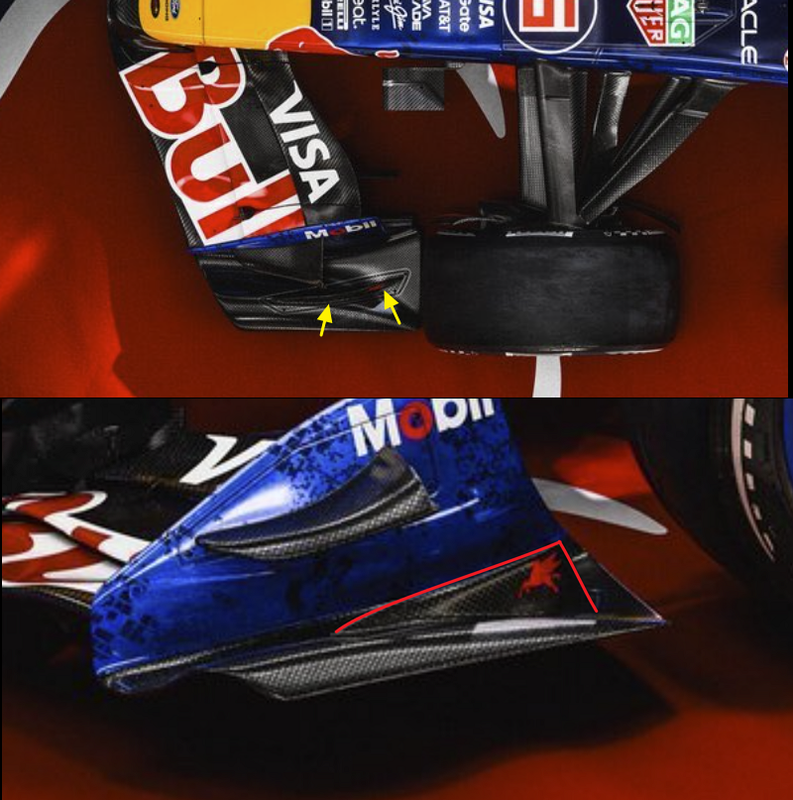
I see universal joints on the mechanism and a linear sensor for feedback so it could very well be a servo motor.
It could be a servo motor. In terms of how fast the mechanism needs to be I think it is worth remembering that the wing position needs to be changed only one time at the beginning of the straight and one time at the end. After that there is plenty of time to prepare for the next switch.
Thinking about the switch from low downforce to high downforce, I think it would be possible to design a system in which a spring of some sort is loaded relatively slowly, to provide the force necessary to switch the position of the wing. A simple switch could release the spring and the switch would be istantaneous.
The switch to the opposite position (high downforce to low downforce) should require little to no energy, since the air itself would already be "pushing" in the right direction. Therefore you really need to "load" the spring once per zone.