2026 Aerodynamic & Chassis Regulations

Here are our CFD links and discussions about aerodynamics, suspension, driver safety and tyres. Please stick to F1 on this forum.
User avatar
organic
1124
Joined: 08 Jan 2022, 02:24
Location: Cambridge, UK

Re: 2026 Aerodynamic & Chassis Regulations

Post

1h44m Kyle engineers video covering the aerodynamic rules in a lot of detail


User avatar
AR3-GP
405
Joined: 06 Jul 2021, 01:22

Re: 2026 Aerodynamic & Chassis Regulations

Post

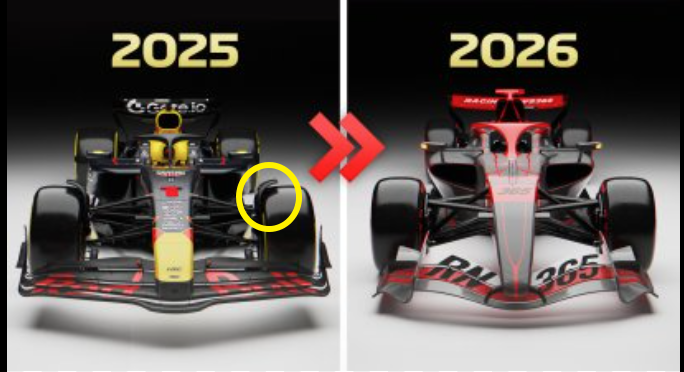
Why was the front wheel brow removed?

Image
Beware of T-Rex

TeamKoolGreen
TeamKoolGreen
-5
Joined: 22 Feb 2024, 01:49

Re: 2026 Aerodynamic & Chassis Regulations

Post

AR3-GP wrote:
08 Jan 2026, 15:13
Why was the front wheel brow removed?

https://i.postimg.cc/2y64hq0Q/image.png
To reduce drag and weight. Dirty air was not a priority anymore. It is the same reason for all of the changes, including the flat floor.

And it is explained in a link on the very first post in this thread, where someone posted this :
Engineers from the FIA and Formula 1 are working feverishly on a new Formula 1 car for 2026, with the aim of recuperating 350 kilowatts every lap. That also has a big impact on the shape of the cars.
That is the reason for all of the changes. Everything else is just PR spin. Because they aren't exactly proud of the fact that they unknowingly ratified a new engine regulation that wasn't even close to fit for purpose.

User avatar
AR3-GP
405
Joined: 06 Jul 2021, 01:22

Re: 2026 Aerodynamic & Chassis Regulations

Post

It wouldn't surprise me to see most teams carrying over similar sidepod solutions from 2022 regulations. They will want to use the sidepod to create a high-pressure region that pushes the tire wake outwards and away from the floor edge. This will be assisted by the new bargeboard.
Beware of T-Rex

User avatar
FW17
173
Joined: 06 Jan 2010, 10:56

Re: 2026 Aerodynamic & Chassis Regulations

Post

Image

Scuderia Toro Rosso (STR) launched their car on the first day of the Valencia test. It’s significance has been somewhat lost amongst the fanfare of the front running teams cars and the innovation of the midfield runners. However the new STR06 deserves more attention, as it has some unique aerodynamic concepts that are drawing praise from other teams engineers. STR have been able to reduce the cooling and packaging demands placed on the sidepods. Thus with a smaller sidepod envelope, the team have revived an old concept from Ferrari, the double floor. This separates the sidepod from the flat floor of the car to improve airflow towards the rear. Pioneered by the Jean Claude Migeot while at Ferrari, the twin floor concept came about in 1992 for the teams F92A. Although not a success, mainly due to mechanical reasons, the car did exploit clever sidepods to improve flow over the diffuser.

Diffusers are limited in length and exit height, as such there is little that can be done with their internal geometry to create a greater volume for more expansion-ratio and hence more downforce. Teams realise that driving more airflow over the diffuser not only creates higher pressure above, but can also drive airflow within the diffuser with aids such as gurneys on the trailing edge of the diffuser opening. The problem is getting airflow with enough energy to pass over the diffuser. To reach the diffuser, the air has a tortuous journey. Starting with passing over the front wing, under the nose and raised chassis, then over the splitter and around the sidepods, before sweeping in between the rear wheels and through the rear suspension. We’ve seen other solutions aimed at improving this path, such as the extreme raised nose, tight coke bottle shape and recently the undercut sidepod. It is the sidepods that create the biggest obstacle to the airflow, sidepods span some 30-40cm beyond the sides of the chassis and in order to package large enough radiators they tend to need the full width across a significant height, making the sidepods effectively a rectangular block to the airflow. If you could remove some of this blockage, especially low down then the airflow can head unimpeded to the diffuser. This is exactly what Migeot did with the Ferrari F92A and Ascanelli has done with the STR06. The Toro Rosso’s sidepods curl in backwards towards the monocoque along their full length, this space is evidenced by the large area of flat floor beneath the sidepods. Air passes under the sidepods directly to the diffuser with little to sap energy from the airflow.

--
Scarbs

User avatar
BassVirolla
12
Joined: 20 Jul 2018, 23:55

Re: 2026 Aerodynamic & Chassis Regulations

Post

FW17 wrote:
09 Jan 2026, 07:29
https://external-preview.redd.it/3jrTIk ... 97a78d1da5

Scuderia Toro Rosso (STR) launched their car on the first day of the Valencia test. It’s significance has been somewhat lost amongst the fanfare of the front running teams cars and the innovation of the midfield runners. However the new STR06 deserves more attention, as it has some unique aerodynamic concepts that are drawing praise from other teams engineers. STR have been able to reduce the cooling and packaging demands placed on the sidepods. Thus with a smaller sidepod envelope, the team have revived an old concept from Ferrari, the double floor. This separates the sidepod from the flat floor of the car to improve airflow towards the rear. Pioneered by the Jean Claude Migeot while at Ferrari, the twin floor concept came about in 1992 for the teams F92A. Although not a success, mainly due to mechanical reasons, the car did exploit clever sidepods to improve flow over the diffuser.

Diffusers are limited in length and exit height, as such there is little that can be done with their internal geometry to create a greater volume for more expansion-ratio and hence more downforce. Teams realise that driving more airflow over the diffuser not only creates higher pressure above, but can also drive airflow within the diffuser with aids such as gurneys on the trailing edge of the diffuser opening. The problem is getting airflow with enough energy to pass over the diffuser. To reach the diffuser, the air has a tortuous journey. Starting with passing over the front wing, under the nose and raised chassis, then over the splitter and around the sidepods, before sweeping in between the rear wheels and through the rear suspension. We’ve seen other solutions aimed at improving this path, such as the extreme raised nose, tight coke bottle shape and recently the undercut sidepod. It is the sidepods that create the biggest obstacle to the airflow, sidepods span some 30-40cm beyond the sides of the chassis and in order to package large enough radiators they tend to need the full width across a significant height, making the sidepods effectively a rectangular block to the airflow. If you could remove some of this blockage, especially low down then the airflow can head unimpeded to the diffuser. This is exactly what Migeot did with the Ferrari F92A and Ascanelli has done with the STR06. The Toro Rosso’s sidepods curl in backwards towards the monocoque along their full length, this space is evidenced by the large area of flat floor beneath the sidepods. Air passes under the sidepods directly to the diffuser with little to sap energy from the airflow.

--
Scarbs
Isn't it exactly the same reason why we've been seeing waterslides and downsloped sidepods through the last regulations?

Possibly the prescribed inwashing bargeboards accomodate better with a heavily undercut sidepod?

User avatar
AR3-GP
405
Joined: 06 Jul 2021, 01:22

Re: 2026 Aerodynamic & Chassis Regulations

Post

Why didn't they just make the bardboard a spec part like the wheel brow from last year.
Beware of T-Rex

User avatar
MIKEY_!
8
Joined: 10 Jul 2011, 03:07

Re: 2026 Aerodynamic & Chassis Regulations

Post

AR3-GP wrote:
11 Jan 2026, 14:43
Why didn't they just make the bardboard a spec part like the wheel brow from last year.
Making it a spec part is a good idea in many ways and I bet they considered it. But teams and fans get really grumpy when performance-critical spec parts fail, like the furor over F2 engines blowing up a few years ago.

The bargeboard is likely to be frequently bumped and sometimes broken off in battle. If it's a team part that breaks, no one can complain. If an FIA spec part breaks, everyone blames the FIA even if the part couldn't reasonably have been made to survive that impact. Even worse if someone then runs over it and gets a puncture. SO much worse if it affects the title contenders. We don't need that drama every couple of weekends.

I assume you're worried the teams will design bargeboards that negate the inwash intent of the rules (I'm worried about that) but we don't need spec parts to fix this. If needed, the FIA can easily tighten the regs, even dictating a single cross section and larger surface area if needed.

mzso
mzso
72
Joined: 05 Apr 2014, 14:52

Re: 2026 Aerodynamic & Chassis Regulations

Post

MIKEY_! wrote:
13 Jan 2026, 09:32
AR3-GP wrote:
11 Jan 2026, 14:43
Why didn't they just make the bardboard a spec part like the wheel brow from last year.
Making it a spec part is a good idea in many ways and I bet they considered it. But teams and fans get really grumpy when performance-critical spec parts fail, like the furor over F2 engines blowing up a few years ago.

The bargeboard is likely to be frequently bumped and sometimes broken off in battle. If it's a team part that breaks, no one can complain. If an FIA spec part breaks, everyone blames the FIA even if the part couldn't reasonably have been made to survive that impact. Even worse if someone then runs over it and gets a puncture. SO much worse if it affects the title contenders. We don't need that drama every couple of weekends.

I assume you're worried the teams will design bargeboards that negate the inwash intent of the rules (I'm worried about that) but we don't need spec parts to fix this. If needed, the FIA can easily tighten the regs, even dictating a single cross section and larger surface area if needed.


This latest BSport video is also not encouraging. And it doesn't even have the outwashy "inwash" bargeboards he proposed.

User avatar
AR3-GP
405
Joined: 06 Jul 2021, 01:22

Re: 2026 Aerodynamic & Chassis Regulations

Post

I know it's just a dummy render, but the floor edge looks odd. I reminds me of the Alfa Romeo launch renders a few years ago.

Image
Beware of T-Rex

User avatar
MIKEY_!
8
Joined: 10 Jul 2011, 03:07

Re: 2026 Aerodynamic & Chassis Regulations

Post

mzso wrote:
13 Jan 2026, 11:36
MIKEY_! wrote:
13 Jan 2026, 09:32
AR3-GP wrote:
11 Jan 2026, 14:43
Why didn't they just make the bardboard a spec part like the wheel brow from last year.
Making it a spec part is a good idea in many ways and I bet they considered it. But teams and fans get really grumpy when performance-critical spec parts fail, like the furor over F2 engines blowing up a few years ago.

The bargeboard is likely to be frequently bumped and sometimes broken off in battle. If it's a team part that breaks, no one can complain. If an FIA spec part breaks, everyone blames the FIA even if the part couldn't reasonably have been made to survive that impact. Even worse if someone then runs over it and gets a puncture. SO much worse if it affects the title contenders. We don't need that drama every couple of weekends.

I assume you're worried the teams will design bargeboards that negate the inwash intent of the rules (I'm worried about that) but we don't need spec parts to fix this. If needed, the FIA can easily tighten the regs, even dictating a single cross section and larger surface area if needed.


This latest BSport video is also not encouraging. And it doesn't even have the outwashy "inwash" bargeboards he proposed.
While I agree it's not encouraging, I don't think we should be so pessimistic either. That analysis shows most of the dirty air being lifted up and over the following car, which is good. There is a narrow band of dirty air at ground level along the centre line (which is obviously bad), but if you look at his previous videos it seems that originates from some severe separation in the diffuser, which won't be anywhere near as severe in real life.

User avatar
AR3-GP
405
Joined: 06 Jul 2021, 01:22

Re: 2026 Aerodynamic & Chassis Regulations

Post

mzso wrote:
13 Jan 2026, 11:36
This latest BSport video is also not encouraging. And it doesn't even have the outwashy "inwash" bargeboards he proposed.
There is no reason to draw a conclusion from an out of context CFD image. The cars have less downforce (30% less than 2025). This is the biggest predictor for how well cars follow, not CFD streamlines. Less downforce equals better following.
Beware of T-Rex

vorticism
vorticism
377
Joined: 01 Mar 2022, 20:20
Location: YooEssay

Re: 2026 Aerodynamic & Chassis Regulations

Post

AR3-GP wrote:
15 Jan 2026, 06:47
I know it's just a dummy render, but the floor edge looks odd. I reminds me of the Alfa Romeo launch renders a few years ago.

https://i.redd.it/2c50du6kvfdg1.png
Smoothly undulating surfaces will be possible with sharp edges at the floor perimeter.

C3.5.4:
g. contain no radius of curvature less than 25mm, except for regions:
i. within 5mm of the plan-view-boundary of Main Floor, when viewed from above or below.
🏴󠁧󠁢󠁥󠁮󠁧󠁿

mzso
mzso
72
Joined: 05 Apr 2014, 14:52

Re: 2026 Aerodynamic & Chassis Regulations

Post

AR3-GP wrote:
15 Jan 2026, 16:03
mzso wrote:
13 Jan 2026, 11:36
This latest BSport video is also not encouraging. And it doesn't even have the outwashy "inwash" bargeboards he proposed.
There is no reason to draw a conclusion from an out of context CFD image. The cars have less downforce (30% less than 2025). This is the biggest predictor for how well cars follow, not CFD streamlines. Less downforce equals better following.
Not until the downforce level is a much less important part of the car performance. And the expected 30% will probably be more like 15, halfway through the season, when those who blundered catch up. (Even in the first race the downforce drop will be less than expected, in the front, if history is any indication)
Last edited by mzso on 16 Jan 2026, 12:16, edited 1 time in total.

TeamKoolGreen
TeamKoolGreen
-5
Joined: 22 Feb 2024, 01:49

Re: 2026 Aerodynamic & Chassis Regulations

Post

AR3-GP wrote:
15 Jan 2026, 16:03
mzso wrote:
13 Jan 2026, 11:36
This latest BSport video is also not encouraging. And it doesn't even have the outwashy "inwash" bargeboards he proposed.
There is no reason to draw a conclusion from an out of context CFD image. The cars have less downforce (30% less than 2025). This is the biggest predictor for how well cars follow, not CFD streamlines. Less downforce equals better following.
Anything cutting through air going at the speed of F1 cars is going to produce dirty air. Just the 4 open wheels will make significant dirty air regardless if the car has any downforce.
There was a lot less downforce in 2014 cars compared to the 2013. The wings were shallower and narrow. The beam wing was gone. I don't recall any noticable improvement in following.