A place to discuss the characteristics of the cars in Formula One, both current as well as historical. Laptimes, driver worshipping and team chatter do not belong here.
LESS centerline cooling, definitely not zero. Take a look back at 2014, most cars at launch had even smaller airboxes than the SF-26, at a considerably lower PU thermal efficiency... There's still a secondary intake at the base of the triangle behind the driver's helmet, and even though the airbox itself is considerably slimmer than the W17's, the bodywork right under/behind it (centerline above the engine and gearbox) is still definitely larger in volume...
There's definitely no radiators in the airbox, and the inlet only has one compartment going to the engine. Maybe there's something in the shoulders. Also I can't see a secondary inlet behind the driver, it's not visible in the pictures.
Wouldn't that be against the rules though? The wings must go to high DF mode in case of failure, that looks like it would do the opposite on the front.
C3.10.10 v. The design is such that failure of the system will result in it returning to its Corner Mode position.
well maybe they have a certain system... what I find weird is that RW and FW don't look synchronous in activation; maybe it is just the .gif; nevertheless x-mode on the front looked pretty low down force
I guess they were just trying to check if everything worked: when rain is on track, FIA will allow teams to operate X and Z mode just for the front wing, therefore they must have a switch to run the mechanisms independently
really? I know that the FIA will adjust the mode according to the conditions and experience, but I never seen any reference of the front and back used independently. X-mode on the front only in the rain sounds scary. but still interesting.
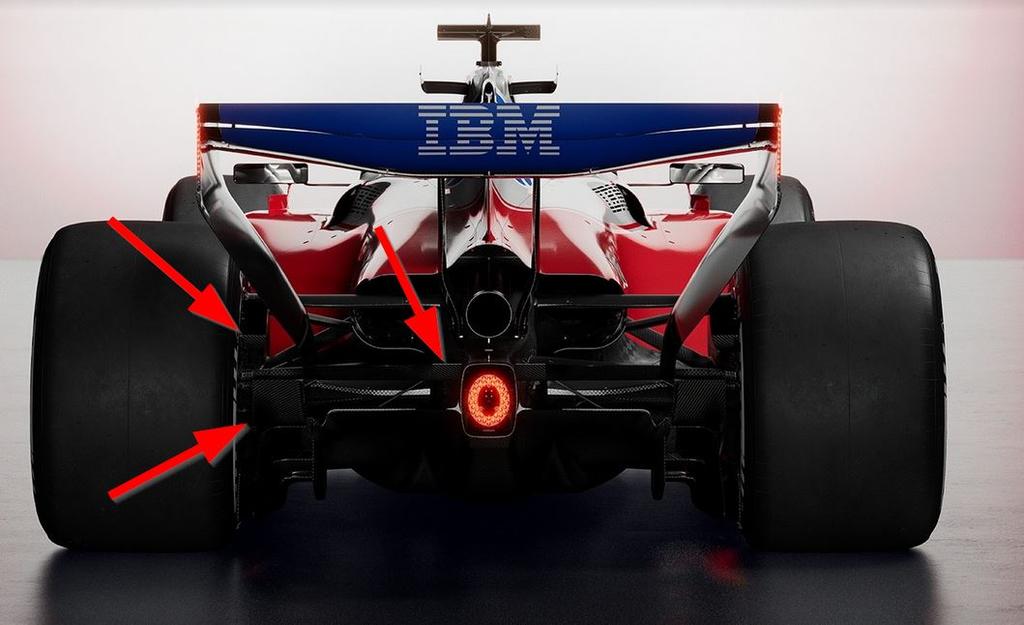
I was hoping that they wouldve developed the wheel covers away from the ugly slab that we've seen for years like merc or RB. Guess they didn't bother or we will see something for Melbourne. At least they could've spent £10 on making it gold or silver!
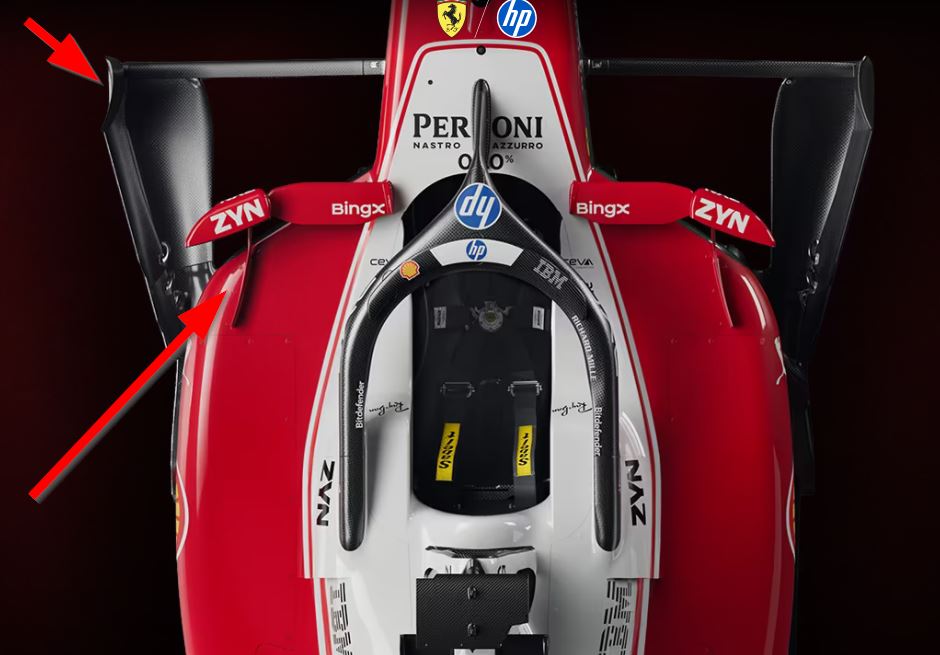
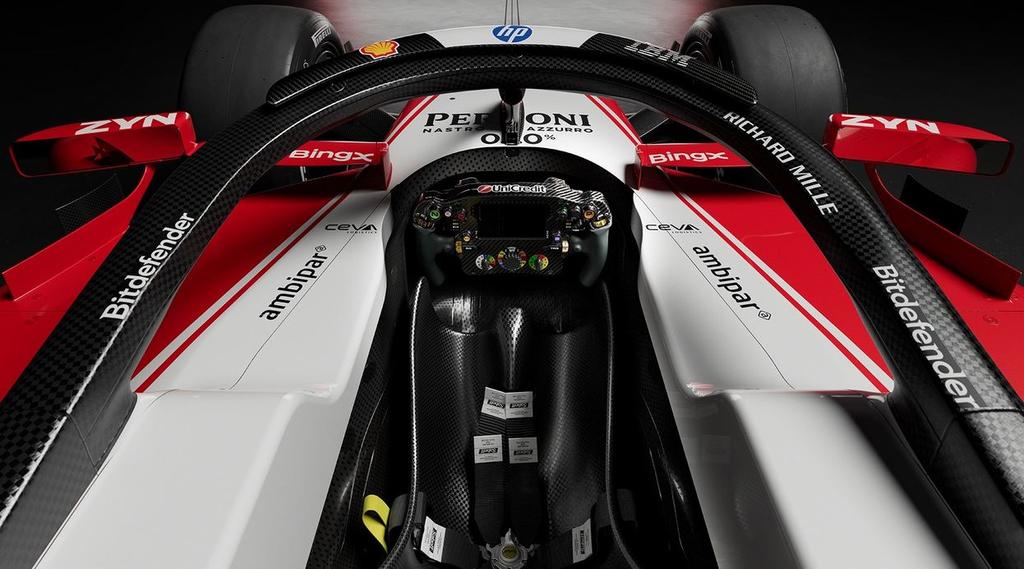
One difference between the Ferrari and Merc is that SF26 has zero centerline cooling. As in previous generations the triangular intake seems to only feed the compressor and doesn't serve a cooling function. SF26 thus has slightly bigger sidepod intakes and maybe not as sleek sidepods as W17, but also less bulk in the center.
LESS centerline cooling, definitely not zero. Take a look back at 2014, most cars at launch had even smaller airboxes than the SF-26, at a considerably lower PU thermal efficiency... There's still a secondary intake at the base of the triangle behind the driver's helmet, and even though the airbox itself is considerably slimmer than the W17's, the bodywork right under/behind it (centerline above the engine and gearbox) is still definitely larger in volume...
There's definitely no radiators in the airbox, and the inlet only has one compartment going to the engine. Maybe there's something in the shoulders. Also I can't see a secondary inlet behind the driver, it's not visible in the pictures.
You can`t say this from outside pictures. Some years ago Renault had a centerline radiator that used the same intake as the engine.
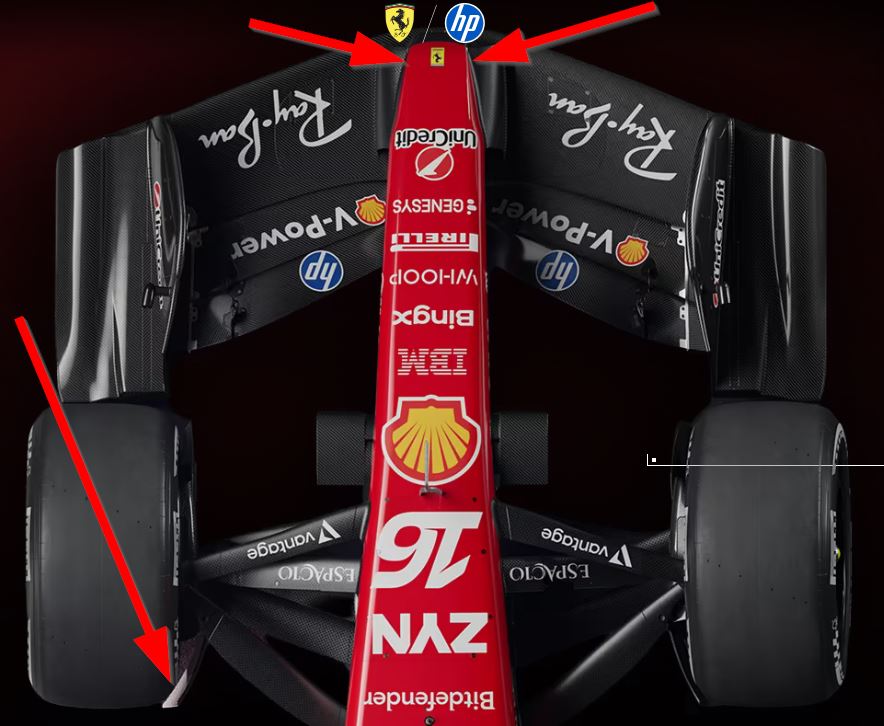
Looks good and has some of the most interesting features I've seen so far this year. The front wing has a very large first element with two small, moving FWAS elements. Proportionally it looks more like a rear wing--very interesting. The large first element will help with structural integrity at the cost of smaller moving flaps. Merc took a different path by mounting the pylons to the center element at the cost of only having one moving flap. Which method will prevail? They both make a lot of sense to me, as they prevent having a large cantilever linked to a smaller first element like we see on the VCARB, RBR, and Alpine.
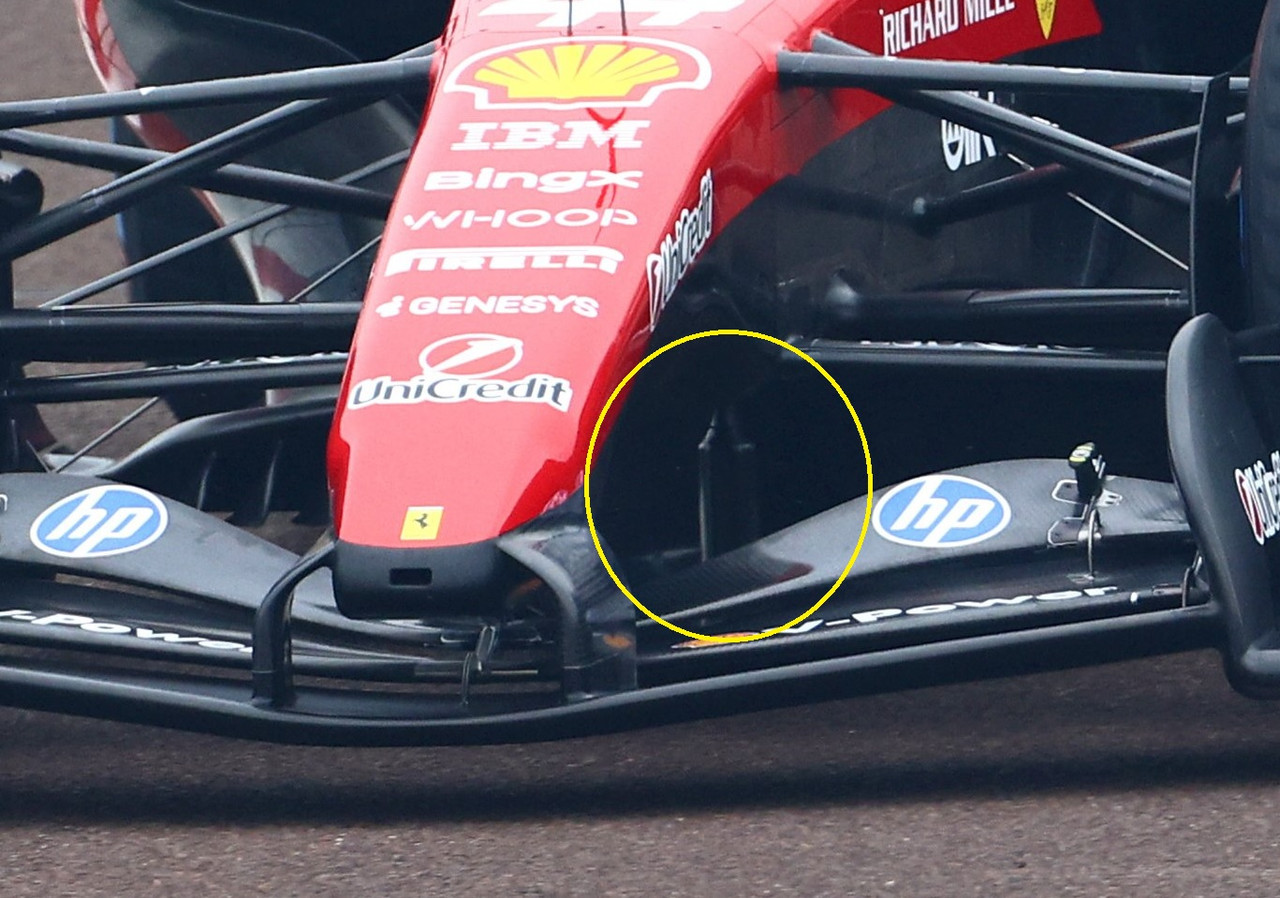
First we've seen of a tension element for the floor foot. Sidepod undercut similar to Merc. The sidepod inlet lip is taking advantage of the ~30mm free area of the monocoque, similar to how they installed their S-duct and how teams generally had winglets at the bases of the front suspension arms. The inlet itself is still normally size, as it has to fit inside of a landscape format letterbox of iirc ~15cm in height. A little extra air pushed into the inlet but mostly I'd call it a vortex generator.
wiktor977, that is the t-tray stay, visible in side views of the car. So they've opted to have it exposed along with a more blunt 'ship's bow.' All teams have gone this route that I've seen, instead of a '22 type pointy, fully enclosed t-tray, which was optional.