- Login or Register
No account yet? Sign up
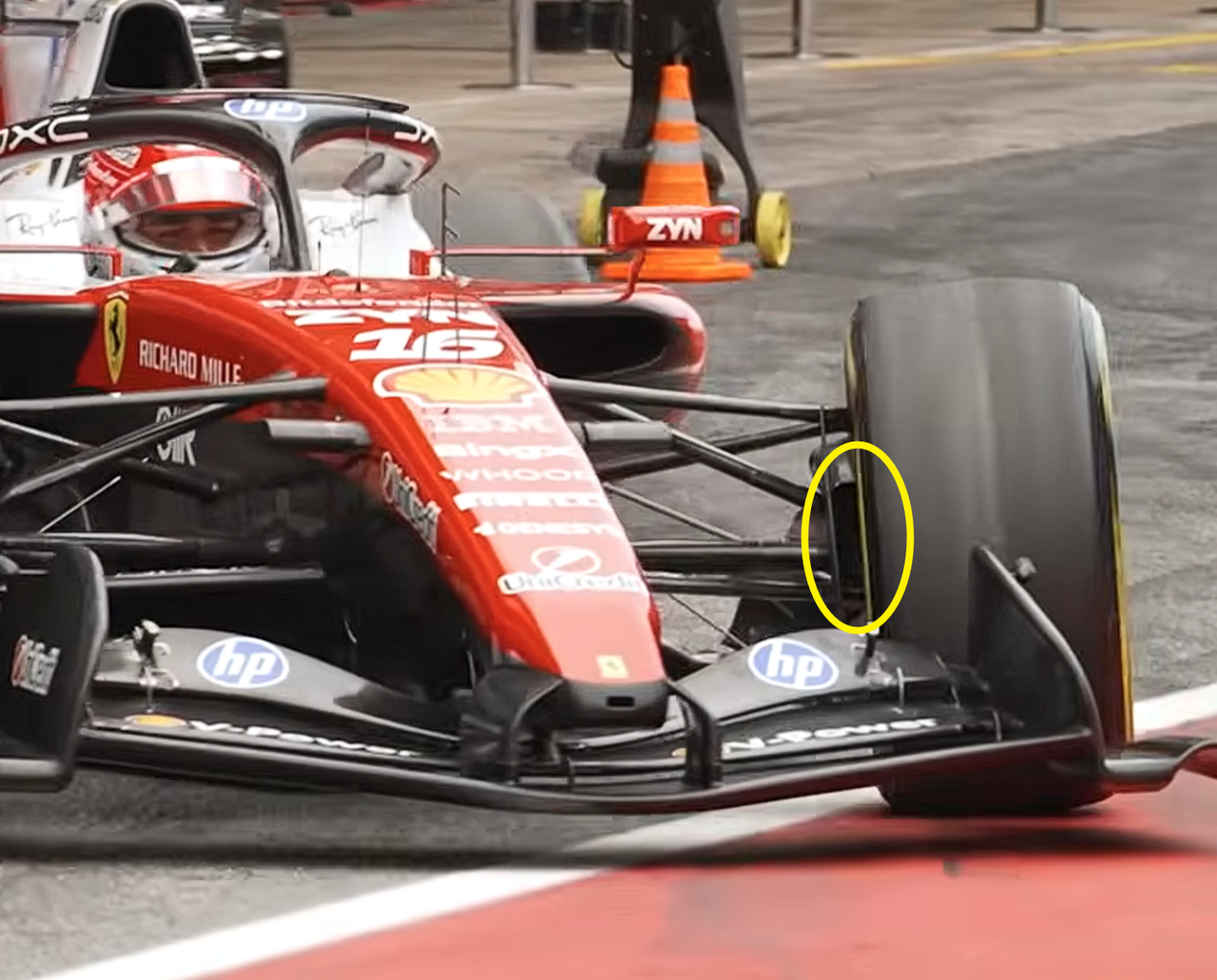
Contacts are embedded in the frame, they engage by fastening mounting bolts. Kind of like when you put back a wireless phone to charge.F1subman25 wrote:So serious question, if the front wing has to be changed during a race, is there a ‘bit’ which needs to be connected to allow the active aero to work? Or will it be as quick a FW change as it was under last regs? Ta
That is true if the system is electrically actuated. If there was some pneumatic or hydraulic system, it would be more complicated.dialtone wrote: ↑27 Jan 2026, 21:44Contacts are embedded in the frame, they engage by fastening mounting bolts. Kind of like when you put back a wireless phone to charge.F1subman25 wrote:So serious question, if the front wing has to be changed during a race, is there a ‘bit’ which needs to be connected to allow the active aero to work? Or will it be as quick a FW change as it was under last regs? Ta
Even in that case, you put the hydraulic part after the nose and electrically actuate the hydraulic piston.matteosc wrote:That is true if the system is electrically actuated. If there was some pneumatic or hydraulic system, it would be more complicated.dialtone wrote: ↑27 Jan 2026, 21:44Contacts are embedded in the frame, they engage by fastening mounting bolts. Kind of like when you put back a wireless phone to charge.F1subman25 wrote:So serious question, if the front wing has to be changed during a race, is there a ‘bit’ which needs to be connected to allow the active aero to work? Or will it be as quick a FW change as it was under last regs? Ta
Cheers guysdialtone wrote: ↑27 Jan 2026, 22:14Even in that case, you put the hydraulic part after the nose and electrically actuate the hydraulic piston.matteosc wrote:That is true if the system is electrically actuated. If there was some pneumatic or hydraulic system, it would be more complicated.
They already have a standard data connection between nose and chassis, they just reuse that since it’s likely something like CAN bus that they can extend and repurpose for whatever they need.
Wouldn't you need pressure from the central hydraulic system to actuate the piston? You could use a hydraulic quick detach connector in that case.dialtone wrote: ↑27 Jan 2026, 22:14Even in that case, you put the hydraulic part after the nose and electrically actuate the hydraulic piston.matteosc wrote:That is true if the system is electrically actuated. If there was some pneumatic or hydraulic system, it would be more complicated.
They already have a standard data connection between nose and chassis, they just reuse that since it’s likely something like CAN bus that they can extend and repurpose for whatever they need.

Or a piston that actuates from the chassis and presses into a hole on the nose. Could easily line that up.Peter Ian Staker wrote: ↑27 Jan 2026, 22:39Wouldn't you need pressure from the central hydraulic system to actuate the piston? You could use a hydraulic quick detach connector in that case.dialtone wrote: ↑27 Jan 2026, 22:14Even in that case, you put the hydraulic part after the nose and electrically actuate the hydraulic piston.matteosc wrote: That is true if the system is electrically actuated. If there was some pneumatic or hydraulic system, it would be more complicated.
They already have a standard data connection between nose and chassis, they just reuse that since it’s likely something like CAN bus that they can extend and repurpose for whatever they need.
Kind of academic though because I suspect most people went for electric motors anyway.
Actually you could have just a small reservoir of oil in the nose and actuate its pump (in the nose) eletrically. In that case the connection would be easy.dren wrote: ↑27 Jan 2026, 22:57Or a piston that actuates from the chassis and presses into a hole on the nose. Could easily line that up.Peter Ian Staker wrote: ↑27 Jan 2026, 22:39Wouldn't you need pressure from the central hydraulic system to actuate the piston? You could use a hydraulic quick detach connector in that case.dialtone wrote: ↑27 Jan 2026, 22:14
Even in that case, you put the hydraulic part after the nose and electrically actuate the hydraulic piston.
They already have a standard data connection between nose and chassis, they just reuse that since it’s likely something like CAN bus that they can extend and repurpose for whatever they need.
Kind of academic though because I suspect most people went for electric motors anyway.
You can have a screw and a small motor rotating the screw to generate pressure for example.Peter Ian Staker wrote:Wouldn't you need pressure from the central hydraulic system to actuate the piston? You could use a hydraulic quick detach connector in that case.dialtone wrote: ↑27 Jan 2026, 22:14Even in that case, you put the hydraulic part after the nose and electrically actuate the hydraulic piston.matteosc wrote: That is true if the system is electrically actuated. If there was some pneumatic or hydraulic system, it would be more complicated.
They already have a standard data connection between nose and chassis, they just reuse that since it’s likely something like CAN bus that they can extend and repurpose for whatever they need.
Kind of academic though because I suspect most people went for electric motors anyway.

minor addition :dialtone wrote: ↑27 Jan 2026, 22:14Even in that case, you put the hydraulic part after the nose and electrically actuate the hydraulic piston.matteosc wrote:That is true if the system is electrically actuated. If there was some pneumatic or hydraulic system, it would be more complicated.
They already have a standard data connection between nose and chassis, they just reuse that since it’s likely something like CAN bus that they can extend and repurpose for whatever they need.

This is one of the more plausible ones.dren wrote: ↑27 Jan 2026, 22:57Or a piston that actuates from the chassis and presses into a hole on the nose. Could easily line that up.Peter Ian Staker wrote: ↑27 Jan 2026, 22:39Wouldn't you need pressure from the central hydraulic system to actuate the piston? You could use a hydraulic quick detach connector in that case.dialtone wrote: ↑27 Jan 2026, 22:14
Even in that case, you put the hydraulic part after the nose and electrically actuate the hydraulic piston.
They already have a standard data connection between nose and chassis, they just reuse that since it’s likely something like CAN bus that they can extend and repurpose for whatever they need.
Kind of academic though because I suspect most people went for electric motors anyway.
There's no other way to do it but a spring, you would need 2 hydraulic circuits, or something very smart, to pull up and down with the same piping. Anyway all of these are likely electromagnetic pistons as it's easiest and most reliable.sucof wrote: ↑28 Jan 2026, 00:54This is one of the more plausible ones.dren wrote: ↑27 Jan 2026, 22:57Or a piston that actuates from the chassis and presses into a hole on the nose. Could easily line that up.Peter Ian Staker wrote: ↑27 Jan 2026, 22:39
Wouldn't you need pressure from the central hydraulic system to actuate the piston? You could use a hydraulic quick detach connector in that case.
Kind of academic though because I suspect most people went for electric motors anyway.
I would say, why not a completely mechanical linkage? The hydraulic line ends at the detachment point, in a metal rod, and in the nose there are no hydraulics, only a carbon fibre rod reaching the wing actuator.
One thing to add, is that the wing has to be moved in both direction. So you either add a spring so it jumps back up (or vice versa) or you have to make your mechanical contact to function in both direction. You can not run probably legally with the wing stuck in either position or getting loose.