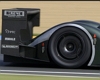
Bold. Audi properly arriving into F1.
AR3-GP wrote: ↑11 Feb 2026, 10:54
wiktor977 wrote: ↑11 Feb 2026, 10:48
But is it vertical? Maybe it's angled towards the floor edge, guiding more air into the floor area
There might be inclination but it's very shallow. If you focus on where the strakes under the floor join to the body (far in front), then it appears nearly vertical.
It's purpose could be what you are saying. Vorticism also proposed this concept (similar enough) in a different thread. He proposed that a blunt wall above the floor would drive a vertical air stream down under the floor. Red Bull has something similar.
In Audi's case, it looks like they have scalloped out a good chunk of the upper section, but retained a low wall above the floor leading edge.
https://i.postimg.cc/gcTPpqXr/image.png
I think what we might be seeing is a thick, rounded floor leading edge extension provided by the sidepod, with a steep downward scoop shape pushing air onto the FLEDs. There are some changes to the color of the bodywork in that region obscuring assessment.
There is an interesting trade off here (if I fully understand the coordinates in this region). There is some freedom to locating the forward location of the floor's front edge. A window of placement fore to aft which is also the tallest part of the front floor legality box, which is also in the same region as the FLED legality box. The farther you peel back the floor, the more you expose the FLEDs, as visible here on the R26, but this also limits how tall the ramp can be. Unless! You use the sidepod as the new floor edge, in which case you gain back the ramp, but even taller, while gaining more-exposed FLEDs, as opposed to more triangular FLEDs fully welded to the floor ramp roof.
Creates some lift but you get a powerful downwashing current to, as I said in July, "...power the FLEDs."
Interesting concept. The FLED vortexes are probably much stronger. Let's see if it works for them.