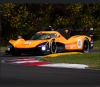
Car looks fast, the team is doing their programme, no major issue, perfect day.
I'm sure we'll start to hear McLaren looks planted and ominous by tonight.

- Login or Register
No account yet? Sign up
Toto has already started thisFittingMechanics wrote: ↑11 Feb 2026, 18:41
I'm sure we'll start to hear McLaren looks planted and ominous by tonight.

LionsHeart wrote: ↑11 Feb 2026, 18:40Mate, thank you so much for this graphics!SilviuAgo wrote: ↑11 Feb 2026, 18:29https://pbs.twimg.com/media/HA4p60BawAA ... =4096x4096
Norris sets the fastest time and Leclerc improves on the final runs. It's clear how power delivery makes a huge difference, even more so than the deltas in the corners at the moment.
Verstappen starts off strong in the lap, Lando makes a mistake in T4, Leclerc makes a great LiCo right at 4. Then McLaren comes out in S2 with great acceleration up to 9. Ferrari is like RedBull in the middle sector. Then Max pushes hard at 12, but Lando gains a 14-point lead on him and Charles on the final straight and takes P1. Who knows if this direct dependence on power strategies will continue or if they will gradually become more aligned and we'll be talking about cornering speed again. Let's see

 Thank you also! Is a pleasure to share!
Yes he did though I believe he used C3 later and didn't improve (maybe different program. He was not doing more than 2-3 laps at a time)
Yes, I confirm, Verstappen's top speed is 344 km/h, crazy. Then he seems to lose due to the lower battery. But we're still just getting started.FittingMechanics wrote: ↑11 Feb 2026, 19:19We need to get used to these differences, it shows when someone uses the battery. Max at the starting straights and Lando later on.

Apparently the Red Bull can deploy consistently over race laps as it does on a fast lap, Toto suggesting the Merc cannot.LionsHeart wrote: ↑11 Feb 2026, 06:56Indeed. That makes a lot of sense. But I believe that to avoid losing a significant portion of battery charge, drivers will have to use significantly less power to maintain top speed on the straights. This will allow them to set consistent laps without becoming a complete slouch. Therefore, I believe race pace should be significantly lower than qualifying. Again, I don't know how much energy can be recuperated in a single lap. What the technology is capable of and what the regulations limit.mwillems wrote: ↑10 Feb 2026, 19:08No actual idea about race pace. In part it will be determined by how many active Aero zones there will be, and at this point the FIA have declined to say anything. We'll find out shortly for Australia. If most straights have active aero then teams can run more wing for the corners (If appropriate) and get downforce back. Quicker on straights and quicker in corners than if there are less active zones.LionsHeart wrote: ↑10 Feb 2026, 18:43
Well, on one fast lap, yes, this year's cars will be faster. But in a race? So far, I'm getting the feeling the race pace will be significantly closer to the 2016 cars. But that's just a feeling.
Some of it will be circuit specific. How will low speed circuits fare if we are relying on mechanical grip and not so much downforce or speed?
I think the FIA said more active Aero zones than there were DRS zones and Australia had 3 DRS, for instance. You could add an active zone between 5 and 6 and have most of the circuits meaningful drag affected straights as active zones.
Since active zones are available (Conditions permitting) throughout a race, race lap pace won't be so far from Q lap pace, so perhaps the race laps will be a bit faster than 2016.
I agree. If there are many active aerodynamic zones, then less battery power will be spent on overcoming drag. In that case, rainy races will be even more chaotic.

