Full V6gearboxtrouble wrote: ↑12 Feb 2026, 04:50That seems insanely early. Was it a single cylinder concept or the full V6? If it was the full V6 then that explains why they're so far ahead of where I thought they'd be by now.
It's been reported that RBPT had nothing to do with production of the Honda PU. They "just" assisted operationally trackside.CHT wrote: ↑12 Feb 2026, 04:54This is perhaps the timeline of RBPT establishment
2021 - RBPT established without production of Honda engine
2022 - RBPT started producing Honda engine with help from Honda / RBPT26 started recruitment for R&D & production personnel
2023 - RBPT started transferring engine production and R&D function to RBPT26
2024 - RBPT26 take over almost all engine production and R&D function without Honda
When RBPT was established in 2021 they have only 9 employees in production department. By 2022 the production department expanded to 121 employeelio007 wrote: ↑12 Feb 2026, 07:08It's been reported that RBPT had nothing to do with production of the Honda PU. They "just" assisted operationally trackside.CHT wrote: ↑12 Feb 2026, 04:54This is perhaps the timeline of RBPT establishment
2021 - RBPT established without production of Honda engine
2022 - RBPT started producing Honda engine with help from Honda / RBPT26 started recruitment for R&D & production personnel
2023 - RBPT started transferring engine production and R&D function to RBPT26
2024 - RBPT26 take over almost all engine production and R&D function without Honda
I don't know what the production staff did at RBPT.
The amount of misinformation you're spewing on this forum is ridiculous. Red Bull never produced a Honda engine. Honda did, and it was rebadged to a RBPT. RBPT only did some maintenance.CHT wrote: ↑12 Feb 2026, 07:34When RBPT was established in 2021 they have only 9 employees in production department. By 2022 the production department expanded to 121 employeelio007 wrote: ↑12 Feb 2026, 07:08It's been reported that RBPT had nothing to do with production of the Honda PU. They "just" assisted operationally trackside.CHT wrote: ↑12 Feb 2026, 04:54
This is perhaps the timeline of RBPT establishment
2021 - RBPT established without production of Honda engine
2022 - RBPT started producing Honda engine with help from Honda / RBPT26 started recruitment for R&D & production personnel
2023 - RBPT started transferring engine production and R&D function to RBPT26
2024 - RBPT26 take over almost all engine production and R&D function without Honda
I don't know what the production staff did at RBPT.
RBPTH001 was the first engine that is produced by RBPT for 2023 season,
Manufacturer: Honda RBPT (Red Bull Powertrains)
Engine name: Honda RBPTH001
Configuration: 90° V6 with Turbocharger, MGU-K and MGU-H
Engine displacement: 1,600 cc (98 cu in)
Weight: 150kg
Max RPM: 15,000 RPM
https://honda.racing/f1/machines/pu-rbpth001
You are right to say that RBPT didn't produce engine for 2021 and 2022 seasons.
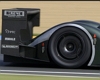
It's a clever way to misquote things. It's production and operation. Not development. I did learn that ESS was done by RBPT, but since there was no offical IP transfer, I am sure Honda had many things in play to keep their technology separate.CHT wrote: ↑12 Feb 2026, 12:28Correction.
Honda Japan manufacture and supply both ICE and ESS of the PU for RBR till 2022
From 2023 onwards, RBPT has taken over the production and development of ESS while relying of Honda for the ICE till 2025.
So now it make sense as to why RBPT employs 121 employee in 2022 before transferring them over to RBPT 2026.
IMO this is a very smart move by RBR because the ESS part of the PU is not worth 50% of the total power delivery for 2026.
Sorry for the confusion
In 2022, RBPT has got 221 employee in the R&D department. What do you reckon they were developing? Honda only has got RBR as partner in F1 till 2025. what is there for Honda to develop ESS without an actual F1 team testing their development?f1isgood wrote: ↑12 Feb 2026, 12:41It's a clever way to misquote things. It's production and operation. Not development. I did learn that ESS was done by RBPT, but since there was no offical IP transfer, I am sure Honda had many things in play to keep their technology separate.CHT wrote: ↑12 Feb 2026, 12:28Correction.
Honda Japan manufacture and supply both ICE and ESS of the PU for RBR till 2022
From 2023 onwards, RBPT has taken over the production and development of ESS while relying of Honda for the ICE till 2025.
So now it make sense as to why RBPT employs 121 employee in 2022 before transferring them over to RBPT 2026.
IMO this is a very smart move by RBR because the ESS part of the PU is not worth 50% of the total power delivery for 2026.
Sorry for the confusion
pantherxxx wrote: ↑12 Feb 2026, 16:42Not exactly. MGUs of the previous gen F1 cars, used 3-phase electric motors. And even the latest gen Formula E cars use 3-phased electric motors. Ford Supervan 4.2 has 6-phased electric motors. A 6-phase motor divides the input current between two groups of three phases. This results in much greater power density and much better torque delivery. This is state of the art EV technology, way above anything else that was featured in previous gen F1 cars. This may perhaps explain why Max can so efficiently utilize the first gear harvesting technique.
And talking about how 75 year old transformers are the same as the state of the art electric tech that Ford developed for EV racing? Nonsensical. In transformers the dielectric oil just sits there, acting as an insulator. It just sits around. The chemical makeup of the oil and the rate of response of silicon carbide inverters needed to optimize high performing EV racing weren't even invented 10 years ago, let alone 75. In Ford Supervan they're running ultra-light pouch cells submerged in a compact, pressurized system under racing loads. If Ford transferred that battery cell and electric racing tech know-how to Red Bull, that could explain that superior energy recovery and delivery performance that Toto was talking about.
Yes. Although I couldn't find any specific confirmation about Ford actually bringing this technology to F1, they did explicitly say that they will help Red Bull on the electric side. A 6 phase motor can produce smoother torque output, because it produces lower torque ripple. And because total current is split across more windings, you can use more aggressive torque maps, without thermal overload.AR3-GP wrote: ↑13 Feb 2026, 01:51This didn't deserve to be hidden in the pre-season thread. The discussion about the 6-phase motor used in the Ford Supervan is especially interesting. I know Mercedes used a 3-phase motor in the previous regulations. This 6-phase technology seems right up the F1 ally in terms of tech transfer from Ford to RBPT (although Ford outsourced the tech in the Supervan). The 6-phase motor permits greater efficiency and higher power density. So it's ideally suited for tight packaging requirements and the higher power output demands of the 2026 regulations.
pantherxxx wrote: ↑12 Feb 2026, 16:42Not exactly. MGUs of the previous gen F1 cars, used 3-phase electric motors. And even the latest gen Formula E cars use 3-phased electric motors. Ford Supervan 4.2 has 6-phased electric motors. A 6-phase motor divides the input current between two groups of three phases. This results in much greater power density and much better torque delivery. This is state of the art EV technology, way above anything else that was featured in previous gen F1 cars. This may perhaps explain why Max can so efficiently utilize the first gear harvesting technique.
And talking about how 75 year old transformers are the same as the state of the art electric tech that Ford developed for EV racing? Nonsensical. In transformers the dielectric oil just sits there, acting as an insulator. It just sits around. The chemical makeup of the oil and the rate of response of silicon carbide inverters needed to optimize high performing EV racing weren't even invented 10 years ago, let alone 75. In Ford Supervan they're running ultra-light pouch cells submerged in a compact, pressurized system under racing loads. If Ford transferred that battery cell and electric racing tech know-how to Red Bull, that could explain that superior energy recovery and delivery performance that Toto was talking about.
Knowing the ambitious culture that resides within RBR, they must have done it.pantherxxx wrote: ↑13 Feb 2026, 06:01Yes. Although I couldn't find any specific confirmation about Ford actually bringing this technology to F1, they did explicitly say that they will help Red Bull on the electric side. A 6 phase motor can produce smoother torque output, because it produces lower torque ripple. And because total current is split across more windings, you can use more aggressive torque maps, without thermal overload.AR3-GP wrote: ↑13 Feb 2026, 01:51This didn't deserve to be hidden in the pre-season thread. The discussion about the 6-phase motor used in the Ford Supervan is especially interesting. I know Mercedes used a 3-phase motor in the previous regulations. This 6-phase technology seems right up the F1 ally in terms of tech transfer from Ford to RBPT (although Ford outsourced the tech in the Supervan). The 6-phase motor permits greater efficiency and higher power density. So it's ideally suited for tight packaging requirements and the higher power output demands of the 2026 regulations.
pantherxxx wrote: ↑12 Feb 2026, 16:42
Not exactly. MGUs of the previous gen F1 cars, used 3-phase electric motors. And even the latest gen Formula E cars use 3-phased electric motors. Ford Supervan 4.2 has 6-phased electric motors. A 6-phase motor divides the input current between two groups of three phases. This results in much greater power density and much better torque delivery. This is state of the art EV technology, way above anything else that was featured in previous gen F1 cars. This may perhaps explain why Max can so efficiently utilize the first gear harvesting technique.
And talking about how 75 year old transformers are the same as the state of the art electric tech that Ford developed for EV racing? Nonsensical. In transformers the dielectric oil just sits there, acting as an insulator. It just sits around. The chemical makeup of the oil and the rate of response of silicon carbide inverters needed to optimize high performing EV racing weren't even invented 10 years ago, let alone 75. In Ford Supervan they're running ultra-light pouch cells submerged in a compact, pressurized system under racing loads. If Ford transferred that battery cell and electric racing tech know-how to Red Bull, that could explain that superior energy recovery and delivery performance that Toto was talking about.
And a 6-phase system doesn’t just smooth torque, it significantly improves regenerative braking fidelity and controllability. But we don't know if they actually made that work in the Red Bull's MGU-K like in the Supervan. I understand it's speculation, since Ford didn't publicly confirm that for the F1 engine. Ford just said they help with the electric side, and Jim Farley (Ford CEO) talked about tech transfer. So who knows? I hope they did, and what Toto said is true.