
- Login or Register
No account yet? Sign up

They're all like this, in threading the exhaust out from turbo outlet to its regulated exit position, and were the same in previous regulatory design. The top of gearbox ""bellhousing" is dipped downward to allow the pipe to come out from quite low mounted turbo.PlatinumZealot wrote: ↑14 Feb 2026, 03:51I am more impressed by how they exhaust pipe is intermingling among the suspension parts than the pylon mounted arms.FNTC wrote: ↑12 Feb 2026, 21:31Found these now, from Tobi Grüner:
https://pbs.twimg.com/media/HA4jHXQWIAA ... ame=medium
https://pbs.twimg.com/media/HA4jHgRbUAE ... ame=medium
https://pbs.twimg.com/media/HA4jHVIWAAA ... ame=medium
https://pbs.twimg.com/media/HA4jHhtXUAA ... ame=medium

"they are all like this"Farnborough wrote: ↑14 Feb 2026, 10:55They're all like this, in threading the exhaust out from turbo outlet to its regulated exit position, and were the same in previous regulatory design. The top of gearbox ""bellhousing" is dipped downward to allow the pipe to come out from quite low mounted turbo.PlatinumZealot wrote: ↑14 Feb 2026, 03:51I am more impressed by how they exhaust pipe is intermingling among the suspension parts than the pylon mounted arms.FNTC wrote: ↑12 Feb 2026, 21:31Found these now, from Tobi Grüner:
https://pbs.twimg.com/media/HA4jHXQWIAA ... ame=medium
https://pbs.twimg.com/media/HA4jHgRbUAE ... ame=medium
https://pbs.twimg.com/media/HA4jHVIWAAA ... ame=medium
https://pbs.twimg.com/media/HA4jHhtXUAA ... ame=medium
The images have very good detail of suspension component though, the "bellcrank" in quite organic design form with much material not there to make the skeleton type structure particularly well shown here.
The torsion bar location can be seen there (travelling concentric and inside the bellcrank assembly) from rear of car and almost horizontal with fairly minor inclination as it comes toward camera position, so more horizontal than vertical and probably to keep the "bottom" end up above the logical placement of diffuser design. This setup primarily driven by how narrow a space they want the gearbox to occupy in that area, hence the favoured shift to push rod and convenience to location favouring more the underfloor aerodynamic requirements.

I think you've read my responses wrong, the first paragraph is reference to your statement about exhaust routing, clearly. And completely true.PlatinumZealot wrote: ↑14 Feb 2026, 11:52"they are all like this"Farnborough wrote: ↑14 Feb 2026, 10:55They're all like this, in threading the exhaust out from turbo outlet to its regulated exit position, and were the same in previous regulatory design. The top of gearbox ""bellhousing" is dipped downward to allow the pipe to come out from quite low mounted turbo.PlatinumZealot wrote: ↑14 Feb 2026, 03:51
I am more impressed by how they exhaust pipe is intermingling among the suspension parts than the pylon mounted arms.
The images have very good detail of suspension component though, the "bellcrank" in quite organic design form with much material not there to make the skeleton type structure particularly well shown here.
The torsion bar location can be seen there (travelling concentric and inside the bellcrank assembly) from rear of car and almost horizontal with fairly minor inclination as it comes toward camera position, so more horizontal than vertical and probably to keep the "bottom" end up above the logical placement of diffuser design. This setup primarily driven by how narrow a space they want the gearbox to occupy in that area, hence the favoured shift to push rod and convenience to location favouring more the underfloor aerodynamic requirements.
What a sweeping statement!
My old dusty memory recalls that most of the pushrod cars have the" upper" suspsion mechanisms fully on top of the exhaust pipe where it comes out the bellhousing. I don't recall any like this with the upper parts comingling around the exhaust barrel on top of the gearbox.
Post some evidence of suspensions like this please!



I believe my post in question was very clear since the topic was about the bellcrank and the related mechanisms.Farnborough wrote: ↑14 Feb 2026, 12:42I think you've read my responses wrong, the first paragraph is reference to your statement about exhaust routing, clearly. And completely true.PlatinumZealot wrote: ↑14 Feb 2026, 11:52"they are all like this"Farnborough wrote: ↑14 Feb 2026, 10:55
They're all like this, in threading the exhaust out from turbo outlet to its regulated exit position, and were the same in previous regulatory design. The top of gearbox ""bellhousing" is dipped downward to allow the pipe to come out from quite low mounted turbo.
The images have very good detail of suspension component though, the "bellcrank" in quite organic design form with much material not there to make the skeleton type structure particularly well shown here.
The torsion bar location can be seen there (travelling concentric and inside the bellcrank assembly) from rear of car and almost horizontal with fairly minor inclination as it comes toward camera position, so more horizontal than vertical and probably to keep the "bottom" end up above the logical placement of diffuser design. This setup primarily driven by how narrow a space they want the gearbox to occupy in that area, hence the favoured shift to push rod and convenience to location favouring more the underfloor aerodynamic requirements.
What a sweeping statement!
My old dusty memory recalls that most of the pushrod cars have the" upper" suspsion mechanisms fully on top of the exhaust pipe where it comes out the bellhousing. I don't recall any like this with the upper parts comingling around the exhaust barrel on top of the gearbox.
Post some evidence of suspensions like this please!
My second paragraph, although related, doesn't reference your comments but notes "The images have very good detail of suspension component though, " going on to describe the components in the images posted in thread.
I don't have any image evidence as when I saw these elements first hand taking photographs was specifically forbidden
There's plenty in threads of last year though, if you need confirmation.


You named one item specifically, the exhaust pipe, that's clear. My comment of "they are all like this" is entirely true.PlatinumZealot wrote: ↑14 Feb 2026, 14:18I believe my post in question was very clear since the topic was about the bellcrank and the related mechanisms.Farnborough wrote: ↑14 Feb 2026, 12:42I think you've read my responses wrong, the first paragraph is reference to your statement about exhaust routing, clearly. And completely true.PlatinumZealot wrote: ↑14 Feb 2026, 11:52
"they are all like this"
What a sweeping statement!
My old dusty memory recalls that most of the pushrod cars have the" upper" suspsion mechanisms fully on top of the exhaust pipe where it comes out the bellhousing. I don't recall any like this with the upper parts comingling around the exhaust barrel on top of the gearbox.
Post some evidence of suspensions like this please!
My second paragraph, although related, doesn't reference your comments but notes "The images have very good detail of suspension component though, " going on to describe the components in the images posted in thread.
I don't have any image evidence as when I saw these elements first hand taking photographs was specifically forbidden
There's plenty in threads of last year though, if you need confirmation.
" demonstrates your own ineptness and isn't needed. A simple question asking for clarification would be appropriate.
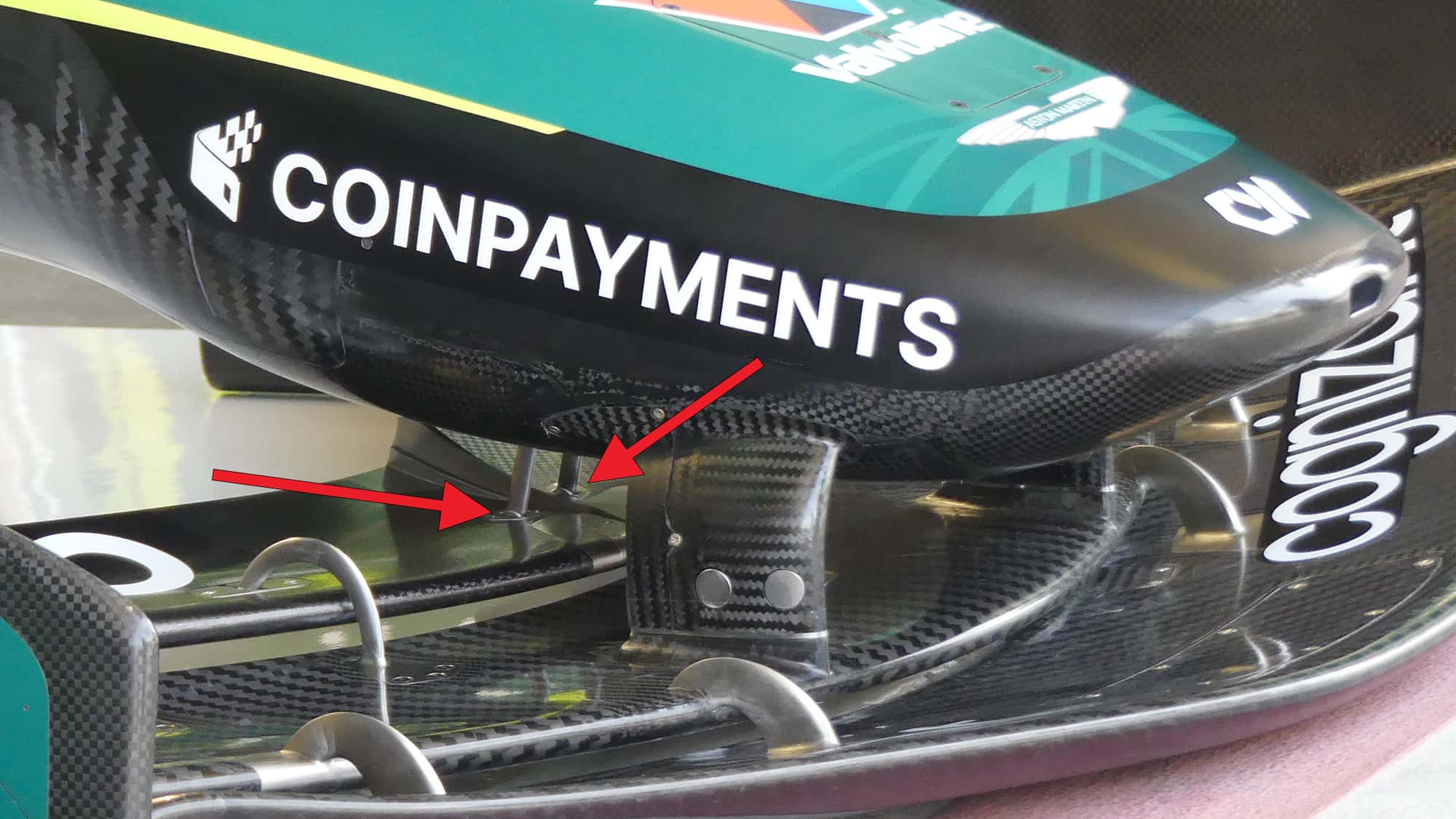
Probably I am missing or misreading something, but how can the last flap rotate if it is connected with a metal bracket to the fixed flap? Or is the connection point on the pivot?MtthsMlw wrote: ↑14 Feb 2026, 15:04Front wing details and adjustment
https://img.auto-motor-und-sport.de/_/b ... 271770.jpg
[...]
The connection to the 3rd flap is hinged. The hinge is coincident with the rotation axis of the flap.matteosc wrote: ↑14 Feb 2026, 19:45Probably I am missing or misreading something, but how can the last flap rotate if it is connected with a metal bracket to the fixed flap? Or is the connection point on the pivot?MtthsMlw wrote: ↑14 Feb 2026, 15:04Front wing details and adjustment
https://img.auto-motor-und-sport.de/_/b ... 271770.jpg
[...]
 They really think Newey build a shitbox