A place to discuss the characteristics of the cars in Formula One, both current as well as historical. Laptimes, driver worshipping and team chatter do not belong here.
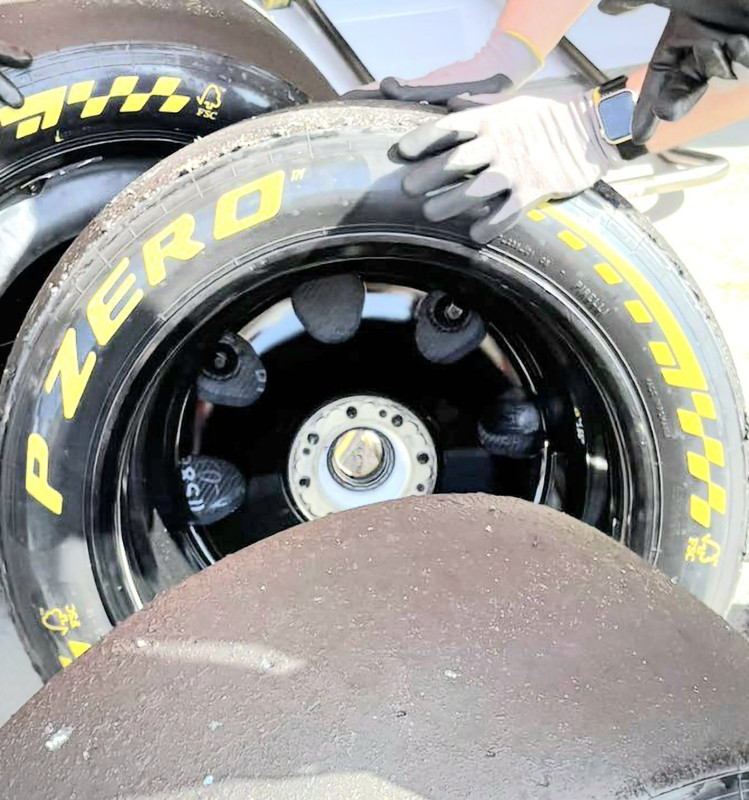
Did anyone happen to see the picture on one of the blogs or social media that showed the inside of the Ferrari front wheel? I remember seeing it and it was very similar to this on the inside. https://i.postimg.cc/GpbM6SJX/image.png
I thought it was interesting, but can't find the picture anymore.
New demands on the front and rear brakes with the additional regeneration. Perhaps the front brakes have a mode to reduce clamping force so that most of kinetic energy is taken by the rear. It means in this mode longer braking distance and that it will be important to keep the front warm.
Are you describing the brake bias?
Yes but the range might be preset within a certain charging mode.
Did anyone happen to see the picture on one of the blogs or social media that showed the inside of the Ferrari front wheel? I remember seeing it and it was very similar to this on the inside. https://i.postimg.cc/GpbM6SJX/image.png
I thought it was interesting, but can't find the picture anymore.
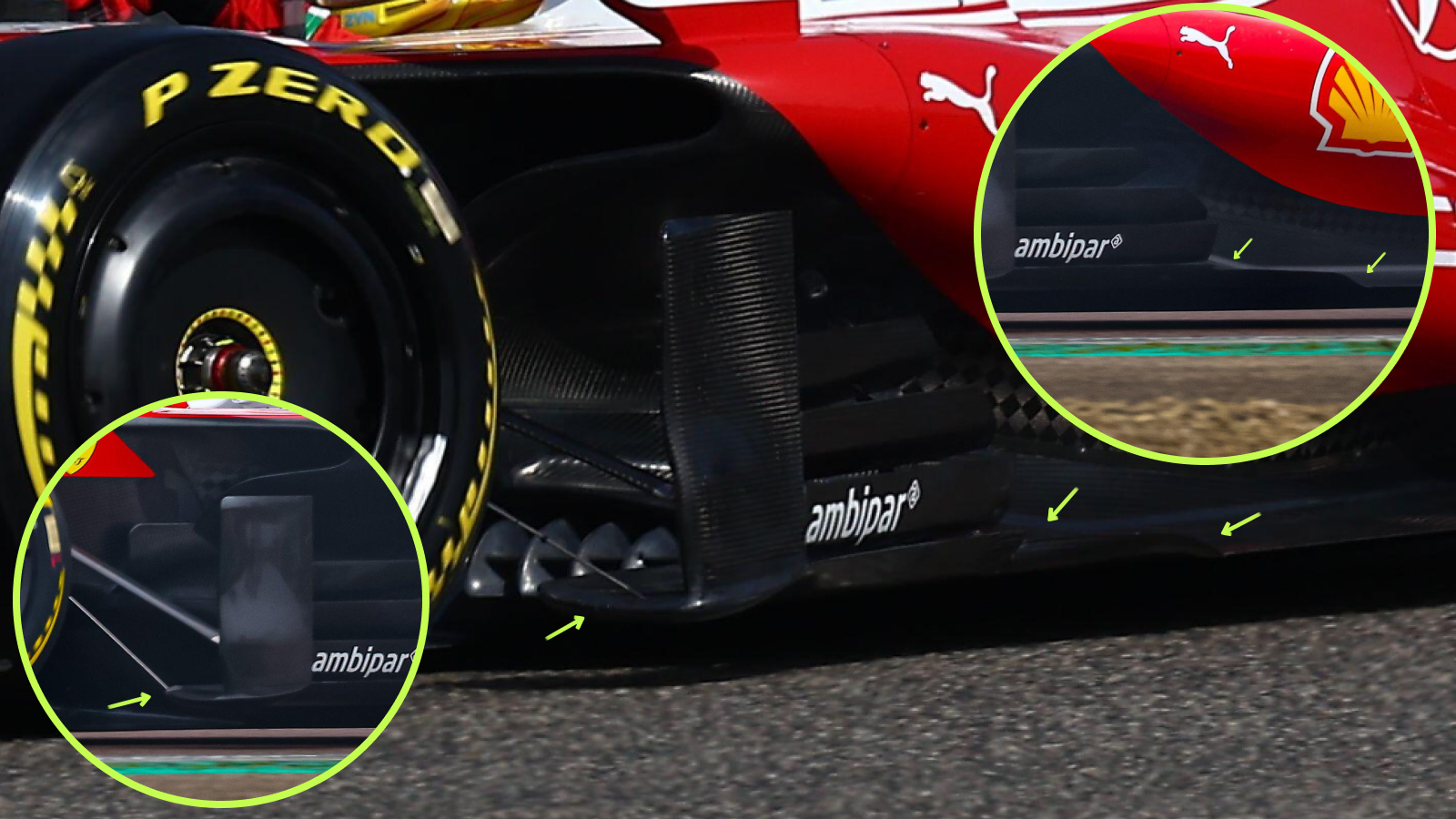
Interesting little flicks on the corner of the diffuser. It’s been pretty standard to indent the corners to help flow attachment, but they’ve used the loss of volume to add a little turning vane.
This is the most interesting diffuser of the grid at the moment. The middle wings are not unique to Ferrari, but they're the only ones that have it fully connected with the top diffuser edge like this.
I think what's happening at the edges is quite a bit more interesting in my opinion. I think Ferrari are the only ones who use the diffuser winglets in this manner where it looks like they have an "extended" diffuser sidewall at the exit.
Interesting little flicks on the corner of the diffuser. It’s been pretty standard to indent the corners to help flow attachment, but they’ve used the loss of volume to add a little turning vane.
This is the most interesting diffuser of the grid at the moment. The middle wings are not unique to Ferrari, but they're the only ones that have it fully connected with the top diffuser edge like this.
I think what's happening at the edges is quite a bit more interesting in my opinion. I think Ferrari are the only ones who use the diffuser winglets in this manner where it looks like they have an "extended" diffuser sidewall at the exit.
To me it looks like the Haas is doing the same "extended" diffuser trick too.
Interesting video.
Looking at their sliding out of the corners, I feel they are not under or over steered, but simply they have too much torque when accelerating out of the corners...?
Hence the rear wheels loose grip slightly, and starts to go everywhere, that is what the drivers try to correct.
To me it seems all these are happening after the most of the direction change of the cornering has been done.
So they might have a software issue to fix to have a power deployment that matches the grip better...
Interesting video.
Looking at their sliding out of the corners, I feel they are not under or over steered, but simply they have too much torque when accelerating out of the corners...?
Hence the rear wheels loose grip slightly, and starts to go everywhere, that is what the drivers try to correct.
To me it seems all these are happening after the most of the direction change of the cornering has been done.
So they might have a software issue to fix to have a power deployment that matches the grip better...
I imagine the deployment will be one of the biggest thing that changes over testing, so they will find they can deploy less during acceleration phases and still be fast because its easier for the drivers to manage.
I was most interested in the videos rumour the suspension components are "anisotropic" and so needed tweaking to improve grip and traction, which might explain the drive and braking issues LH had?
Anisotropic carbon fibre, another name for weave layup or is there more?
If this is true (and I have zero expertise to opine on the likelihood), presumably it’s something we’ll be able to observe? Ie the suspension would be visually different under different loads.
What I will say, which could fit this story, is that it was previously said that Ferrari were waiting on the ok from the FIA before bringing some of their updates. Now you could guess that the “diffuser extension” could be one such thing - ie will they approve Ferrari’s interpretation to basically get a bigger diffuser - but this one could also fit in that category. Again, if true, you would imagine rival teams would call this a “moveable aerodynamic device” and push for some kind of rigidity test. That certainly would fit with Fred seeming to walk back his objection to the compression ratio thing a little bit (since it’s a similar conceptual thing around measurement vs intention).
Did anyone happen to see the picture on one of the blogs or social media that showed the inside of the Ferrari front wheel? I remember seeing it and it was very similar to this on the inside. https://i.postimg.cc/GpbM6SJX/image.png
I thought it was interesting, but can't find the picture anymore.
Anisotropic carbon fibre, another name for weave layup or is there more?
If this is true (and I have zero expertise to opine on the likelihood), presumably it’s something we’ll be able to observe? Ie the suspension would be visually different under different loads.
What I will say, which could fit this story, is that it was previously said that Ferrari were waiting on the ok from the FIA before bringing some of their updates. Now you could guess that the “diffuser extension” could be one such thing - ie will they approve Ferrari’s interpretation to basically get a bigger diffuser - but this one could also fit in that category. Again, if true, you would imagine rival teams would call this a “moveable aerodynamic device” and push for some kind of rigidity test. That certainly would fit with Fred seeming to walk back his objection to the compression ratio thing a little bit (since it’s a similar conceptual thing around measurement vs intention).
Based on the description it is a matter of layup direction, which is pretty common in carbon fiber components. Carbon fiber is anisotropic by nature and there is a lot of work done to "tune" its flexibility in different directions.
Its application to suspension arms is however potentially innovative, it all depends on the extent in which this is exploited.