chatgpt explanation of the situation. This is why, newly proposed hot and cold test might hurt all PU manufacturers and hence might not get required voting to pass it.
##

What the regulation says
The **Fédération Internationale de l'Automobile** mandates a **maximum 16:1 compression ratio** for the 2026 power units.
Compression ratio depends on:
* Combustion chamber volume
* Piston crown geometry
* Clearances
* And how all of that changes with **temperature (thermal expansion)**
---
##

What “hot-only test” would allow
If the FIA only tests engines at **operating temperature (~130°C)**:
Manufacturers could design the engine so that:
*

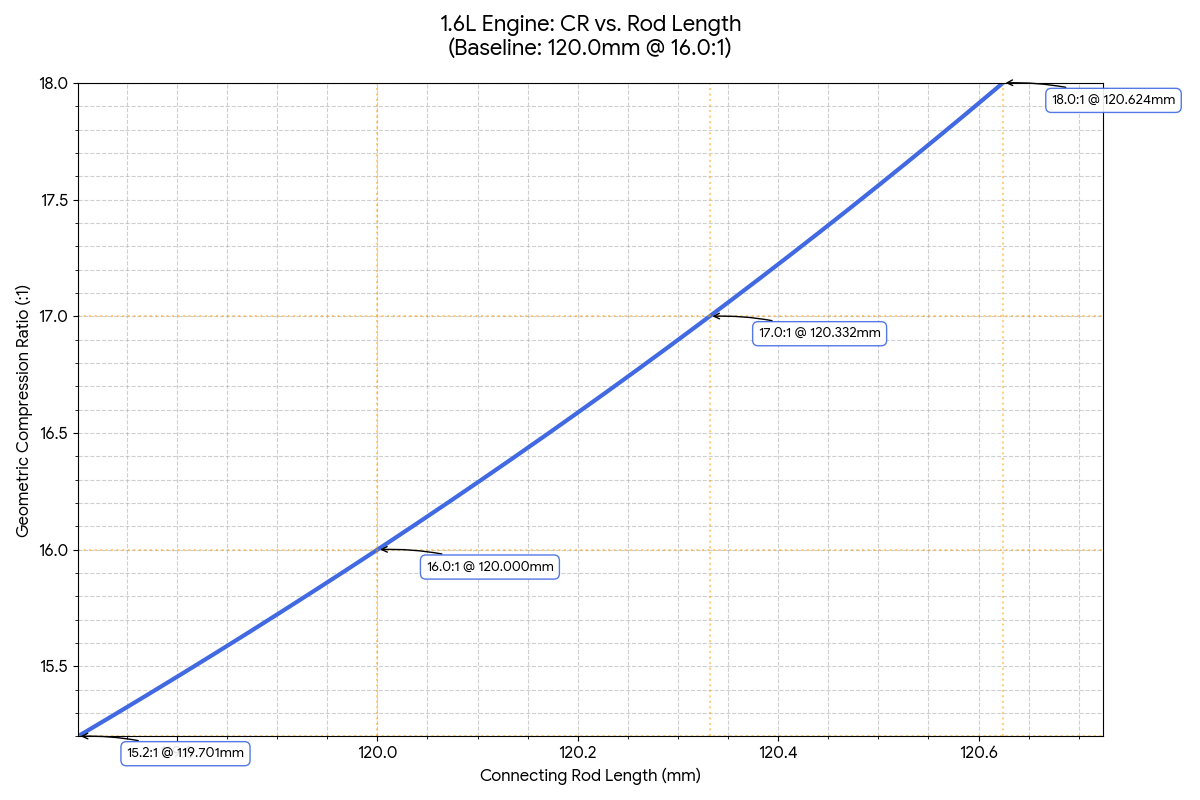
When cold → compression ratio is **above 16:1** (e.g. 16.2:1)
*

When hot → thermal expansion causes chamber volume to increase slightly, bringing it **down to exactly 16:1**
In that scenario:
* The engine passes inspection (because inspection is hot-only)
* But the geometric design is technically outside the limit at cold
So they would be optimizing the engine assuming it will only ever be measured hot.
---
##

Why that might be attractive
Designing it slightly over 16:1 when cold could allow:
* More aggressive combustion chamber geometry
* Tighter clearances
* Potential efficiency gains
* Better combustion shaping at operating temperature
Basically:
They tune the engine so that **its “true performance state” (hot) sits right on the legal limit**, even if it technically exceeds it when cold.
---
##

Why adding a cold test blocks this
If the FIA requires **both cold AND hot compliance**, then:
* You cannot exceed 16:1 in either condition.
* You lose the ability to “design through temperature.”
* You must stay under the limit across the full thermal range.
That removes a clever engineering margin.
---
##

Why this creates political tension
So now there are potentially two opposite strategies:
* One camp allegedly designed engines that exceed 16:1 when hot.
* Another camp may have designed engines that exceed 16:1 when cold but drop to 16:1 when hot.
A hot-only test would hurt the first group.
A cold-only test would hurt the second group.
A dual test hurts both.
That’s why the voting dynamics suddenly shifted.
---
In simple terms:
> A hot-only test lets you “hide” excess compression at cold.
> A cold-only test lets you “hide” excess compression at hot.
> Testing both removes both tricks.
Hemce, the conclusion is, potentially, ALL manufacturers have illegal engines in either scenarios and faill "Compliance in all conditions" clause.

 What the regulation says
 What “hot-only test” would allow
 When cold → compression ratio is **above 16:1** (e.g. 16.2:1)
 When hot → thermal expansion causes chamber volume to increase slightly, bringing it **down to exactly 16:1**
 Why that might be attractive
 Why adding a cold test blocks this
 Why this creates political tension

 So proof someone is not a witch….try to drown them…if they live, they are a witch and if they drown/die, then they are ok, ie not a witch..bravo