Grasping at straws? You don't think like an engineer then.
Depending on the results of the Japan GP, Honda PU's 'abnormal vibration' problem could be prolonged... Yasuaki Asaki speculates
Under the new regulations, a system called "ADUO (Additional Development Upgrade Opportunity)" will be introduced. The PU (Power Unit) is homologated (certified) before the start of the season, and from that point on, updates to improve performance are generally not allowed. However, the FIA will measure the performance of the PU every six races, and PUs that are significantly lower in performance compared to other manufacturers will be given the opportunity for additional updates.
It has been said that ADUO might also apply to Honda, but if I were someone in the FIA, I wouldn't do such a thing. Improvements related to reliability, which prevent failures from occurring, are already recognized in principle.
Moreover, Honda has not properly run since the pre-season tests. Even Honda's own staff may not fully understand the actual capabilities of Honda's PU. In a situation where they don't even know how much power they have lost compared to their rivals, how could they possibly extend a helping hand?
"First of all, I think it would be better not to break it so that I can finish the race," I would say if I were an FIA person. After you can run properly, you will look at the data and decide whether to rescue or not.
However, if Honda can solve the problem of abnormal vibration, Aston Martin expects to form a top group with Mercedes and Ferrari.
I have no doubt about the abilities of Honda's juniors. They won multiple titles with Red Bull and set an unprecedented record of 21 wins in 22 races in 2023. I believe that if you are not a person with ability, you will not be able to record such an overwhelming win rate.
But why is it that a group that has competed for the championship many times until last year is in a situation where it is not even possible to finish the race? It is not due to the ability of individual engineers. I can only think that there was a mistake in judgment on the part of the leader who coordinated the development.
Leaders may have overestimated their abilities and decided to accept the idealism advocated by Adrian Newey in a last-minute schedule. So as a result of changing things that didn't need to be changed, development was delayed. My guess is that it was also late to grasp the vibration problem, which led to the current situation.
Even if you decide to drastically change the PU, I think you have to create a place to go back before doing it. If the new one doesn't work, I'll go back here. If you haven't prepared it, you can't call yourself a professional. It may be that the overall management of development, including such decisions, was not well managed, such as where and how much to allocate people, money, and time.
The PU is the source of vibration (not specifically ICE or MGU), literally the cause that generates vibration, and the battery becomes the receiver of that vibration. When driving, intense vibrations occur, causing damage to the battery. How to quickly solve this problem is now being questioned of Honda's engineers.
I think there was only so much that could be done before the season opener at the Australian GP, given that sufficient testing could not be done during the off-season test runs. If they had been able to run properly from the start of testing, there might have been time to think of different countermeasures, but it seemed that the problem was clearly recognized just before the opening.
If that assumption is correct, the first two races of the season, the Australian GP and the Chinese GP, likely involved retroactive countermeasures. From my experience, effective vibration countermeasures in a short period are retrofitting dynamic dampers or stiffness enhancement by adding parts like braces.
A dynamic damper is a component made of rubber and weights, attached to vibrating parts to reduce vibration. It is a technology also used in production cars, and if the symptoms can be mitigated with a temporary measure like a dynamic damper, the development delay can be limited to a few months.
I was focusing on the perspective of whether these measures would allow the race to be completed at the second round, the Chinese GP, but both Fernando Alonso and Lance Stroll retired. In my view, it seemed that the retroactive measures were not sufficiently effective. It seems that further updates will be made for the Japanese GP (March 27–29), but if that still doesn’t work, a major revision will be necessary. Depending on the situation, it may be necessary to redesign the car itself. If that happens, it would be a significant setback. Normally, it might take time on the order of half a year or a year.
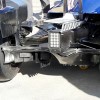
Why did vibrations occur only with Aston Martin Honda, which have not appeared even in inexperienced teams like Audi or Red Bull Powertrains (RBPT)? It is necessary to verify the cause from photos showing the arrangement of each PU part and how it is attached to the car body and identify the fundamental problem. This process requires the sense of engineers, and I think it has become a situation where the development capability of HRC (Honda Racing) is being questioned.
Regarding the lack of power of the internal combustion engine, it will come after vibration countermeasures, but it may also need to be promoted simultaneously by another team.
In F1, due to the worsening situation in the Middle East, the cancellation of the fourth round Bahrain GP and the fifth round Saudi Arabia GP, which were scheduled after the Japanese GP, was announced, creating a five-week interval. For Honda, this allows for a bit of time, but it is unclear whether the issue can be resolved in such a short period.
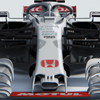
The occurrence of abnormal vibrations is an event that is happening with only one team, Aston Martin, so I think we will investigate the truth while comparing it with other cars. However, looking at the current Aston Martin Honda, it reminds me of the situation of Mercedes when they introduced the zero-pod.
Mercedes, starting from the beginning of 2022, aimed to improve aerodynamic performance and also adopted the zero-pod, which made the sidepods as compact as possible. They tried this in an attempt to outdo other cars, but the car suffered from intense vertical oscillations, known as porpoising, and could not demonstrate the competitiveness they had hoped for.
As a result, it took Mercedes about a year and a half to abandon the zero-pod concept, but I hope Honda does not repeat the same mistake. I sincerely wish that, by cooperating with Aston Martin, they can solve the problem as quickly as possible and be able to compete in the position they rightfully should.