
- Login or Register
No account yet? Sign up

In order to suck the flexible surface upwards, there needs to be sub-atmospheric pressure above the surface, which requires air flow. Once the flexible surface makes contact with the bottom of the car, there is no longer any space for the air to flow through. No air flow means no pressure differential, so no normal force over the area of contact - so no friction.autogyro wrote:It is designed for the low pressure under the car to suck the surface up into contact with the floor and to make use of this friction to brake the car.
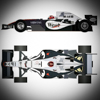
Yes. it may work, but there would need to be a complete car, on wheels, for that to work. And what would happen on a wet day? There would be no friction and car would not be retarded? Further, for the rubber to lift and create the suction that would be needed, it could not be glued down to the substrata, leading to all sorts of problems. But maybe your idea warrants proper evaluation, whereas I have see both controlled discharge containers, and retardant astroturf in action, under tests.autogyro wrote:Gilgen, Webbers crash was a flight along the circuit and then the car went off track upright for many yards without retadation before hiting the barriers.
My surface placed on the corner run off would probably have stopped Webber before the barriers.
As to the low pressure area. The material is pulled up forming a venturi between the car floor and the ground. Yes, if it makes contact with the floor the low pressure ceases but soon forms again as the material drops.
It is the build up of material under the car that brakes it.


I had a word with my friend, Bernie, and he says that Charlie never mentioned this "idea" to him. However, if he was able to obtain sponsorship from The London Rubber Co., he might just give it a try.autogyro wrote:I discused the idea with Charlie Whiting a few years ago.
There were moves to allow me to run tests and some F3 cars were to be made available to fire at a test surface.
Unfortunately it was decided the cost would be to high.
Perhaps the cost now might not be such a barrier.