Mudflap wrote: ↑23 Nov 2017, 14:41
Blaze1 wrote: ↑23 Nov 2017, 09:03
Wazari wrote: ↑23 Nov 2017, 08:22
It can't? Are those figures about fuel efficiency or more about deployment strategy and harvesting? Those are the fuel loads averaged over the last 15 races including Brazil. I don't have the figures for the first few races.
You guys know way more than me on all matters engine/PU related, but I would have thought fuel efficiency (instantaneous) and harvesting (ERS-H) were related. The more energy the MGU-H can harvest, the more it can send to the MGU-K.
K deployment per lap is limited by regs.
K deployment is not limited by regs. There are two proper regulations on energy and one minor one. The minor is simply that mgu-k can't be used during race start till after cars reach 100km/h, presumable as the somewhat unintentional but definitely that traction control/torque smoothing from the mgu-k control(feel wheel spin, harvest heavily, no wheel spin, up the torque fill till traction slip detected) makes race starts too predictable.
The two major regulations on power are, the battery can only send 4MJ per lap to the MGU-K and the MGU-K can only send 2MJ per lap to the battery. The battery can send unlimited power to the mgu-h, the mgu-k can send unlimited power to the mgu-h and the mgu-h can send unlimited power to the battery and the mgu-k.
The only major limitation, as the mgu-h harvests more than the mgu-k and when the mgu-h is harvesting the most it's most efficient(with no power conversion loss) to send it direct from mgu-h to mgu-k right at the point it's needed, is how much you can harvest.




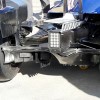

 RBR is the most efficient chasis out there, so the number seems right
