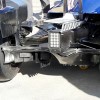
continuum16 wrote: ↑13 Feb 2026, 00:30
I think people need to be wary of blaming Honda 100% for all of the car's shortcomings. Don't get me wrong, they're definitely behind. But thinking "Oh the car's visually striking but slow so it must be the engine ONLY causing the issues" is the *exact same* trap McLaren (and the Alonsistas) fell into in 2015. Just because Adrian Newey's penned the car doesn't give it the golden ticket. From 2000 to 2020 Adrian Newey's cars won the title four times, and that was all in the same ruleset from 2010-2013. Maybe it was PR posturing, maybe it was true, but Red Bull always downplayed his involvement in the ground effect era as well.
I think maybe, just possibly, people have inflated their expectations here. Even taking Newey out of the equation, what have we seen from this team since Stroll bought it in 2018 that gives people confidence that they could jump immediately to the top? In the last decade, they had half of one good season with the AMR23, which they didn't even develop properly. Their only other podium-quality car was the RP20 which was hardly an original design, and one that they couldn't even properly develop in 2021. Ironically the last two years under the Force India guise was the only time they had consecutive years with top-5 WCC finishes.
No, in fact, the nervous handling of the car isn't caused by engine problems. However, even problems with kerbs (like the RB18 suffered from) can be fixed with the right setup. The engine, on the other hand, you can't fix and you have to wait until 2027. Now there are two points: if you say it lacks energy then it is a battery/electric motor problem, if it is a combustion problem etc, torque of turns etc. then it's an ICE problem. Let's try to put the pieces of the puzzle in the right place. If the PU overheats, the team can:
limit electric deployment
reduce turbo pressure
reduce combustion advance
protect MGU-K
In this case, the "lack of energy" is not a structural defect.
We must then understand one fundamental thing: When Alonso loses speed, does he lose it immediately (ICE)
or does he lose it in the last 200–300 meters (ERS)?
This is the key. If it's ERS, it can be fixed with management and cooling.
If it's pure ICE, it's heavier.
At the moment guys, although the statements say otherwise, the ice doesn't seem that bad to me, yes, ok, They have lower idle engine revs than the others, but we don't know if they do them conservatively, seeing everything that happened.
Regarding Newey, he's the last person I'd doubt. He was the one who created the ground effect and steered the engineers in the right direction. And just look at his resume.