Please discuss here all your remarks and pose your questions about all racing series, except Formula One. Both technical and other questions about GP2, Touring cars, IRL, LMS, ...
Dallara does also make the SF23 Super Formula chassis so it's likely that they will improve upon it for their next Indy car chassis with the hope that they will make the car lighter than then current chassis which is heavier than the SF23. It would be cool to see SF and Indy crossover races, even if for just exhibition.
Dallara does also make the SF23 Super Formula chassis so it's likely that they will improve upon it for their next Indy car chassis with the hope that they will make the car lighter than then current chassis which is heavier than the SF23. It would be cool to see SF and Indy crossover races, even if for just exhibition.
Potentially.
The safety standards are a lot higher in Indy Car than any other open wheel series due mainly to running on ovals.
Much talk was made of Verstappen’s crash at Silverstone, but crashes of that magnitude (or geater) is somewhat a regular occurance in Indy Car (they’re pretty rare in F1). The safety record of the current car is pretty amazing considering how big of shunts there have been over its life span.
Indy also requires focus on blowover testing, ie: when the cars get sideways or backwards at 180-200mph plus, what does the car do? They want to keep them on the ground. Even F1 doesn’t require that.
Dallara does also make the SF23 Super Formula chassis so it's likely that they will improve upon it for their next Indy car chassis with the hope that they will make the car lighter than then current chassis which is heavier than the SF23. It would be cool to see SF and Indy crossover races, even if for just exhibition.
Potentially.
The safety standards are a lot higher in Indy Car than any other open wheel series due mainly to running on ovals.
Much talk was made of Verstappen’s crash at Silverstone, but crashes of that magnitude (or geater) is somewhat a regular occurance in Indy Car (they’re pretty rare in F1). The safety record of the current car is pretty amazing considering how big of shunts there have been over its life span.
Indy also requires focus on blowover testing, ie: when the cars get sideways or backwards at 180-200mph plus, what does the car do? They want to keep them on the ground. Even F1 doesn’t require that.
True, and Indy I believe is sticking to the windscreen but if I remember correctly it is lighter than the F1 halo. The current Indy cars don't look bad, especially in oval form, so the high down force package weight and design is where we may see the most change. I for one love the Newey's X1 design but it technically wouldn't be open wheel in the pure sense, but has aero benefits. The current cars already have somewhat of a similar look too. Perhaps it will look like an in-between of F1 and LMN cars
As someone who has watched Indycar all the way through the DW12/IR-18 era, it might sound strange but I really hope that they do not rush this. If a new car is coming by 2027 it has to be on the track in 12 months or less and that seems unrealistically soon. Change for the sake of change is never good and it seems like a lot of people (who ironically are NOT in the Indycar chassis supplier business) are getting more and more vocal about the need for a new car which might add undue pressure.
What Indycar cannot afford is a NASCAR "Next-Gen" problem whereby the new car is no safer, more expensive, more restrictive, and produces worse racing than the car it replaces. NASCAR is in year 4 of the new car and there are still many critical flaws, but enough time and money has allowed for safety and raceability improvements at least. Indycar cannot afford that both literally and metaphorically, as they have fewer teams, fewer OEMs, and smaller pockets.
The DW12/IR-18 has proven to be effective but at this point is a frankenstein car. It was not designed for hybridization. It was not designed for the aeroscreen. Even a ground-up design of similar outward appearance would probably be 10-20kg lighter just because it could be better optimized and things could be better integrated. I personally would welcome a mild evolution similar to the mid-cycle IR-18 refresh. The current cars are still very good looking imo and do not really need to be that much faster. Most tracks already have lap times under 70 seconds; any more will just create lapped traffic faster and probably worsen the dirty air.
Personally I expect the IR-27/IR-28 to be similar to the IR-18 but with power steering, slimmer sidepods, and a smoother integration of the aeroscreen. I would not be surprised if we see some uncommon elliptical aero surfaces for the wings similar to F2 or, to a lesser extent, SF.
"You can't argue with stupid people, they will drag you down to their level and beat you with experience"
- Mark Twain
Quite a few people think the IR-28 is underwhelming because it is not enough of a visual evolution of the current car, but I disagree. I actually think the current car, aesthetically speaking, is quite good looking. It has a sort of retro quality to it given how simple a lot of its bodywork profiles are.
Is anything radically different on the new car? Not really. But all the changes go in the right direction: it’s safer, it’s lighter, presumably has more downforce and/or less drag, and has more power than the current car. They say the new cars will have 750-800 hp (a small boost compared to current ICE power, allegedly) from the ICE plus up to 100 hp from the new hybrid element (about twice the current amount) for up to 900hp total (on road and street courses at least, oval boost will be lower if they keep their current philosophy). Take notes, Stefano and MBS…
It does look like someone has just hit “sharpen” on a photo of the current car, plus added some F1 modern ground-effect styling (swept wings and sidepod leading edge most notably). I don’t much care for the closed-profile rear wing look (in superspeedway trim), even if I understand why they’d go with such a design. There’s actually a huge undercut on the sidepods which is quite a departure. I also think there’s some interesting front tire wake treatment going on.
In short: is it the best looking car ever made? No. Is it a sensible evolution of a proven success? Seems like it.
"You can't argue with stupid people, they will drag you down to their level and beat you with experience"
- Mark Twain
Indycar posted another story with a few juicy new details about the IR-28. One detail that stood out to me is that inerters are being added to the car to stabilize pitch under different conditions to have more consistent ground effects.
I would note that inerters were banned by F1 in 2022 which would make Indycar the only series to use them.
To admin, please rename this thread from "Dallara IR-27 IndyCar Series 2027 onwards all-new car discussion" to "Dallara IR-28 IndyCar Series 2028 onwards all-new car discussion"
Done. I only edited the first and last post, so it can be messy in the middle, but that is enough for the new title to show up in all links and in replies.
Done. I only edited the first and last post, so it can be messy in the middle, but that is enough for the new title to show up in all links and in replies.
IndyCar have unveiled their new 2028 chassis — the 𝐃𝐚𝐥𝐥𝐚𝐫𝐚 𝐈𝐑-𝟐𝟖 — and it looks 𝐕𝐄𝐑𝐘 𝐠𝐨𝐨𝐝
A handful of media were allowed to take a first look at the car in road-course configuration, set to be tested this weekend. The cockpit is 𝐛𝐢𝐠𝐠𝐞𝐫, the controls appear cleaner and more simplified, and the new car could even feature 𝐩𝐨𝐰𝐞𝐫 𝐚𝐬𝐬𝐢𝐬𝐭 — something the current IndyCar does not have
A core mandate from the start was to build a car capable of raising performance standards and 𝐛𝐫𝐞𝐚𝐤𝐢𝐧𝐠 𝐭𝐫𝐚𝐜𝐤 𝐫𝐞𝐜𝐨𝐫𝐝𝐬 across all circuit types. The IR-28 delivers this through increased horsepower from a new 𝟐.𝟒-𝐥𝐢𝐭𝐫𝐞 𝐞𝐧𝐠𝐢𝐧𝐞, a weight reduction of roughly 𝟏𝟎𝟎 𝐩𝐨𝐮𝐧𝐝𝐬, and a newly integrated hybrid unit offering 𝟏𝟒 𝐭𝐢𝐦𝐞𝐬 the energy-storage capacity while weighing 20lb less than the current system.
Once track testing wraps in October, Dallara will begin 𝐟𝐮𝐥𝐥-𝐬𝐜𝐚𝐥𝐞 𝐩𝐫𝐨𝐝𝐮𝐜𝐭𝐢𝐨𝐧. Engine manufacturers receive development cars in late 2026 or early 2027, with hybrid systems introduced in Q2 2027 — and to keep teams focused during the 2027 season, official deliveries of one car per entry will begin 𝐢𝐦𝐦𝐞𝐝𝐢𝐚𝐭𝐞𝐥𝐲 after the 2027 finale.
ONE TO WATCH.
@indycar
On the 2nd paragraph actually the power-assisted rack and pinion steering on IR-28 car will remain absent.


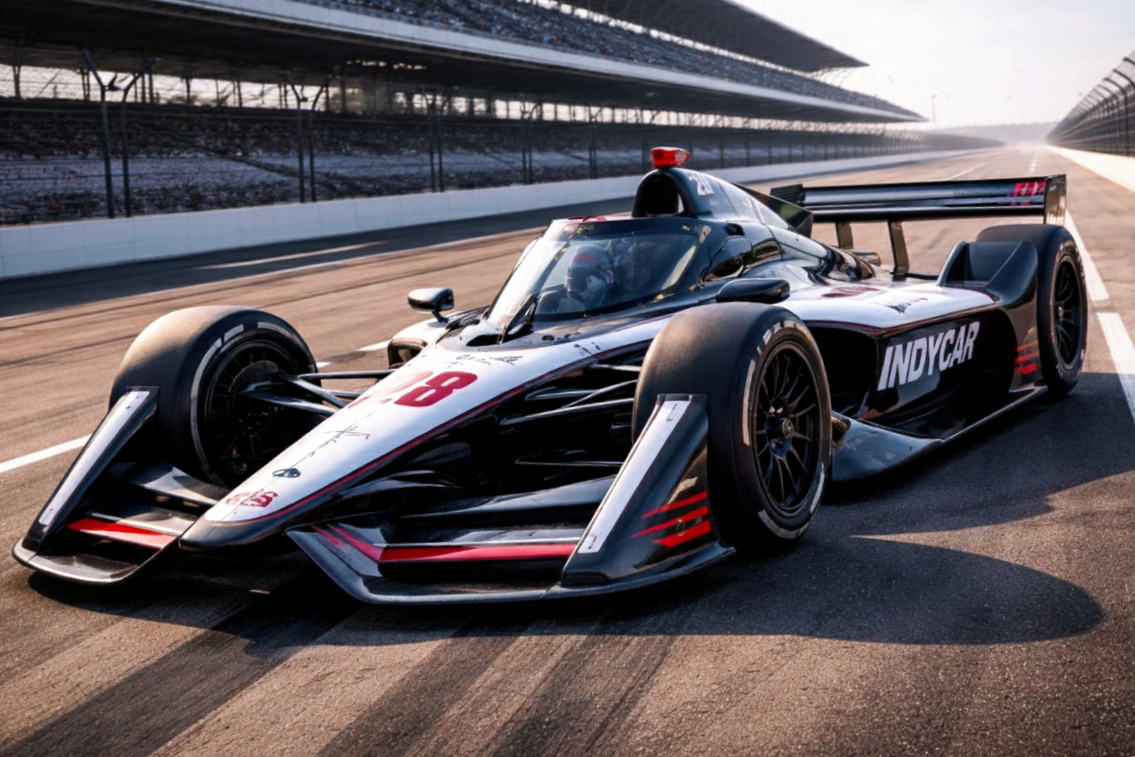
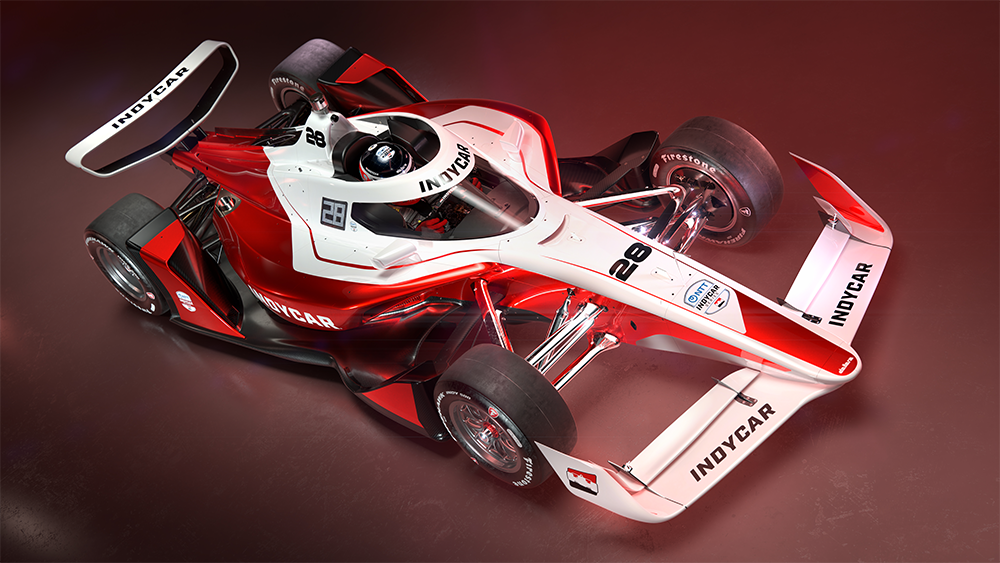



 𝐁𝐑𝐄𝐀𝐊𝐈𝐍𝐆: 𝐈𝐍𝐃𝐘𝐂𝐀𝐑 𝐑𝐄𝐕𝐄𝐀𝐋𝐒 𝐅𝐈𝐑𝐒𝐓 𝐑𝐄𝐀𝐋 𝐈𝐌𝐀𝐆𝐄𝐒 𝐎𝐅 𝐓𝐇𝐄 𝐍𝐄𝐖 𝐃𝐀𝐋𝐋𝐀𝐑𝐀 𝐈𝐑-𝟐𝟖!


 @indycar