Hello everyone,
with the first visual interpretations of the 2026 regulations emerging, I found the Cadillac concept particularly interesting from an aerodynamic standpoint.
One element that stands out is the reintroduction of a nose cape (or mantle), a solution last seen prominently in the pre-2022 era, especially on Mercedes cars. With the 2026 rules moving toward a flat floor and significantly reduced wing complexity, it looks like teams are already searching for alternative ways to recover front-end load.
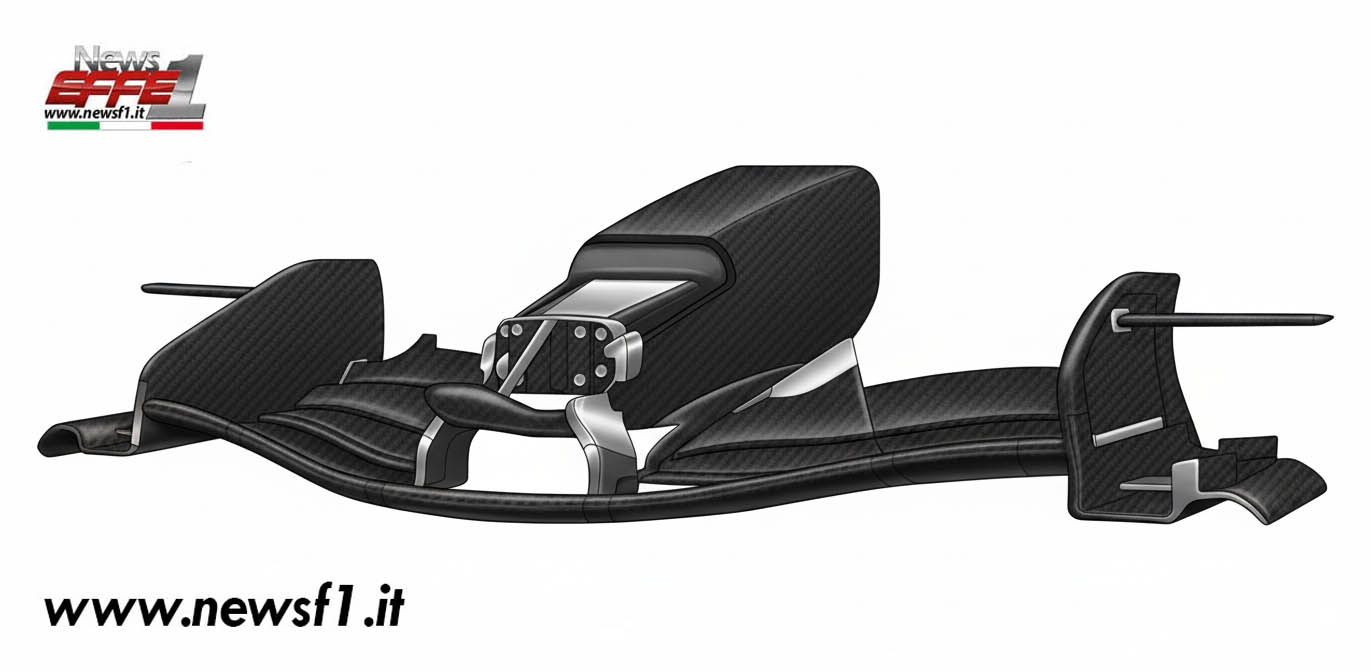
From an engineering perspective, the cape makes sense in this context:
it can generate local low pressure under the nose,
help condition the flow toward the leading edge of a flat floor,
and potentially create controlled vortical structures to improve underfloor sealing, even in a regulation set designed to reduce vortices overall.
A more detailed technical breakdown of this concept (with flow management considerations and 2026 constraints) is available here, if useful for the discussion:
https://www.newsf1.it/f1-2026-cape-cadi ... -analysis/
It feels like 2026 may not be a clean break from the past, but rather a selective revival of older concepts adapted to new constraints. I’d be curious to hear opinions on whether solutions like the cape can meaningfully compensate for the loss of Venturi effect, or if we’re looking at a fundamentally lower-downforce era regardless.