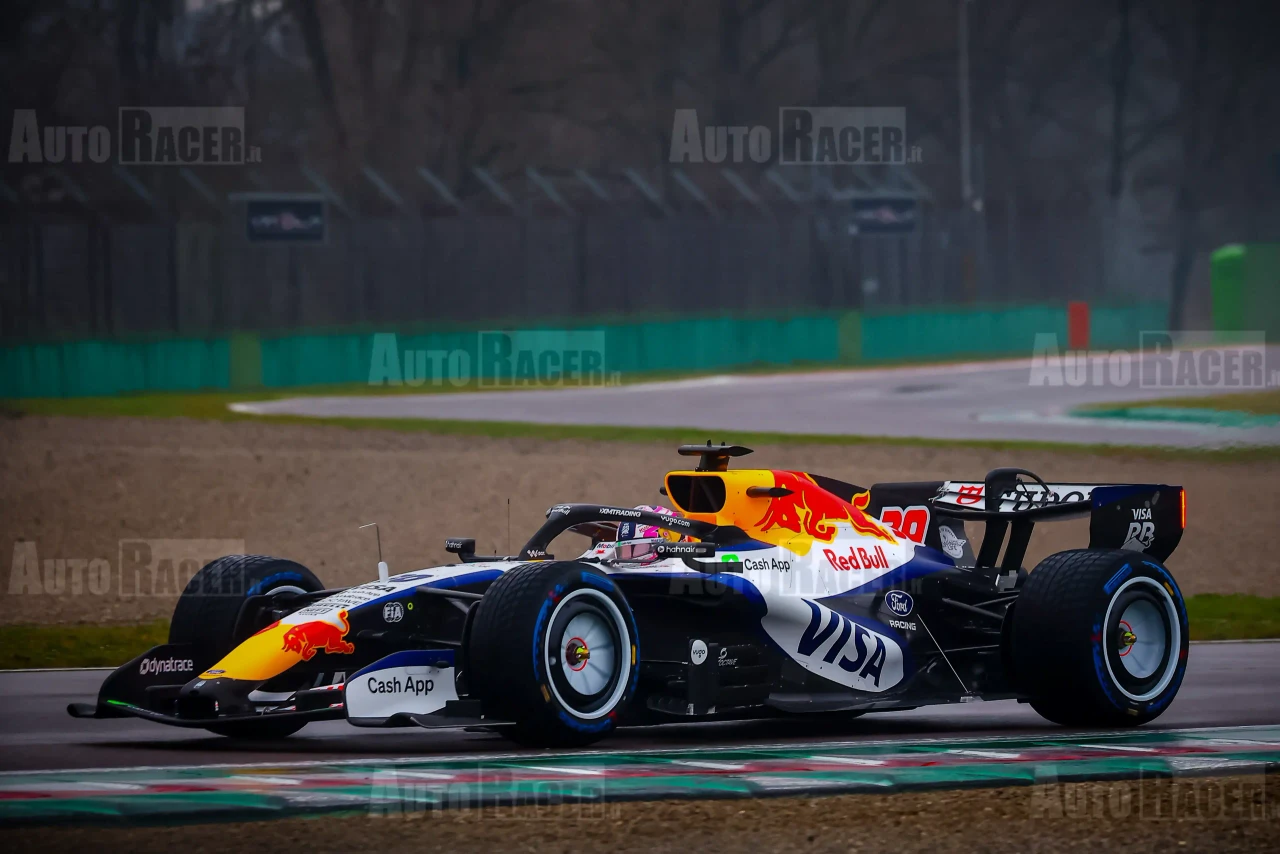

Cadillac

Audi

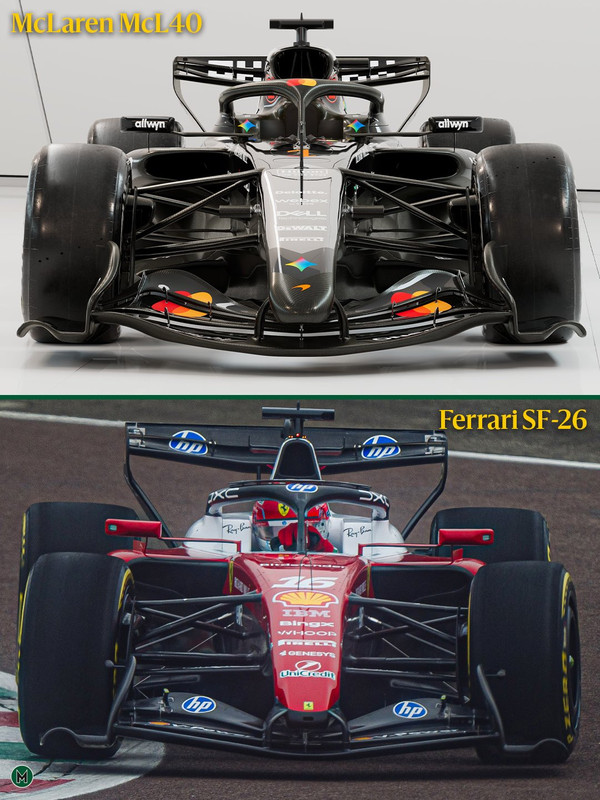
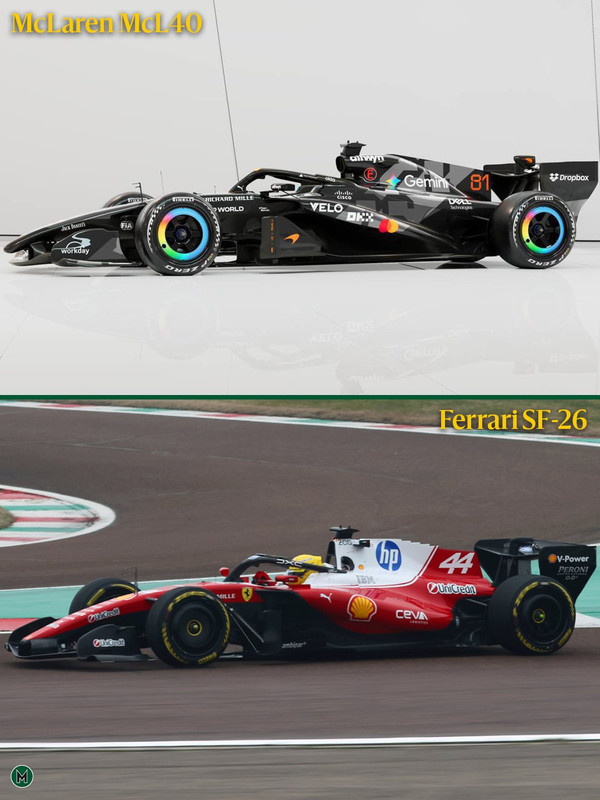
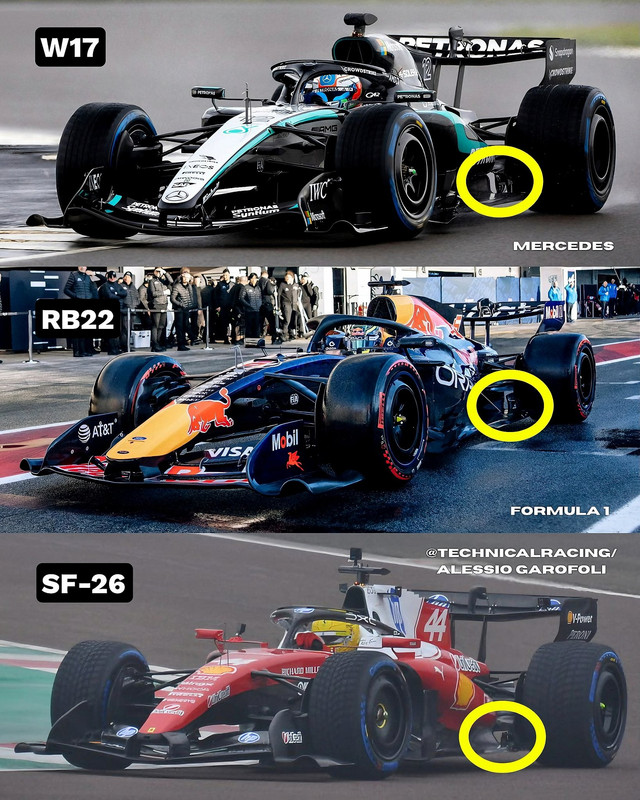
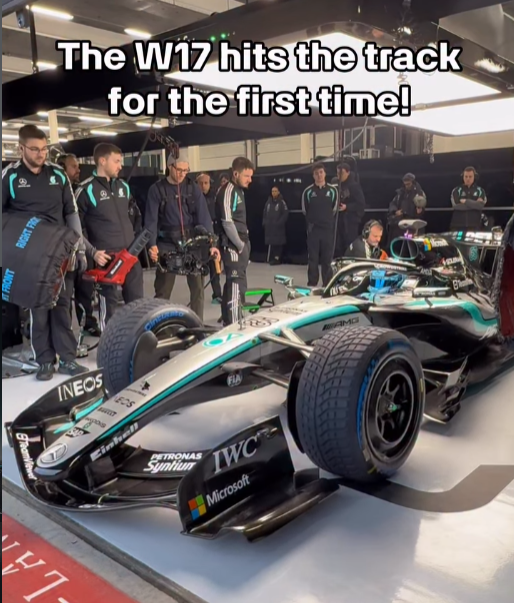
So far I'd say Merc looks the most advanced in terms of tight packaging and innovative bits. Second is VCARB. Third Alpine.





Yes, I’ve said this a few places but there’s definite trend towards the “coanda” style sidepods from 2012/13 (of the McLaren variety) this year. I guess it makes sense that they want to feed the diffuser airflow in a similar sense to how they wanted to feed it hot exhaust gases, but I do now wonder if it’s this diffuser “hole” trick that has pushed them in that direction now.Giando wrote: ↑23 Jan 2026, 16:49where i've seen those Ferrari and Mercedes sidepod shape before?
mmmm
https://i.ibb.co/cKw2sGSK/Screenshot-20 ... -39-32.png
Already all three FWAS variations have been seen.

Not for discrediting your ideas, but Meredith effect has been discussed before, and does not seem feasible for low speeds and "weird" sections (the effect seems very sensitive to the shape of the duct, as well as proportions of inlet vs outlet (looks like too much volume / section for an F1).vorticism wrote: ↑23 Jan 2026, 22:55You both raise an interesting point, to me at least. Those Coanda type sidepods lofted the exhaust over top the inflow arriving from the undercut. If they end up using big cooling louvers or sidepod cannons it might again be a way to loft a heated airstream over the undercut inwash. Not necessarily to energize the diffuser but simply to steer the efflux through the rear suspension members which cause drag & turbulence anyway, so why not blast them with the radiator efflux while the diffuser gets clean undercut inwash. If the Meredith effect can be achieved below 300kph via tuned, short path ducting (sidepod cannons, f.e.) then the radiator outflow could be slightly more energetic than ambient airflow, in which case, maybe you would want them to feed the diffuser. Radiator blown diffuser.
Already all three FWAS variations have been seen.
4-element: VCARB, Ferrari, Haas
2-element: RB (rendering)
1-element: Mercedes
Correct me if I'm wrong but the regulations seem to indicate the there are also three potential rear wing variations:
1-element rear wing with no RWAS
2-element rear wing with 1-element RWAS
3-element rear wing with 2-element RWAS (all we've seen yet)

For lack of a better term I use it, because it simply implies otherwise higher radiator efflux velocity--if it can approach free stream velocity (ambient airspeed) then it could be put to beneficial use with other aero components. In this context it wouldn't be about producing thrust, necessarily, only that it might not be consider dirty air as it usually is.BassVirolla wrote: ↑25 Jan 2026, 22:43Not for discrediting your ideas, but Meredith effect has been discussed before, and does not seem feasible for low speeds and "weird" sections (the effect seems very sensitive to the shape of the duct, as well as proportions of inlet vs outlet (looks like too much volume / section for an F1).
https://x.com/Motor_Sport/status/201571 ... 99797?s=20