vorticism wrote: ↑23 Jan 2026, 20:41
I wonder what the logic is behind maintaining these so-called anti-dive arragnements. Considering that in the last regs set the common reasoning was to create a more stable aero platform for the floor tunnels. The previous flat floor regs did not have these arragnements to this degree--that's one reasone the RB18 stood out so much compared to 2021 cars. Was it simply an unturned stone? The complaint from drivers was said to be that it reduced brake feel--if so it's being ignored in favor of its continued aero/mechanical advantages?
vorticism wrote: ↑23 Jan 2026, 22:55
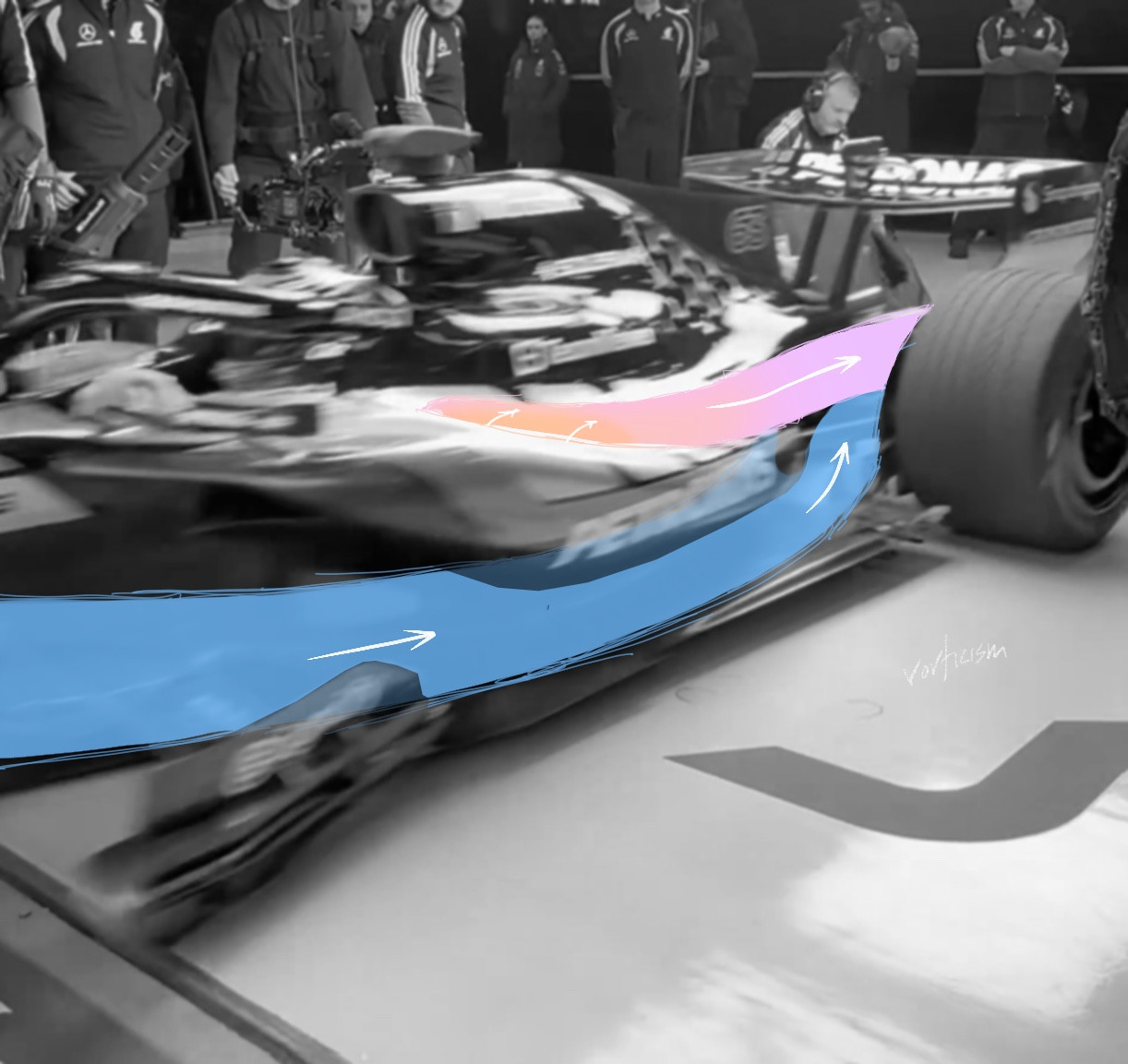
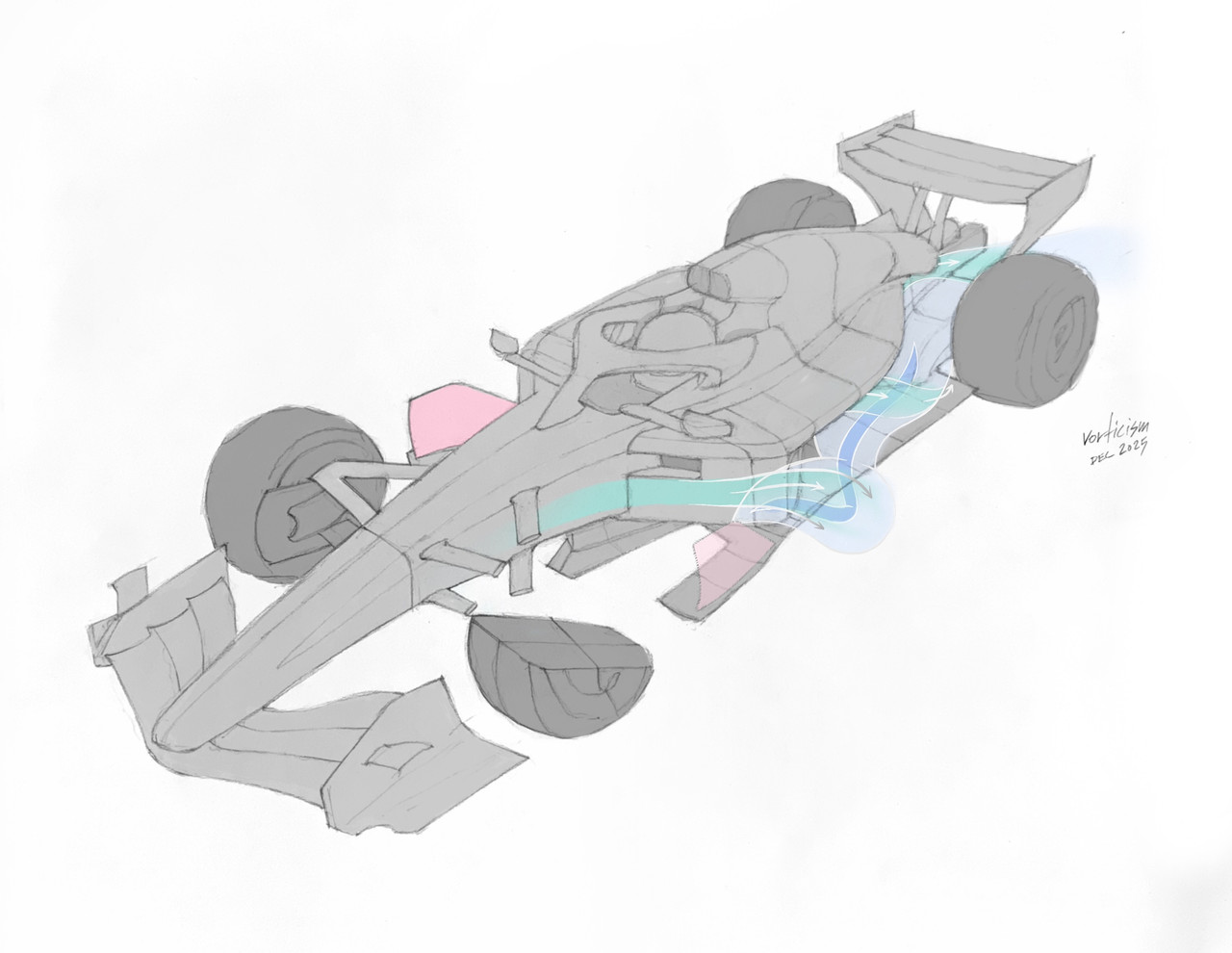
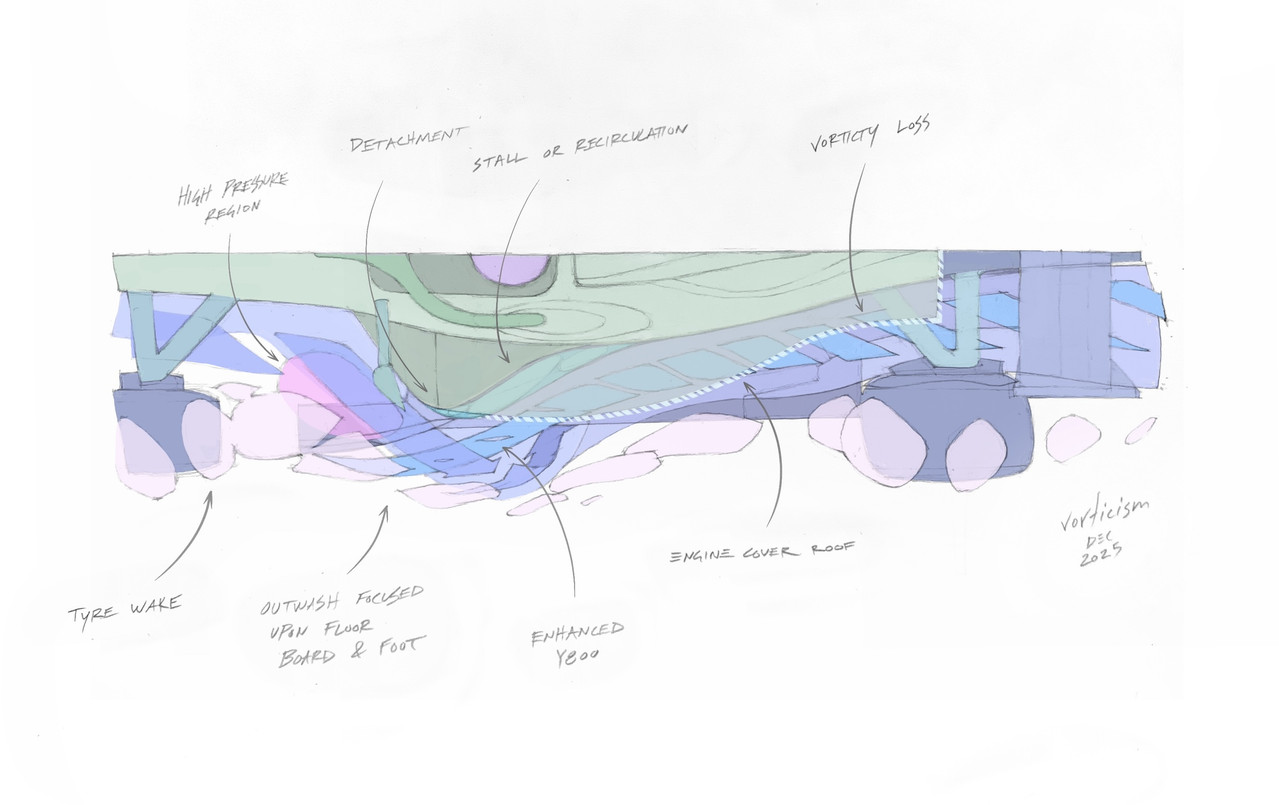
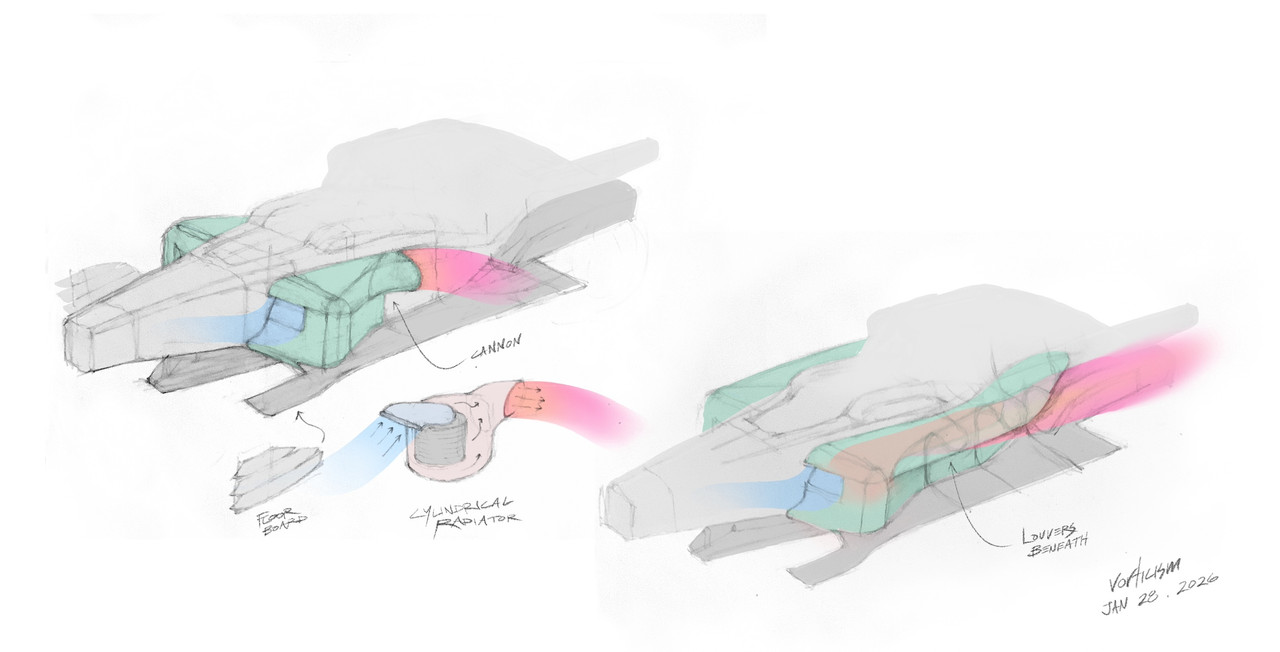
Those Coanda type sidepods lofted the exhaust over top the inflow arriving from the undercut. If they end up using big cooling louvers or sidepod cannons it might again be a way to loft a heated airstream over the undercut inwash. Not necessarily to energize the diffuser but simply to steer the efflux through the rear suspension members which cause drag & turbulence anyway, so why not blast them with the radiator efflux while the diffuser gets clean undercut inwash.
Instead of exhaust jumping over the inwash flow, radiator efflux might instead jump into the suspension members. If the rear suspension members receive lower energy air they should experience less drag. But would this proximity harm the diffuser? It would allow more free stream air directly beneath the RW via a smaller central cannon. Sidepod efflux in general should reduce sidepod lift.
https://i.postimg.cc/d3FYyDvs/image-(2).jpg
The topic was looked at in here and F1 commentary in general through the optic of this effect, specifically in relation to preserve/conserve GE floor geometry and associated aero platform performance.
However, its been very useful prior to this recent "publicity" for many other applications related to suspension effects.
To define it may help in understanding. Effectively, its a geometric conflict within the design that promotes or restricts movement against load/torque/mass leverage in dynamic response.
Most importantly, it lives in parallel with the spring medium, but can be separated effectively within the same system.
The practical application that's important here, is to have it only responding to braking forces (in this restricted topic) which allows more free choice of ultimate spring rate used to support the platform when not braking.
It can therefore leave much more optimal suspension compliance in approach to track irregularities (high speed corners etc) while just using the brake induced effect when needed. Like running two "concentric" system within the same hardware.
This
https://en.wikipedia.org/wiki/DW-link although for rear wheel application, gives good overview of possibilities from someone with leading interpretation of related topic. He effectively changed the whole approach with his work in cycle racing.
The driver effect, we can see clearly who (just one person

) responded so well to this architecture, making absolutely maximum use of this effect but with odd feeling characteristics not sitting well with many others. Last two years saw more drivers start to really understand its potential, and adapt their driving in incorporating this into positive responses, rather than fighting the effects and claiming huge variation in chassis response from track to track.


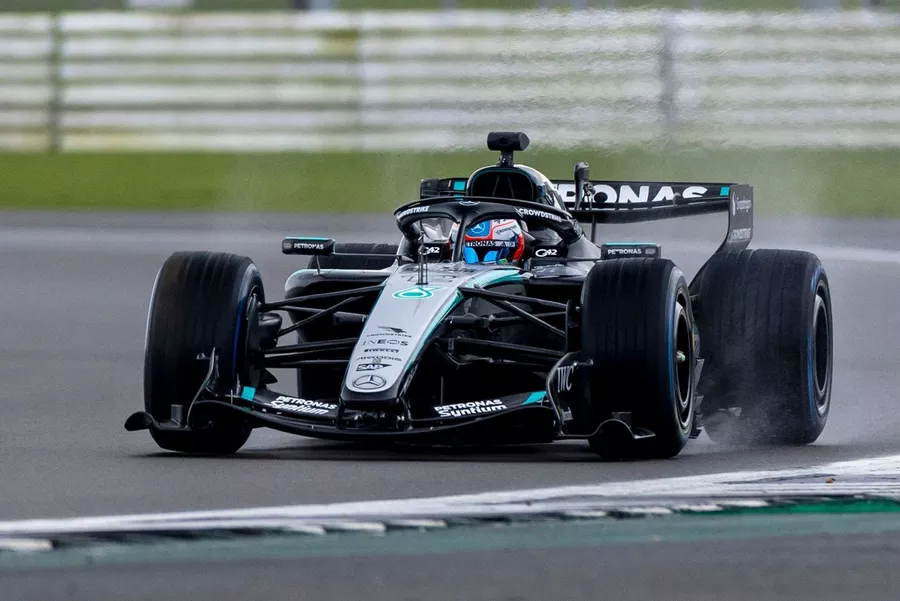
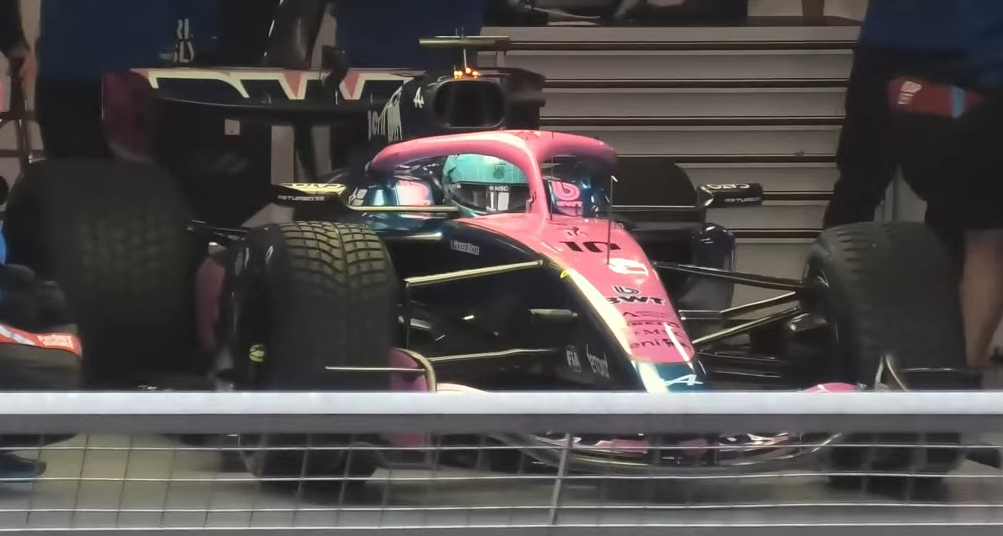



 the return of rake