I won't go into much detail, but that "not being able to charge beyond or let alone" had me thinking that it's not that Honda designed a system that can't "EVEN" charge at 250kW under NORMAL conditions or some hater narrative.
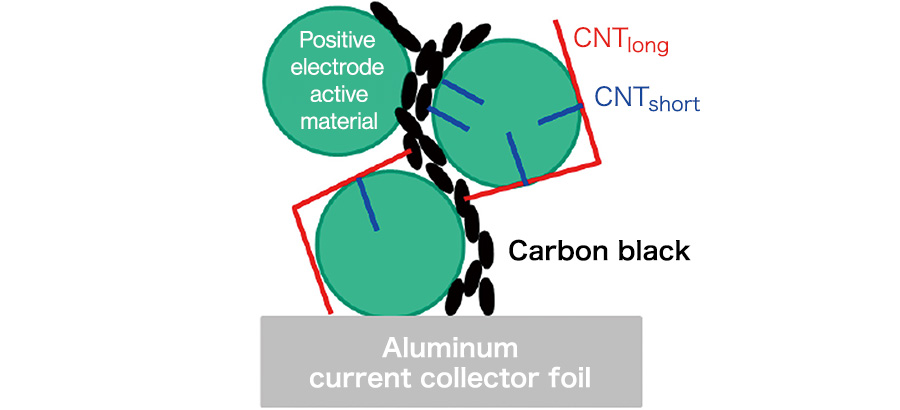
As for the damage, I have a hunch that it is related to the carbon nanotube design of Honda's battery cells. The vibrations may be causing the nanotubes to become dislodged, face the wrong direction, or damaged which ultimately reduce the contact areas that the carbon nanotubes are suppose to bridge within the space gaps. This could significantly reduce the battery's longevity and ability to charge and discharge at a fast rate. CNT usually have good vibration resistance but under extreme conditions, vibrations can damage them.
From Honda's website on ESS Carbon nanotubes:
Carbon nanotubes (CNTs), the key technology for further increasing output
As already explained, ESS development was conducted in the United Kingdom, but being unable to find a local supplier to manufacture the materials that represent a key technology for further increasing output, Honda decided to develop the ESS with the support of a Japanese supplier. The key technology in question was carbon nanotubes (CNTs). Battery cell electrodes containing carbon particles, and electricity flows through these particles.
By filling the spaces between carbon particles with the nanometer-sized, tube-shaped CNTs (with a diameter of one millionth of a millimeter, or 10-9 m), it is possible to achieve low resistance and enable electricity to flow more freely. However, rather than just mixing the CNTs with the carbon particles, this technology provided the knowhow needed to optimize the process, including the mixing method, thickness, and coating method for applying a thin layer of active material to the electrodes.
Battery cells also employ separators that prevent internal short circuits while allowing the transmission of lithium ions between the anode and the cathode, and the thinner those separators can be made, the lower the resistance and the higher the output. If efforts are too aggressive at this time, on the other hand, the risk of internal short circuits increases. When developing a new ESS for the 12th round of the 2021 season, Honda was able to make these separators thinner while maintaining reliability by optimizing the material characteristics.
 https://global.honda/en/tech/motorsport ... train_ESS/
The Red Bull chassis did not experience this battery vibration issue and thus must have had countermeasures or a completely different philosophy in chassis rigidity around this area of the monocoque.