Stu wrote: ↑11 Mar 2026, 08:51
Farnborough wrote: ↑11 Mar 2026, 00:20
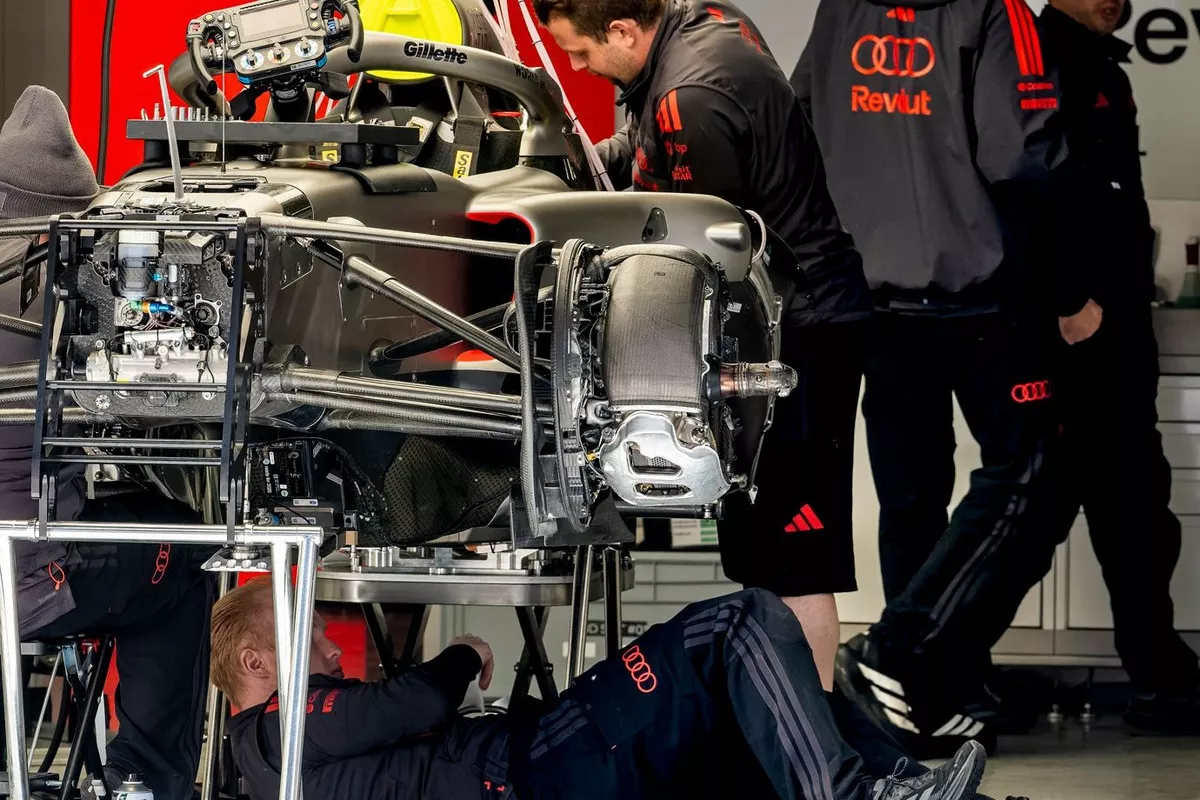
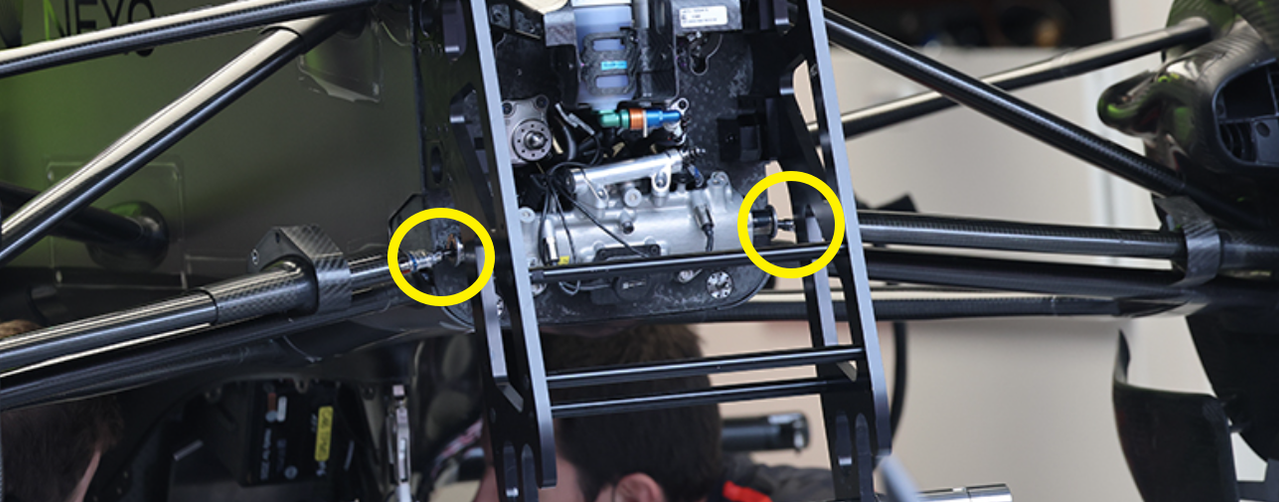
Good detail of the split top "wishbone" as effectively two separate and simgular struts to form that arrangement.
Look at the outer end at the upright, see how far they are displaced vertically, one from the other, at that location.
And having just seen the wreckage photo in the W17 thread (thank you AR3-GP

), not a universal thing to do.
Although we think of multi-link designs as a new tech approach, it is more in line kinematically with the old 1950’s & 1960’s approach (separated control arms and links); the big difference is the vertical displacement, which does make visually examining the suspension behaviour near impossible (makes a mockery of the ‘loads of anti-xxxx there’ comments). I have it on very good authority that it very specialist software is required to analyse the kinematics of modern multi-link systems.
Its something that Audi themselves possess considerable experience around. Their A8 chassis birth brought this split top wishbone, not vertically but longitudinal in layout, to their car platform in early 1990s.
Essentially to deal with front driven wheel needs (Quattro & front drive iteration) dynamics by extremely detailed presentation of that tyre to road surface within constraint challenges.
It's a double "wisbone" installation with effectively separated "pushrod" spring and damper (without location duties) applied to near the base of upright location.
Ultimately, in that usage, it concisely controls the space in which the wheel moves very tightly through steering, while also bringing more advantageous control of contact tyre patch dynamics in presenting it to road surface.
That chassis was also multi link rear too. Folded into small space form with castor, camber and toe link independence in design.
They must possess significant knowledge and evaluation of such system as routine, plus James Key also advanced in this type thinking in previous chassis, going back to Toro Rosso concept that others copied.




 ), not a universal thing to do.