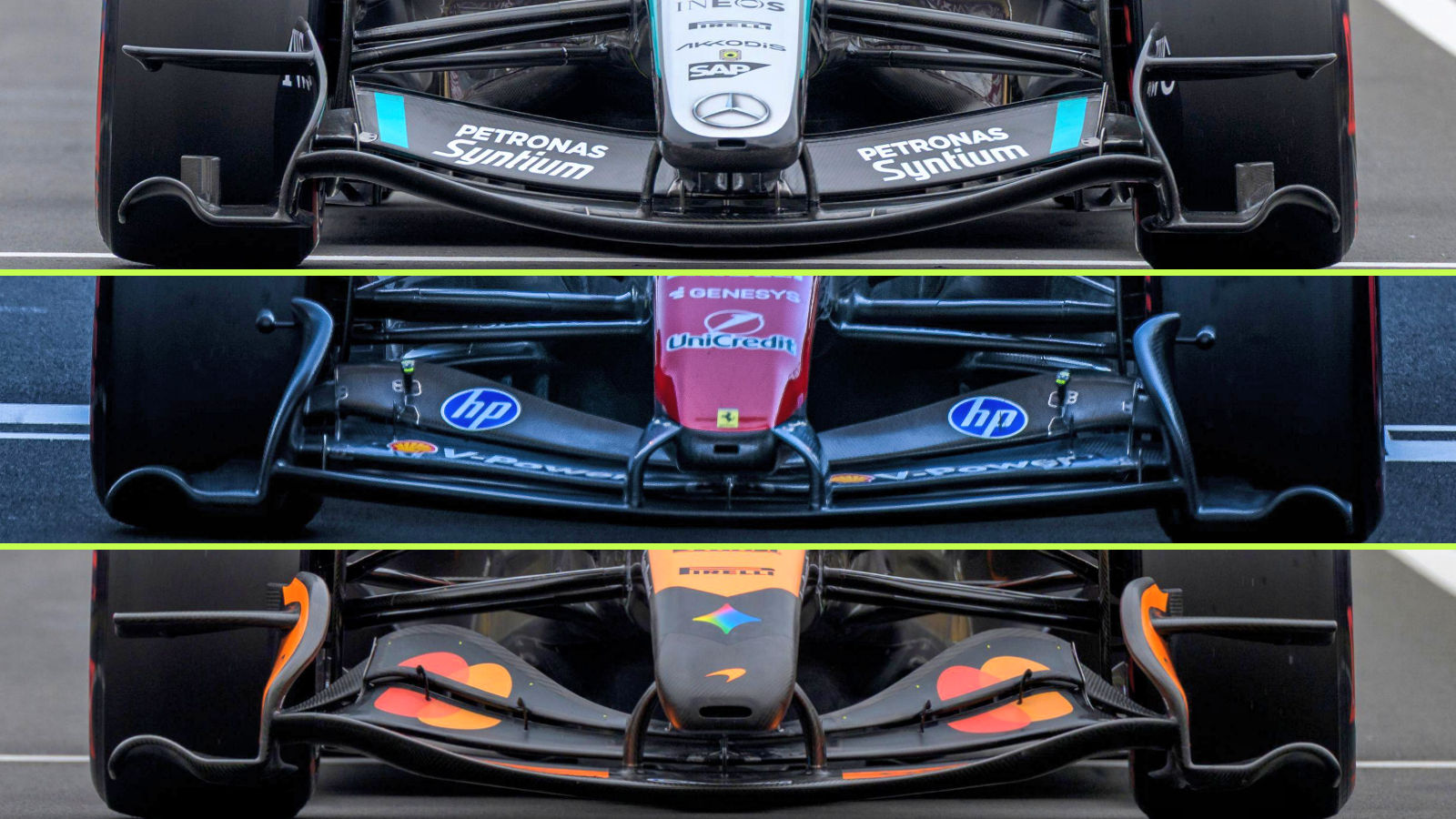
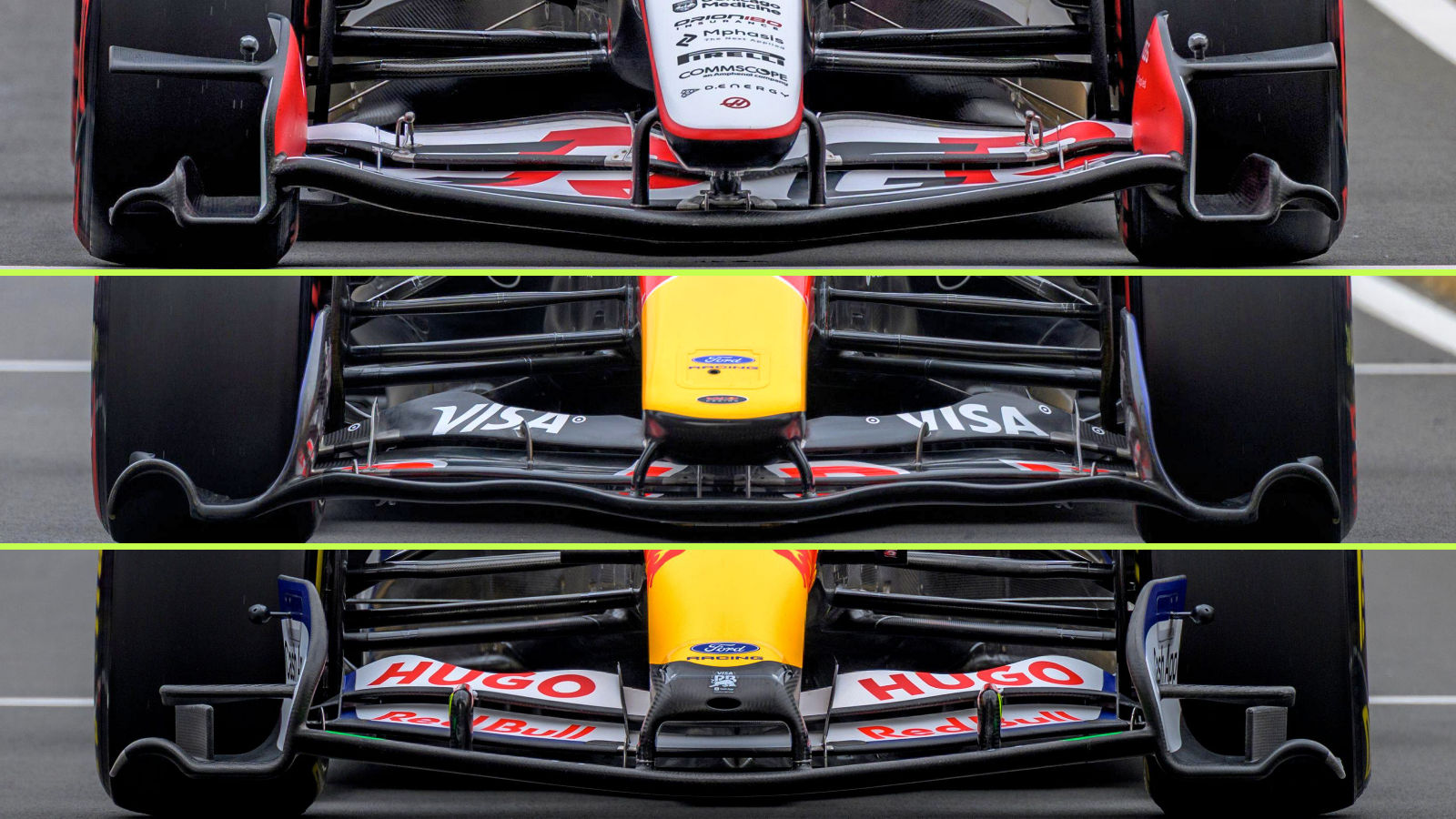
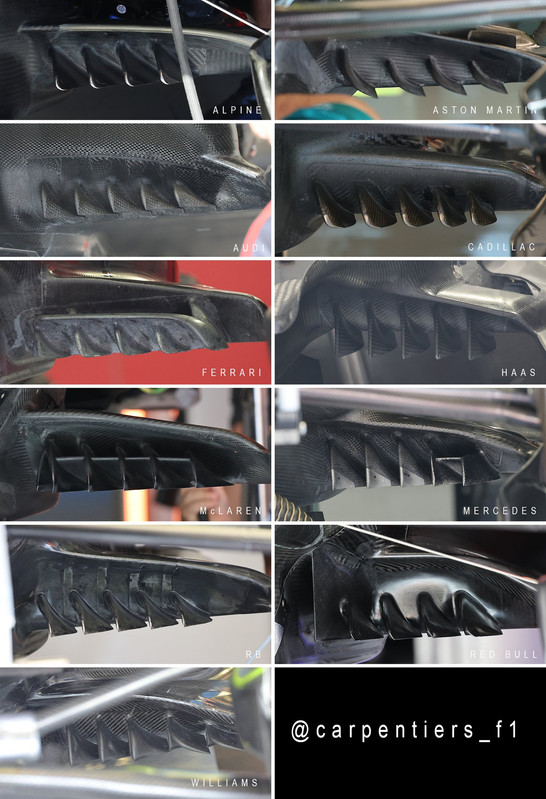
An interesting comparison of the Ferrari and Red Bull concepts by Jan Kapral. Although I don’t agree with the one or other conclusion, and I also believe that some of these results, especially given the on-track performance we’ve seen, stem from a specific cause and are therefore not entirely accurate, I’ll leave Jans analysis as it is without comment because of my massive respect for his dedication, passion and great work:
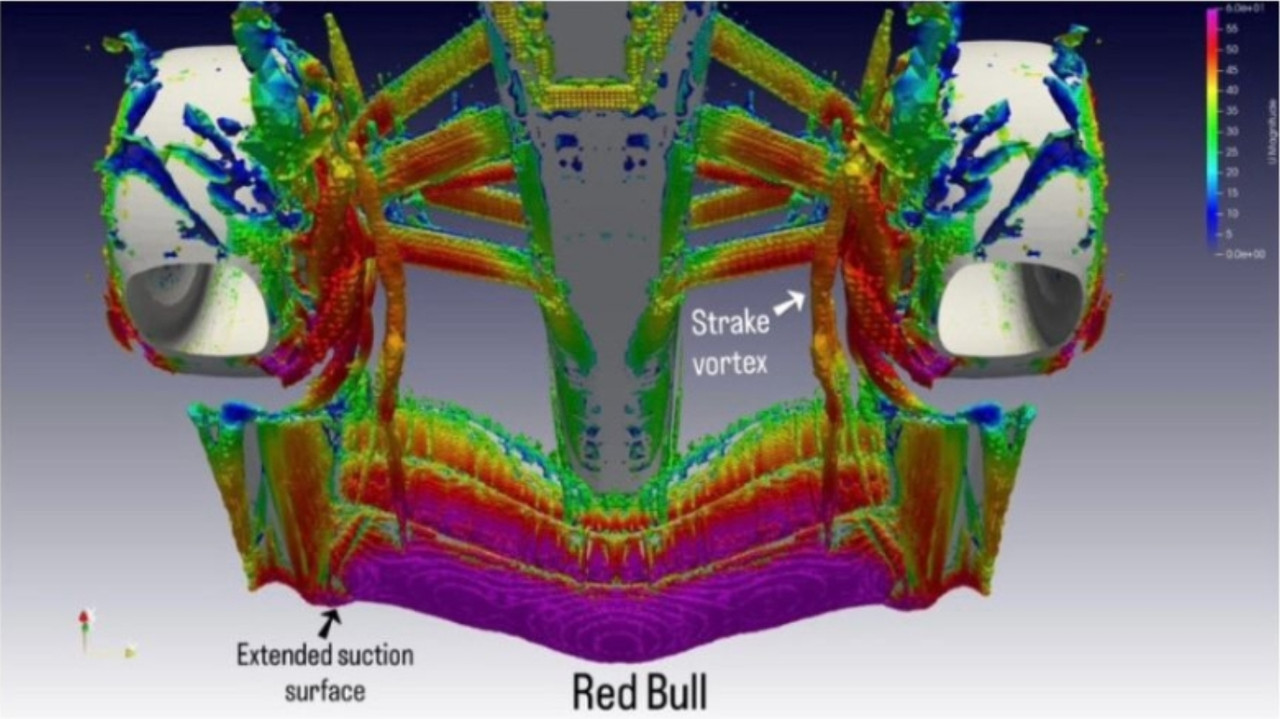
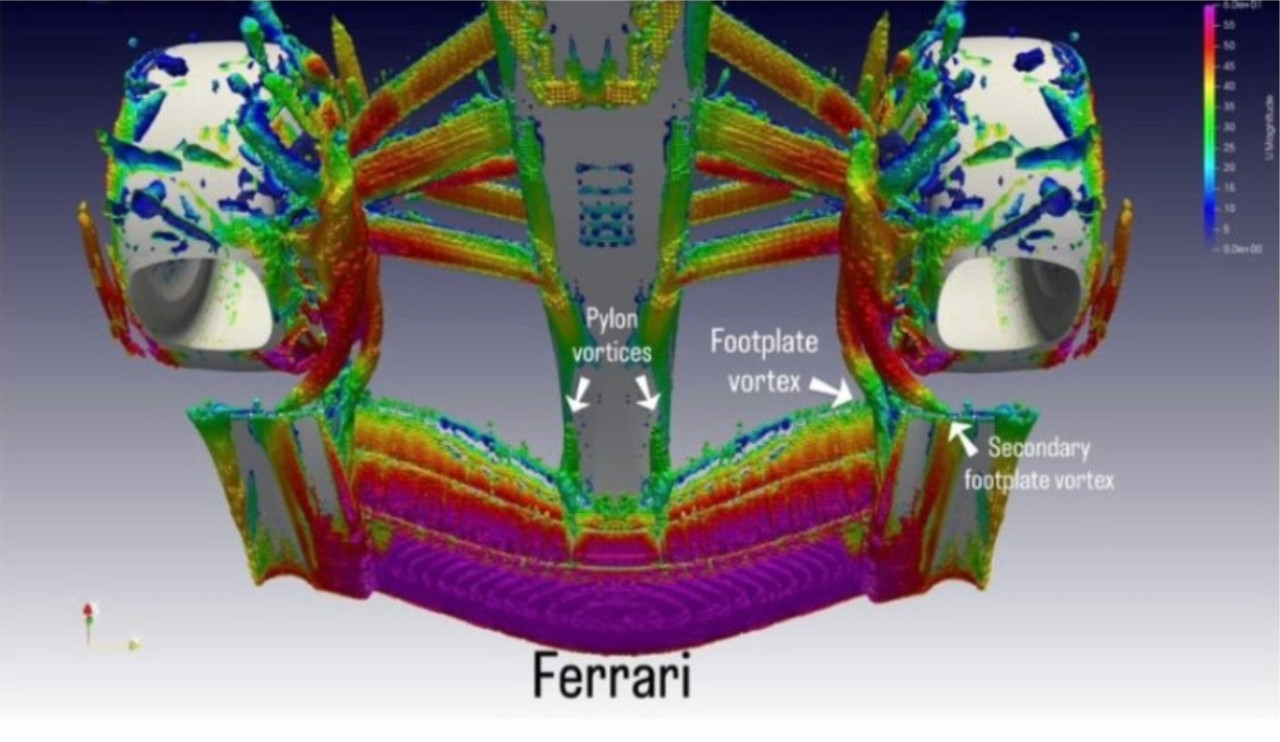
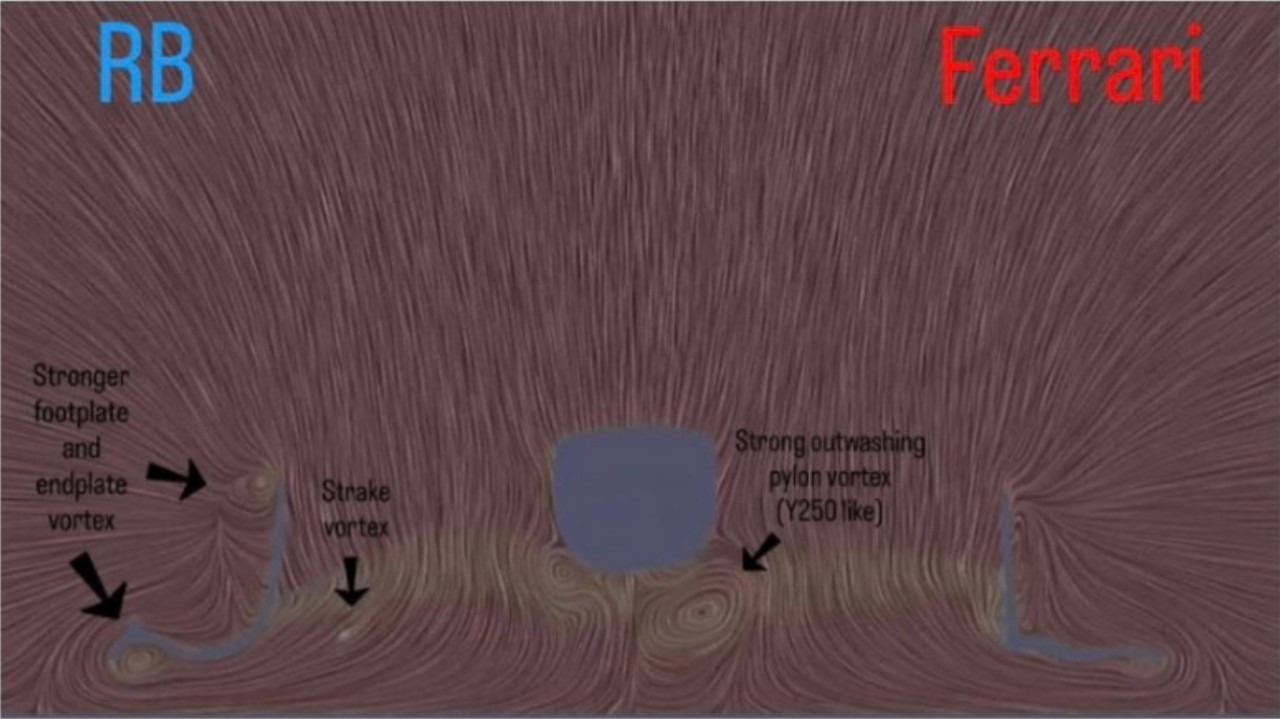
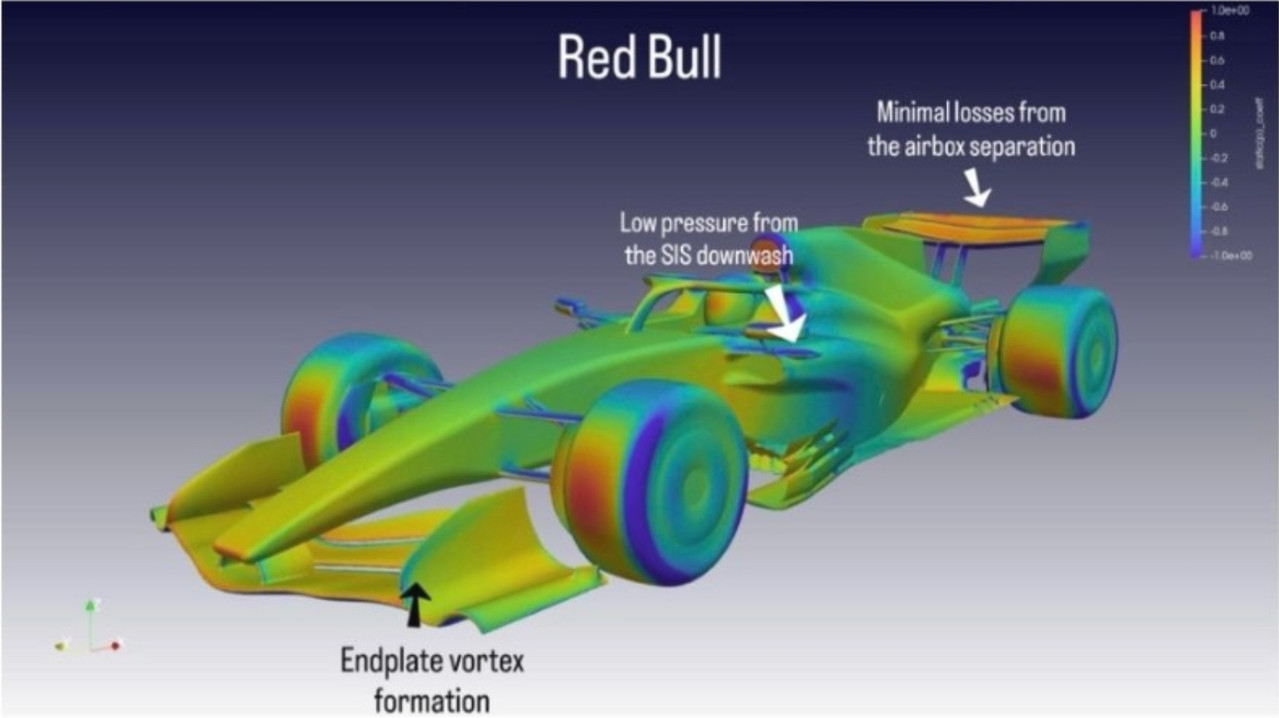
Both cars exhibit similar load distribution, but differ significantly in flow conditioning strategies. Red Bull's low nose position restricts flow through the central wing section, forcing air outboard and promoting strong outwash. Ferrari adopts a higher
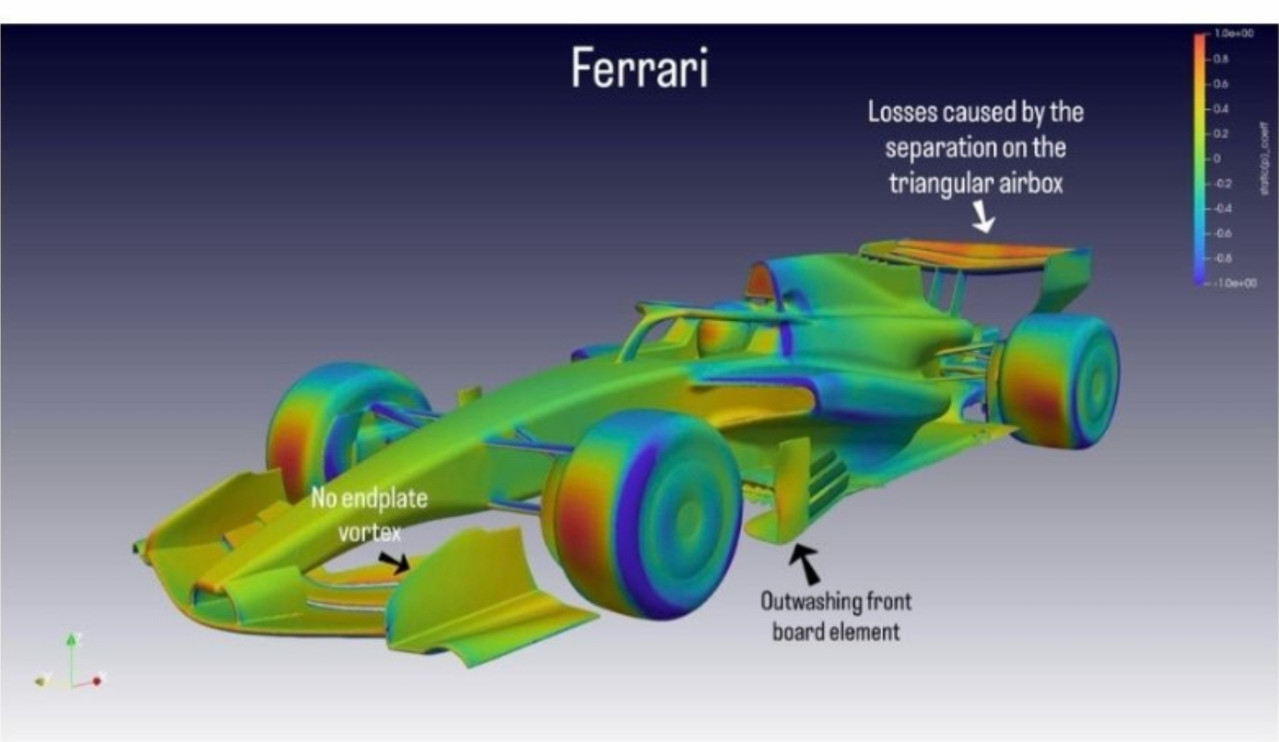
nose with elongated pylons, generating a Y250-like vortex that travels beneath the nose and feeds the sidepod undercut. The extended lower lip of the sidepod inlet likely stabilizes and sustains this structure downstream. At the endplate-footplate junction, Red Bull employs a smooth transition, reducing footplate vortex strength and instead relying on a strake-
generated structure. Ferrari's stepped footplate produces two distinct vortices. Footplate vortices on both cars merge with tyre squirt and rear deflector vortex into a single, stronger outwash feature.
Ferraris endplate curvature limits the formation of the endplate vortex which
Red Bull aims at the brake duct.
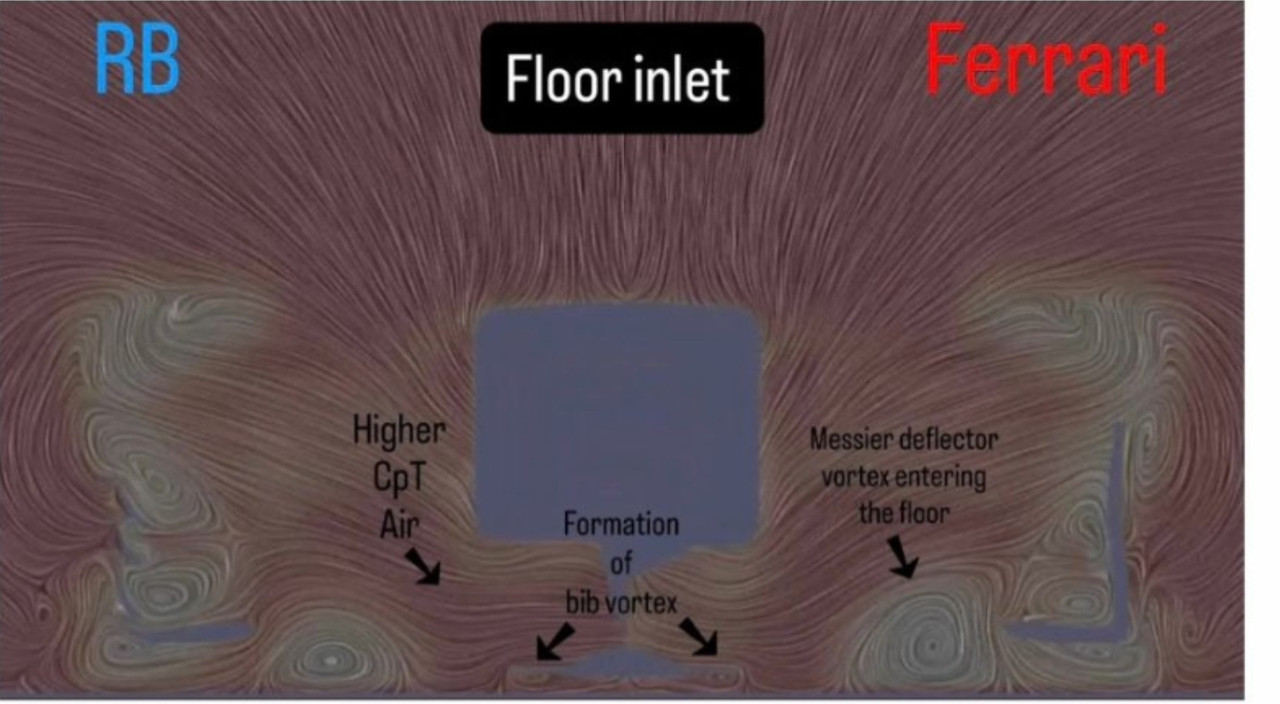
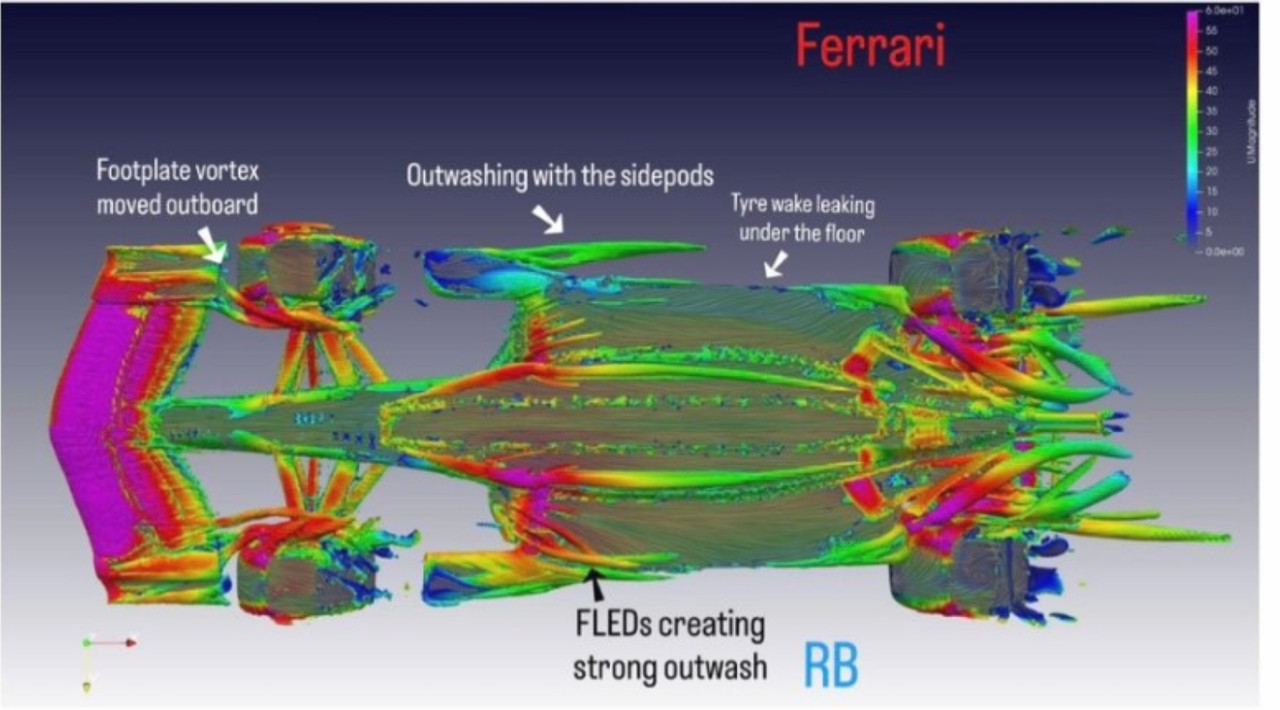
The floor foot generates suction ahead of the inlet supporting any incoming outwash created by the front-end geometry. Further downstream, the remaining dirty air is pushed outboard by the Floor Leading Edge Devices (FLEDs). Red Bull's geometry
appears more effective in this area, although this may partly result from inaccuracies in the Ferrari CAD
model. Suction under the boat section of the floor is controlled by the floor bib vortex,
The upper tyre wake is managed by the floor board Red Bull uses three upwashing horizontal elements with a slight inboard kink at their rear ends, while Ferrari employs one outwashing element followed by
three horizontal ones. The vortex generated by Ferrari's outwashing element increases the pressure on the upper horizontal element, strengthening its vortex compared to Red Bul's design.
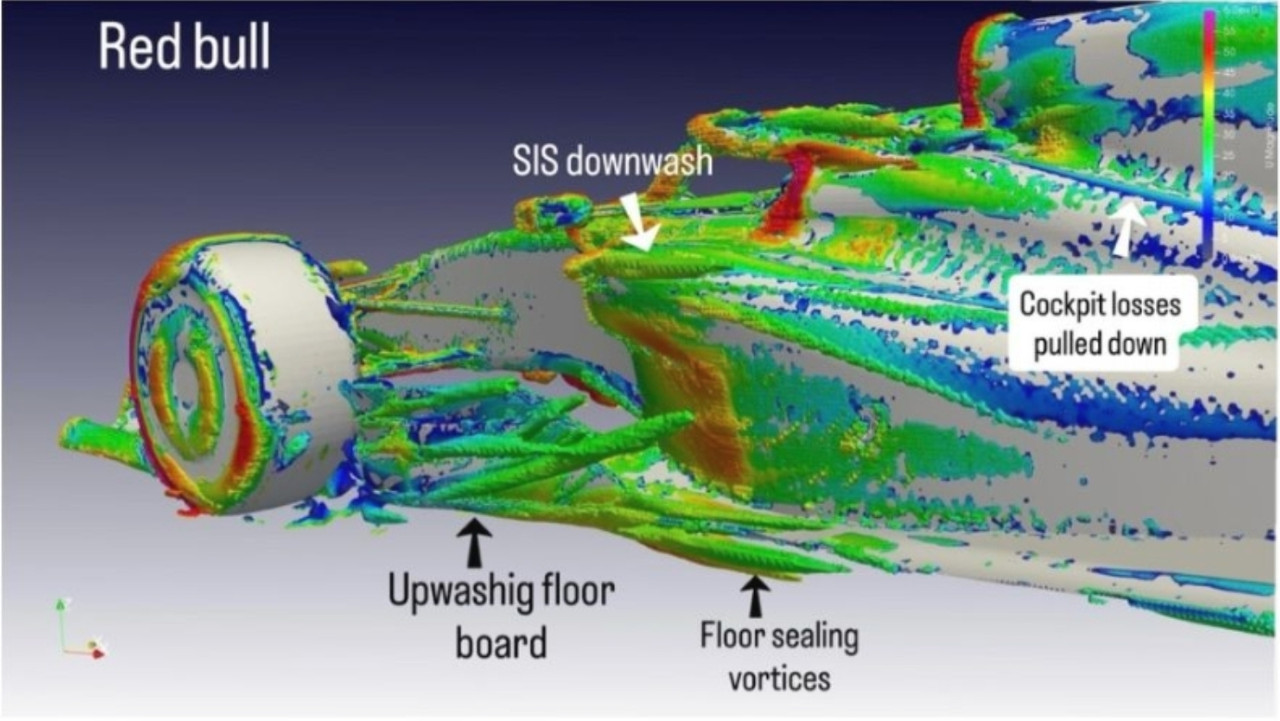
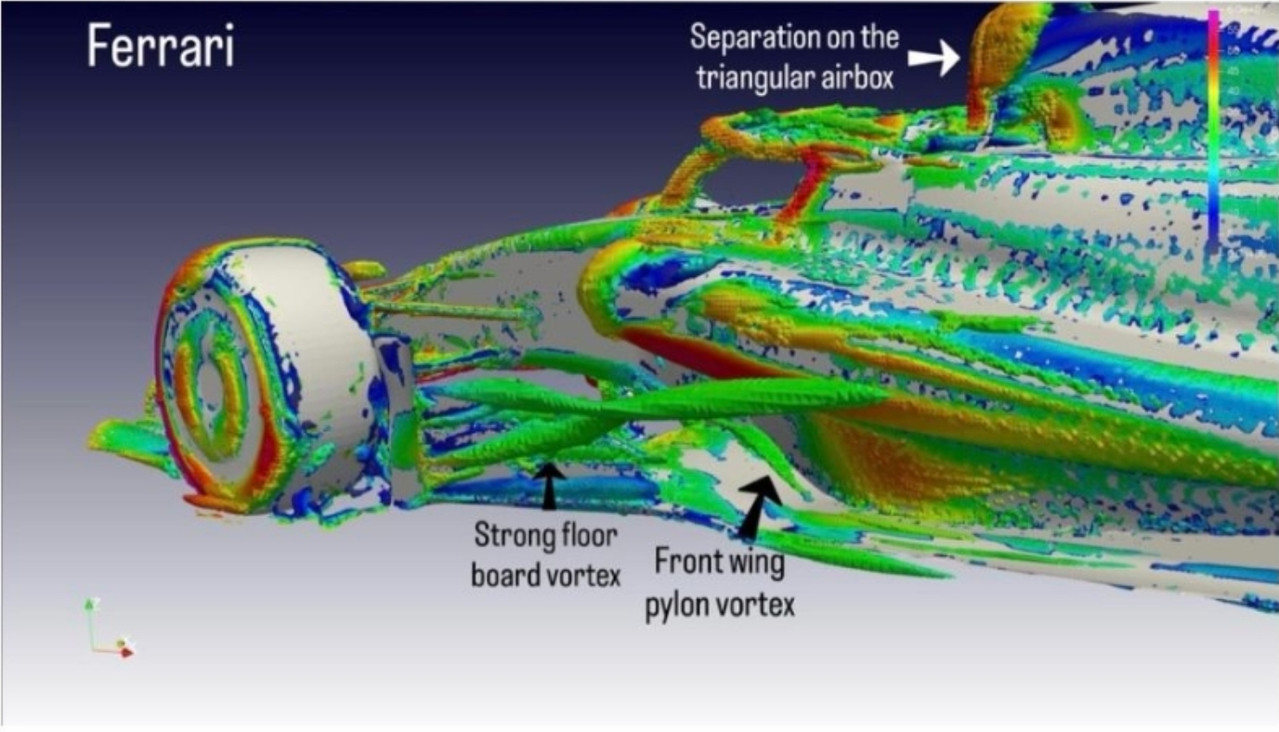
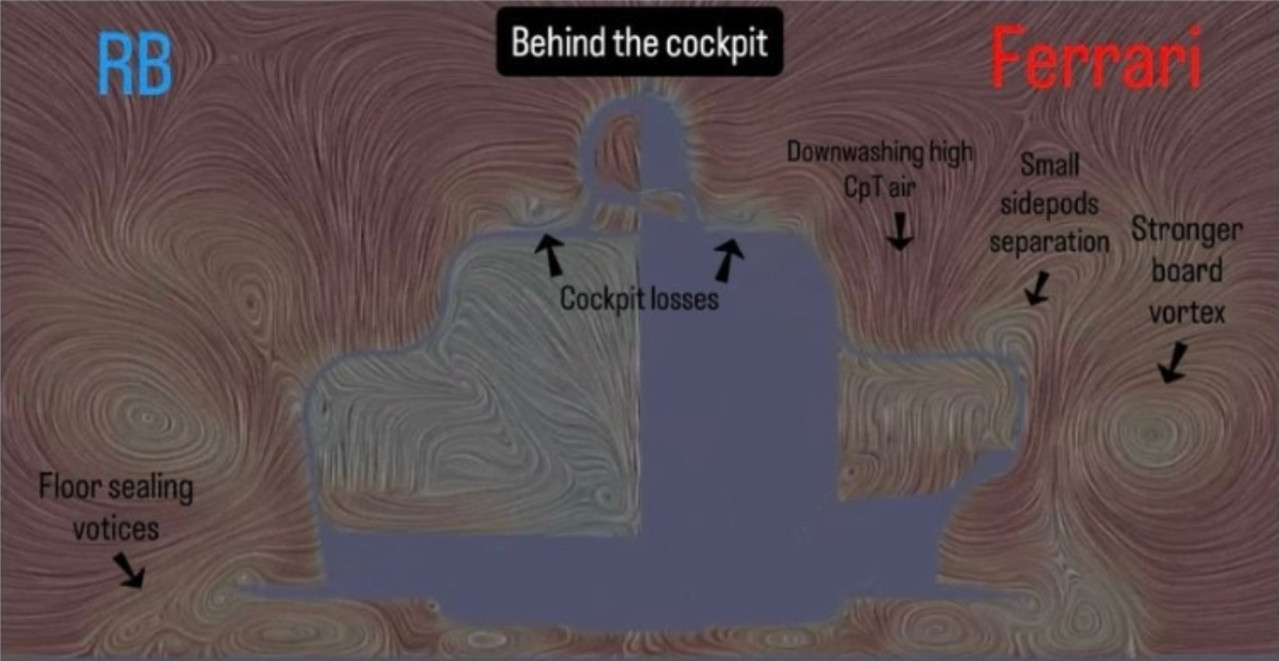
Sidepods primarily manage flow rather than generate downforce, Ferrari combines downwash geometry with a pronounced undercut, delivering high-energy flow rearwards via dual pathways. Red Bull's
tighter inwashing concept prioritizes flow confinement. While inwashing solutions are typically more robust and easier to optimize, downwash concepts can transport higher-energy flow to critical rear regions. Red Bull's tightly packaged bodywork incorporates a downwashing
surface behind the cockpit, displacing cockpit losses away from the rear wing. Ferrari employs "cannon"-style volumes reminiscent of earlier ground-effect designs. Ferrari retains a triangular airbox inlet, although a more concave upper
surface generally shows improved resistance to flow separation.
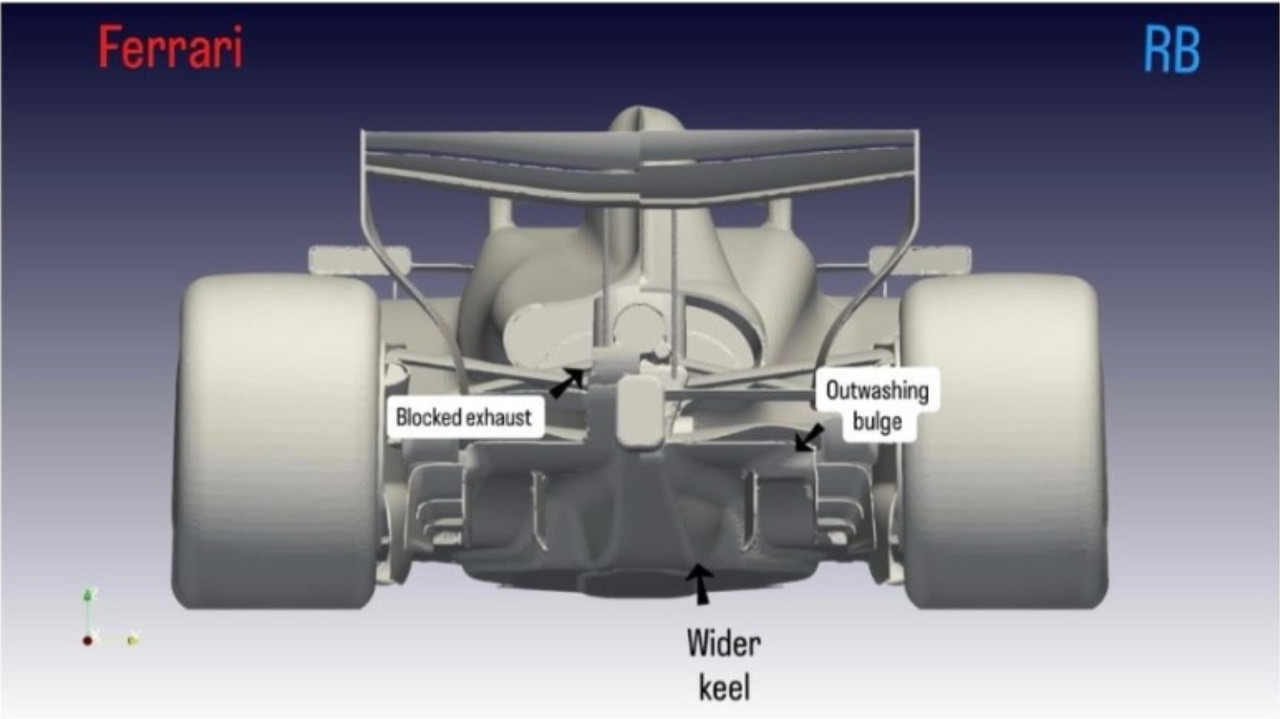
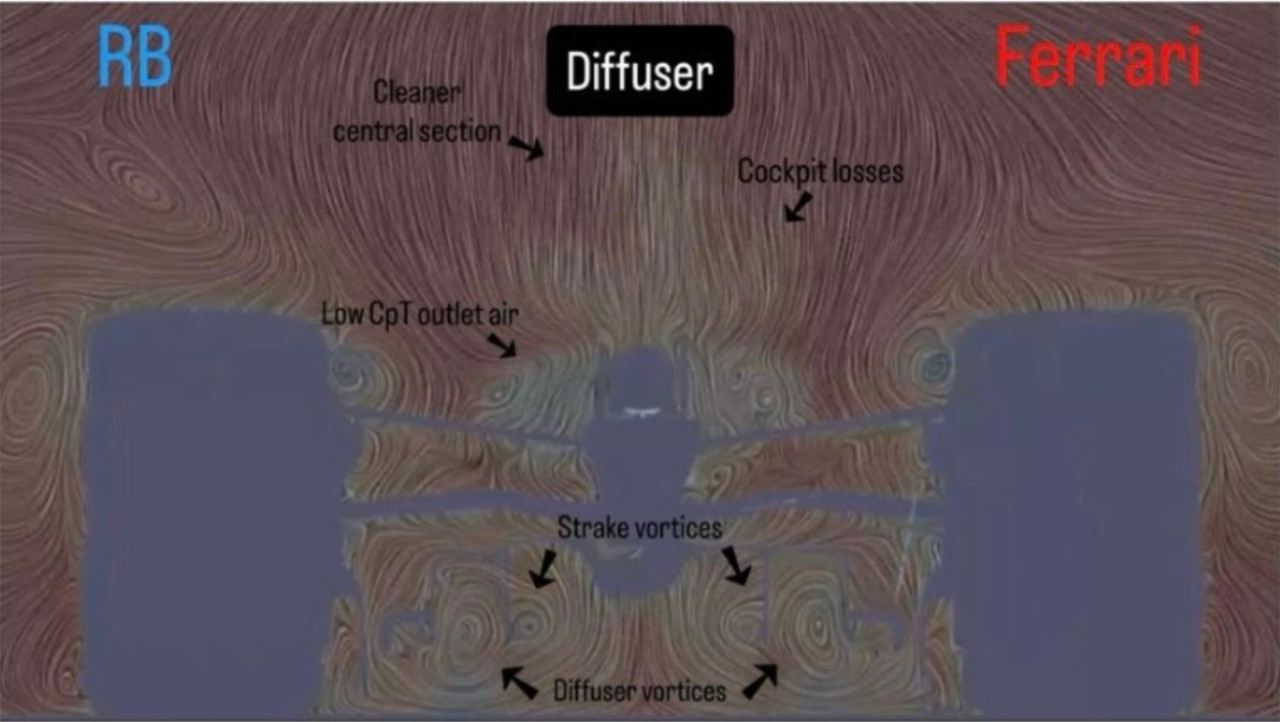
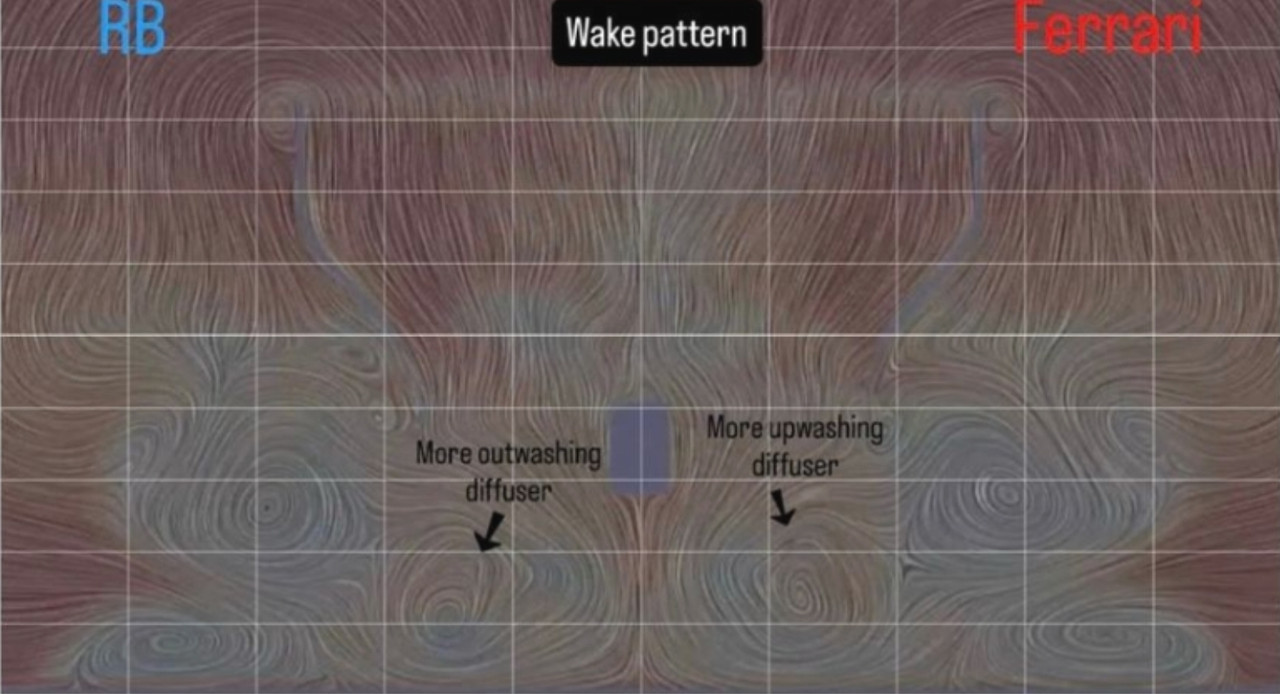
Red Bull features an outwashing bulge at the upper corner of the diffuser, seamlessly integrated with the diffuser strake. Likely due to a wider gearbox casing, the keel section is also broader than Ferrari's.
Ferrari's exhaust-blocking winglet did not perform well at this mesh resolution. Overall, Red Bull follows a more outwashing philosophy, while Ferrari extracts more flow in the upwash direction.
The optimal aerodynamic balance differs
significantly between the two cars. Red Bull
features a very strong front end and, to
compensate, must run at an extremely |ow rake of around 0.25°. This likely results in an overal loss of downforce due to diffuser choking. Ferrari achieves balance at approximately 0.75° of rake, but the overall concept appears weaker. The primary contributor to its lack of rear downforce is insufficient outwash generated by the FLEDs. Red Bull's concept appears easier to fine-tune, making its lack of real-world performance somewhat puzzling--potentially pointing to a correlation mismatch. Ferrari, on the other
hand, shows greater development potential, as relatively small geometric refinements could yield significant performance gains.
Thank you Jan for your effort and great work!