I asked AI what the performance advantages were for solid state over lithium ion batteries for F1 and its reply was fascinating as I didn't understand why it could be such a big advantage...but holy smokes it could be. The most intriguing portion of what it said was in regards to recharge rates. It's a good read and educational. Should this pan out for Honda could we dare to dream of a Alonso championship??

><><><<><<><<<><><><><><><><
The rumor about Honda developing solid-state batteries for its 2026 power unit (supplying Aston Martin) stems from recent reports and forum discussions, though it's not officially confirmed—Honda has announced production of solid-state tech for EVs starting in early 2025, and speculation links this to F1 for a potential edge.
If true, this would represent a significant leap, as solid-state batteries use a solid electrolyte instead of the liquid one in lithium-ion cells, enabling several key advantages in the high-stakes F1 environment where every gram, watt, and millisecond counts. Here's a breakdown of the main benefits compared to the lithium-ion setups other teams will likely use:
1. Higher Energy Density
Solid-state batteries can pack 20-50% more energy into the same volume or weight than lithium-ion equivalents, potentially allowing Honda to store the required ERS energy (up to ~9MJ per lap under 2026 rules) in a lighter package.
In F1, this translates to weight savings of several kilograms, improving overall car balance, acceleration, and fuel efficiency—critical when the minimum car weight is set at 798kg (including driver) and every ounce affects lap times.
For other teams on lithium-ion, they'd need bulkier or heavier batteries to hit the same capacity, potentially compromising aero or requiring trade-offs in chassis design.
2. Faster Charging and Discharging (Power Density)
These batteries support quicker energy recovery and deployment, with recharge rates potentially double that of lithium-ion, aligning perfectly with the 2026 emphasis on manual override modes for electrical boosts during overtakes (up to 350kW bursts).
In practice, this means more responsive ERS activation, like instant power surges out of corners or during qualifying, without the thermal throttling that can plague liquid-electrolyte cells under sustained high loads.
Lithium-ion batteries, while improved, have slower ion movement through liquid, leading to potential delays or reduced peak power in extreme F1 cycles of rapid charge-discharge.
3. Improved Safety and ReliabilityWithout flammable liquid electrolytes,
solid-state designs are far less prone to thermal runaway, leaks, or fires—vital in F1 where crashes and high vibrations are common, and batteries must withstand G-forces up to 50G.
This could reduce the need for heavy protective casings, further aiding weight reduction, and minimize downtime from failures during races or testing.
Conventional lithium-ion packs require more robust cooling and safety systems to manage risks, adding complexity and potential points of failure for other teams.
4. Better Thermal Management and Durability
Solid-state batteries operate efficiently across a wider temperature range and degrade slower over cycles, which is advantageous in F1's grueling conditions (e.g., hot tracks like Bahrain or wet ones like Spa).
They could enable more consistent performance throughout a stint without as much cooling overhead, potentially allowing for slimmer radiators or better aero packaging.
Lithium-ion alternatives might need more aggressive liquid cooling, which adds weight and could lead to power derating if overheating occurs.
Overall, if Honda pulls this off, it could give Aston Martin a notable performance advantage in electrical deployment and efficiency, especially in races where energy management is key (e.g., tracks with heavy braking zones). However, solid-state tech is still emerging, with challenges like high production costs and scaling for F1's bespoke needs—rumors suggest it's a "game changer" if it works, but reliability in a race environment remains unproven.
Other manufacturers like Mercedes have explored it via F1 tech transfer, but no one's confirmed deployment for 2026 yet.
https://x.com/i/grok/share/5BFKBAspRN01IaYftzCk0BtjMWatching F1 since 1986.

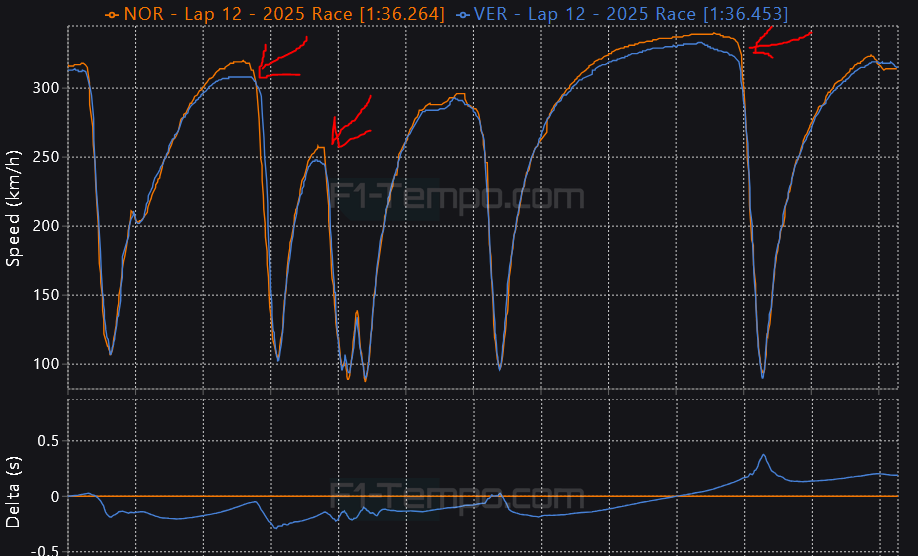
 He's leading. Why would you assume being told about a gap means, "slow down and give the tow"? What a weird assumption. Why did he pull away from George in the first stint if he wanted to tow him?